How to Balance Decor and Function in an Entryway
A framework for an entry that works and looks good: a decorative answer for every daily need, a three-part split of the surface and a two-minute evening reset.
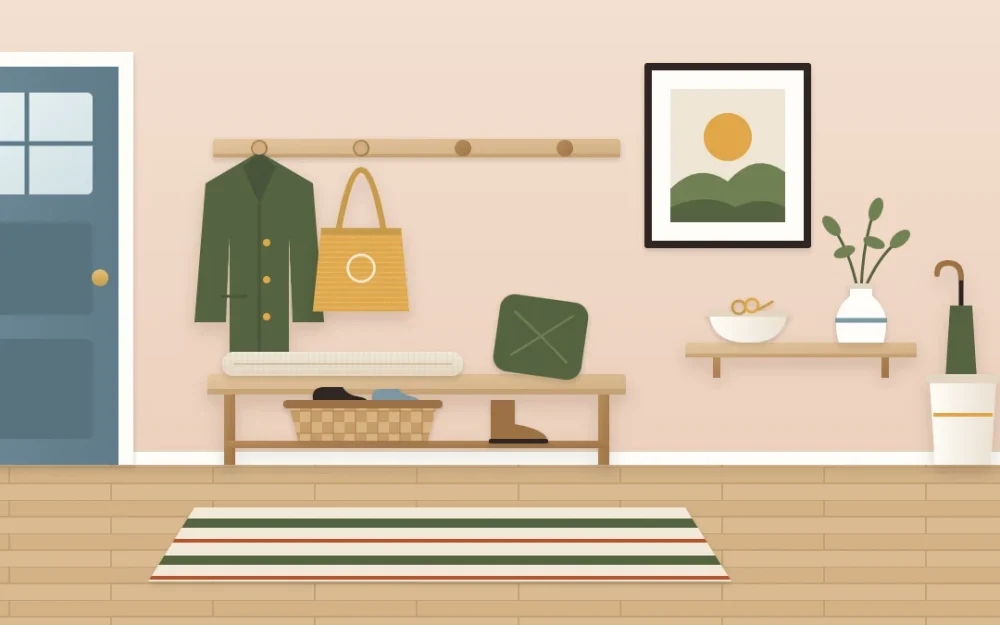
Most entries lean one way. Some are pretty and useless: a styled console with nowhere to drop keys, so the keys land on top of the styling. Others are practical and plain: hooks, a shoe rack and a pile of mail, all doing their job and none of it pleasant to walk in to.
A functional entryway that also looks good is not a compromise between the two. It comes from applying two simple tests to everything by the door, then dividing the space so the working parts and the decorative parts stop fighting.
Two tests for everything by the door
- Every practical need gets a good-looking answer. If something has to be there, choose the version of it you enjoy seeing.
- Every decorative piece earns its place. It adds light, color or texture, or it goes.
This is what separates practical entryway decor from plain storage: the container is chosen as carefully as the vase. If you are starting from an empty wall, work through the order for decorating any entrance first, then come back and apply these two tests.
Give each practical need a good-looking answer
Note what really arrives at your door each day, then give each item one home that suits your palette.
| Daily need | Decorative answer | What keeps it looking good |
|---|---|---|
| Keys and sunglasses | A ceramic bowl or a small tray | One only, in a color that repeats elsewhere |
| Coats and bags | A wooden peg rail or a row of knobs | A limit of one coat and one bag per person |
| Shoes | A lidded basket or a slim closed cabinet | Today’s pair in view, the rest out of sight |
| Mail and papers | A lidded box on the console | Emptied when the lid stops closing |
| Sitting down | A bench with one cushion | The seat kept mostly clear, like a display |
| Umbrellas and scarves | One tall floor basket | A single purpose for each basket |
Notice that each answer is also a material: ceramic, wood, woven fiber, fabric. Chosen together, the working pieces become the decor.
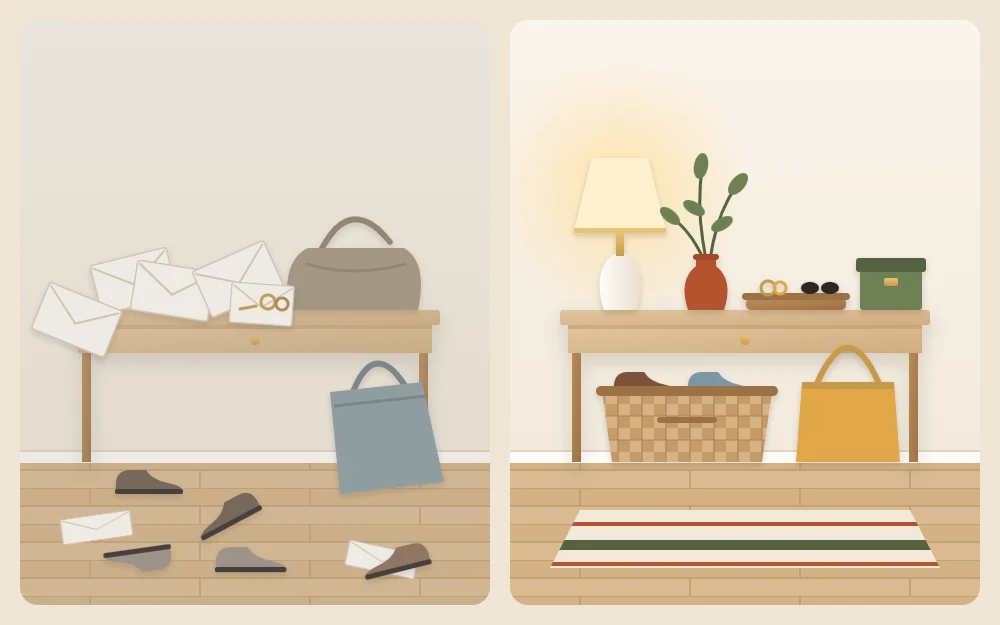
A tray deserves particular thought because it frames whatever sits on it; the guide to styling an entryway tray as a catchall goes into shape and size. For weaves, lids and proportions, see the decorative basket ideas.
Before you hang anything
A peg rail, hook or shelf fixed to the wall needs hardware chosen for your wall type, the weight of what it will carry and the manufacturer instructions. In a rental, check your lease or ask before making changes.
Make every decorative piece earn its place
Now turn the test around. In a small working space, an ornament that only sits there is taking a spot from something useful. Keep the pieces that do one of three things.
- Add light: a mirror that bounces daylight from the next room, or a plug-in or rechargeable lamp that glows at dusk.
- Add color: one print, a vase or a cushion that carries your accent color to the door.
- Add texture: a woven basket, a wool runner, a plant, a rough ceramic pot.
The best pieces do both jobs at once. A mirror is a last look and a source of brightness. A bench cushion is comfort and color. A handsome bowl is a sculpture until the keys go in it, and still a sculpture afterward.
Split the surface in three
Entryway drop zone styling fails when the whole surface is styled or the whole surface is a dumping ground. A rough three-way split, used as a loose guide, prevents both.
- Working part: the end nearest the door. The key bowl or tray lives here, along with the mail box.
- Styled part: the far end. A lamp, a vase of stems or a small stack of books with one object on top.
- Empty part: the middle, left clear so a bag or parcel can land without knocking anything over.
The empty part matters most. Without it, daily things spill into the styled end within a day or two. The same idea works on a wall: hooks lower and nearer the door, art higher and further along, blank wall between them.
If your entry is pretty but impractical
The signs: keys at the bottom of your bag, coats on a chair in the next room, shoes in a heap just past the rug. The decor is fine. It simply left out the daily routine.
- Swap one ornament for a bowl or tray at the door end of the console.
- Add two or three hooks at a comfortable height beside the mirror, not across the room.
- Slide a basket under the console or bench for shoes.
- Remove one decorative object to create the empty part of the surface.
If your entry is practical but plain
The signs: everything has a place, and the entry still looks like a utility corner. Here the routine works and the materials let it down.
- Replace plastic or wire containers with woven, wooden or ceramic ones in your palette.
- Put one piece of art or a mirror above the working zone so the wall has a focus.
- Add a lamp for evening warmth and a plant or a vase of stems for life.
- Edit what shows. A decorative and practical entryway displays a few things and conceals the rest.
If you find you prefer very little on view, the minimalist approach of one piece for each job takes this editing a step further.
A two-minute evening reset
An entryway that looks good and works needs a small daily habit, not a weekend overhaul. Before bed:
- Return keys and sunglasses to the bowl.
- Move extra coats and bags from the pegs to the closet, leaving one each.
- Put shoes in the basket or cabinet and set out tomorrow’s pair.
- Drop the mail in its box and close the lid.
- Straighten the cushion and check that the empty part of the console is empty.
Because every item already has an attractive home, the reset is a matter of putting five things back. If it regularly takes longer, one need is missing its answer. Go back to the table and find which.
Frequently asked questions
What should every entryway have to be functional?
At minimum, a landing spot for keys, somewhere for the coat and bag in current use, and a way to keep shoes from spreading across the floor. A mirror and a light source are close behind. Beyond that, add only what matches something your household really does at the door.
How do I make practical storage look decorative?
Choose containers by material and color, the way you would choose a vase. Woven baskets, a wooden peg rail, a ceramic bowl and a lidded box in tones from your palette read as decor. Then set a visible limit for each, so what shows stays sparse and deliberate.
How much of a console table should be left empty?
As a loose guide, about a third. One end holds the working pieces such as the key bowl, the other end holds a lamp or vase, and the middle stays clear. That open stretch gives bags and parcels somewhere to land and stops daily items drifting into the styled end.