Decorative Trays for the Entryway: Styling a Catchall That Looks Good
How to choose a tray for the console by shape, size and material, what to put in it using a tall, low and useful formula, and a weekly reset that keeps it tidy.
At a glance
- Difficulty
- Easy
- Time
- About 10 to 20 minutes
- Best for
- Consoles and shelves where keys, sunglasses and small items tend to spread
- Renter note
- No fixings needed
What you need
- Tray with a low rim
- Small bowl or lidded box
- Bud vase or flameless LED candle
- Small deep dish for coins
- Soft cloth
Keys, sunglasses, a lip balm, yesterday’s mail: none of it is clutter until it spreads. Scattered across a console, six small things look like a mess. Gathered on an entryway tray, the same six things look like one object you chose on purpose.
That is the whole appeal of a catchall. It does not ask you to own less or to change your habits at the door. It simply draws a line around the everyday and makes the line good-looking. The steps below cover how to choose the tray, what to put in it and how to keep it that way.
Why a tray works as a frame
The eye groups whatever sits inside a border. A tray gives small, unrelated items a shared edge and a shared background, so they stop competing with the lamp, the vase and everything else on the surface. It also gives your hand a target. When there is an obvious place to drop the keys, they tend to land there.
The clear surface around the tray matters as much as the tray. Bare tabletop on every side is what makes the group read as a deliberate tray vignette rather than a pile with a rim.
Choose the shape for the surface
Shape is the first decision, because it sets how the tray relates to the furniture beneath it.
- Round softens a table full of straight lines and suits a small or square surface. It holds a compact group best: a bowl and a bud vase.
- Rectangular echoes the lines of a console and sits neatly parallel to its front edge. It suits boxes, folded sunglasses and a dish in a row.
- Oval falls between the two. It follows the length of a narrow console and still has the softness of a curve.
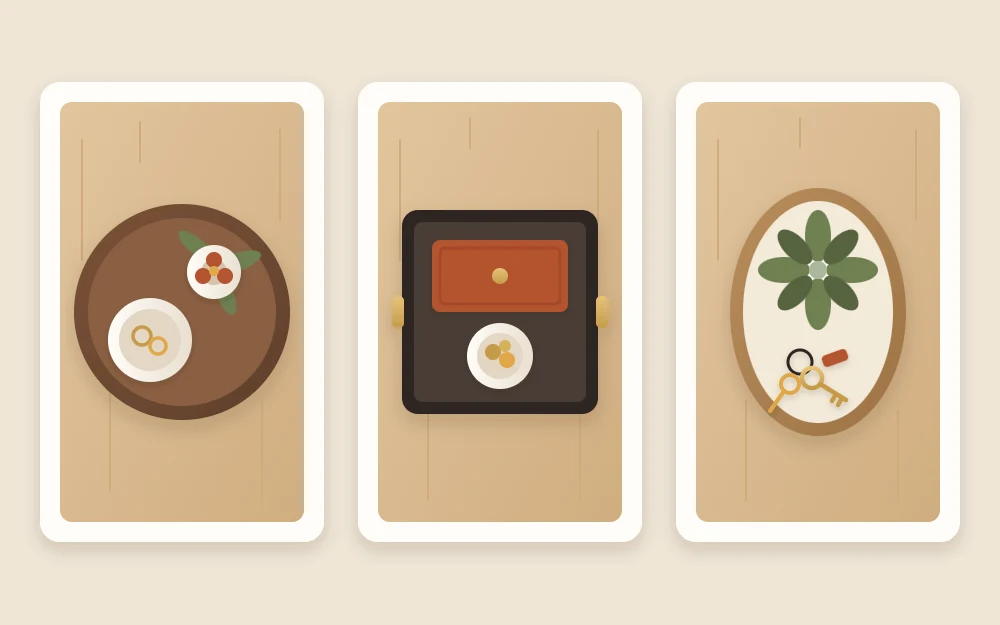
Size it to leave clear table around it
As a rule of thumb, a decorative tray for a console table takes up no more than about a third of the surface length, with visible tabletop in front, behind and to each side. On a console 36 in (91 cm) long, that points to a tray of roughly 12 in (30 cm) as a starting point.
Check the depth as well. A tray that reaches from the front edge to the wall leaves no room for a frame to lean behind it and tends to look wedged in. If the surface is very shallow, a small round dish may serve you better than a tray. The same thinking applies to a narrow ledge, which the guide to styling a shelf by the door covers.
Pick a material that contrasts with the table
A tray that matches the tabletop disappears, and the frame effect goes with it. Choose a material that differs in color or texture from what it sits on.
- Wood on a painted or stone surface adds warmth; on a wood console, go clearly lighter or darker than the top.
- Woven rattan or seagrass brings texture to a smooth table and softens the sound of keys.
- Ceramic or stone feels solid and looks good nearly empty.
- Metal in brass or black adds a small note of shine or contrast; a low rim keeps it from looking heavy.
- Leather or lacquer gives a tailored finish and wipes clean.
A low rim is practical for a key tray in the entryway: high enough to stop things sliding off, low enough that you can see what is inside.
The tray formula: something tall, something low, something useful
Three kinds of object make a tray look styled and still do its job.
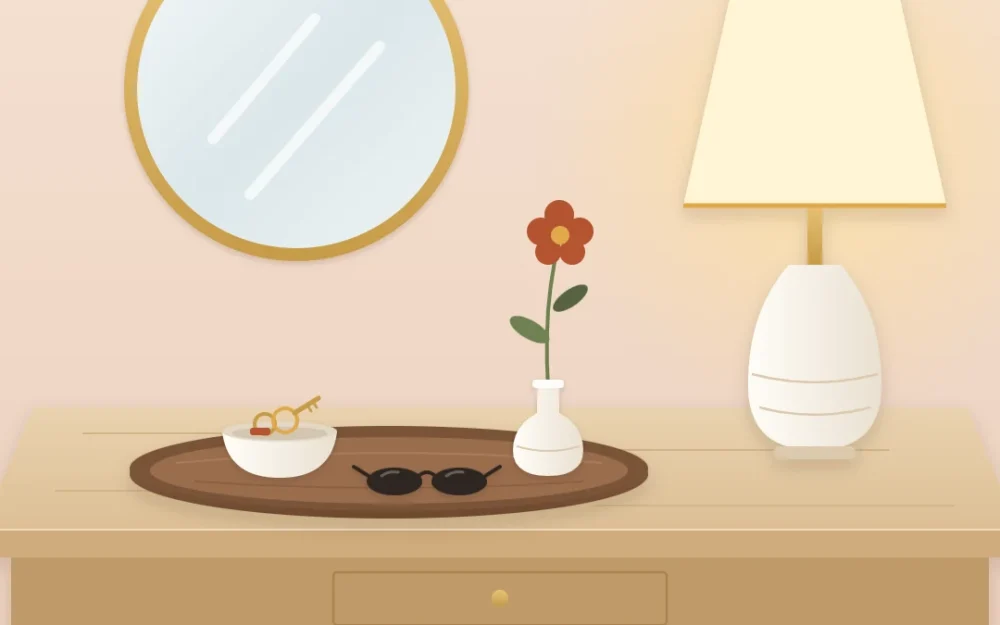
- Something tall. A bud vase with one stem, a slim bottle or a flameless LED candle in a holder. This gives the group a high point so it does not read as flat.
- Something low. A small bowl, a lidded box or a smooth stone. It grounds the arrangement and adds a second texture.
- Something useful. The daily items themselves: keys in the bowl, sunglasses folded beside it.
Place the tall piece toward the back or one end and leave an open patch at the front for whatever arrives next. Limit decorative pieces to one or two. The tray exists for the everyday things, and the decoration is there to keep them company.
Good to know
A flameless LED candle is the sensible default by the door, where drafts, coats and bags pass close to the surface. If you do light a real candle, keep it attended and well away from anything that could catch.
One tray per surface, plus a small dish
Two trays side by side cancel each other out; the table goes back to looking like a collection of small things. Keep to one tray on each surface and let it sit off-center, balanced by the lamp or a taller object at the other end. The method for the full tabletop is set out in the guide to styling an entryway console step by step.
Coins and loose odds and ends are the exception. They scatter across a flat tray, so give them a second, smaller dish with deeper sides, either inside the tray or just beside it. Mail is best kept elsewhere, in a lidded box or an upright holder, because paper fills a tray within a day.
Catchall tray styling that lasts: the weekly reset
A tray stays attractive only if it is emptied now and then. Once a week:
- Lift everything out and wipe the tray.
- Return only what is used daily. Receipts, spare keys and pocket finds go to a drawer or the bin.
- Put the tall and low pieces back in their places and refresh the stem if there is one.
- Check that the open patch at the front is still open.
Tip
If the tray fills up again within two days, it is doing too many jobs. Decide which items truly need to live by the door and find a closed home for the rest; the guide to balancing decor and function in an entry maps each need to a good-looking answer.
Frequently asked questions
What size tray should I use on an entry console?
A common starting point is a tray about a third of the length of the surface, with bare tabletop visible on every side. Measure the depth too, so the tray does not span from the front edge to the wall. On very shallow surfaces a small dish often looks better.
What should go in an entryway catchall tray?
Keep it to the things you pick up every day, such as keys and sunglasses, plus one or two decorative pieces. A small bowl gives the keys a home, and a bud vase or flameless candle adds height. Mail and receipts are better kept in a separate box.
Should the tray match the console table?
Contrast usually works better than a match. A tray in the same color and finish as the tabletop blends in and loses its framing effect. Try wood on a painted surface, woven fibers on a smooth one, or a clearly lighter or darker tone on a wood console.