
The Best Interior Design Tips to Stop Your House Looking Like a Mess
Why Most Homes Feel “Off” (And How the Best Interior Design Tips Fix That)
The best interior design tips aren’t about buying expensive furniture or following every new trend. They’re about understanding a handful of simple principles that make any room feel intentional, calm, and yours.
Here’s a quick summary of the most impactful tips:
- Start with a plan – measure your space and test layouts before buying anything
- Anchor with a rug – size up; the front legs of every major piece should sit on it
- Layer your lighting – use at least three light sources per room, never just one overhead fixture
- Stick to a color palette – 60% dominant, 30% secondary, 10% accent
- Define a focal point – every room needs one “leading” element everything else supports
- Choose proper scale – furniture that’s too small makes a room feel more cramped, not bigger
- Edit ruthlessly – negative space is a design feature, not wasted space
Think about the last time you walked into a room that just felt right. Chances are, you couldn’t explain exactly why. That’s the goal of good interior design — it’s nearly invisible when it works.
The frustrating reality? Many people spend thousands on new furniture and still end up with a space that feels cold, cluttered, or random. The problem usually isn’t the budget. It’s that most of us focus on buying things rather than building a cohesive system.
This guide breaks down the core principles — from spatial planning and color theory to sustainable material choices and small-space tricks — so you can create a home that’s both beautiful and practical, without starting over from scratch.
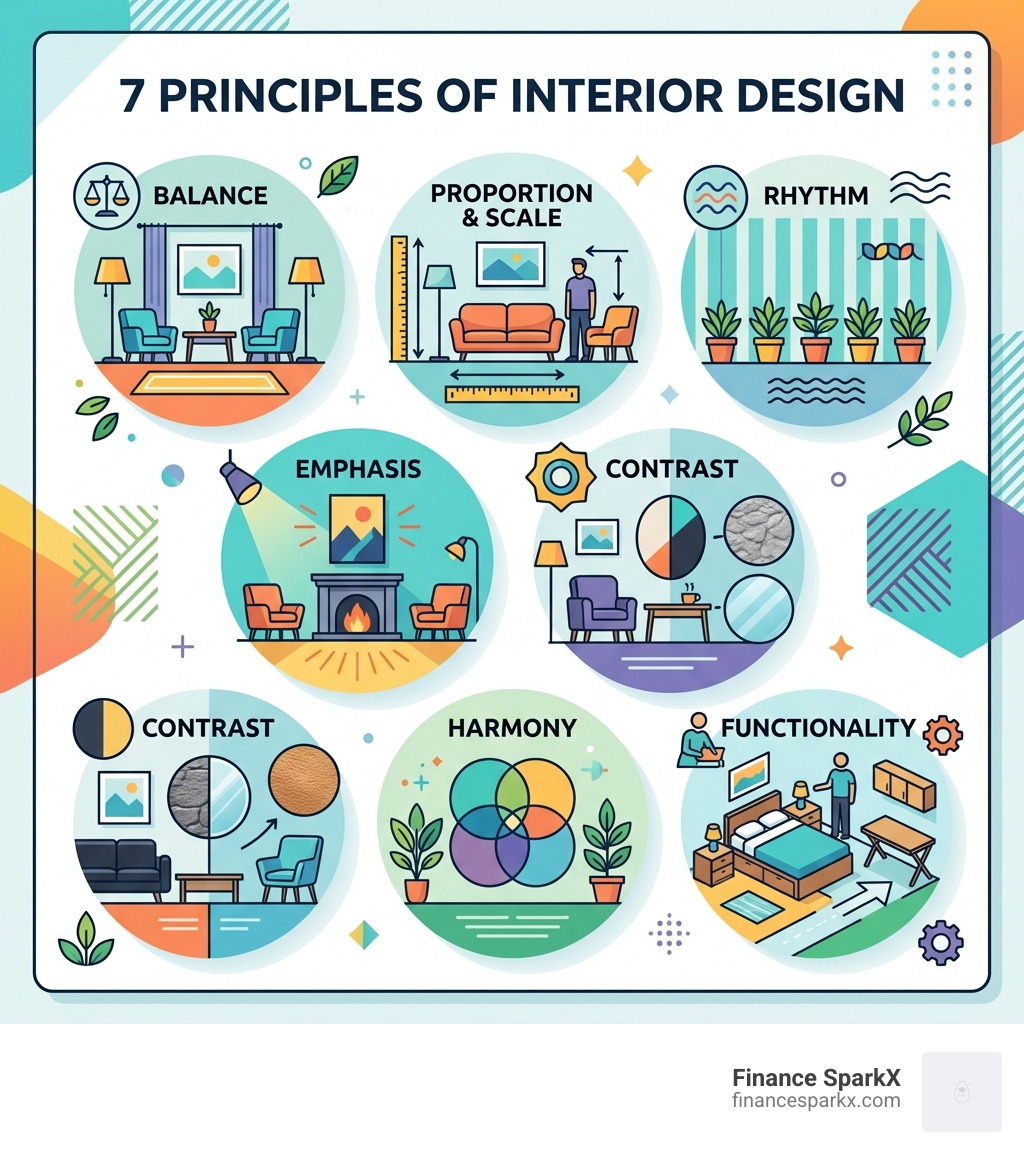
Planning Your Space: How to Start Designing a Room from Scratch
Designing a room from scratch can feel overwhelming, but we always recommend starting with a game plan rather than a shopping trip. The first step isn’t picking out a sofa; it’s understanding the “bones” of your room. We begin by defining the room’s purpose and how we want to feel in it. Is it a spa-like bedroom for rest or a high-energy kitchen for entertaining?
Before you spend a dime, you must measure everything. We’ve seen many people buy a king-sized bed only to realize the bedroom doors won’t open. Use graph paper (where one square equals one square foot) or digital tools like Floor Plan Creator to see what actually fits. This phase is about identifying your “anchor pieces”—the large items like a sofa or bed—that will dictate the rest of the layout. For a deep dive into starting with $0, check out these 22 Interior Design Living Room Secrets for a $0 Transformation.
Testing Layouts Before You Buy
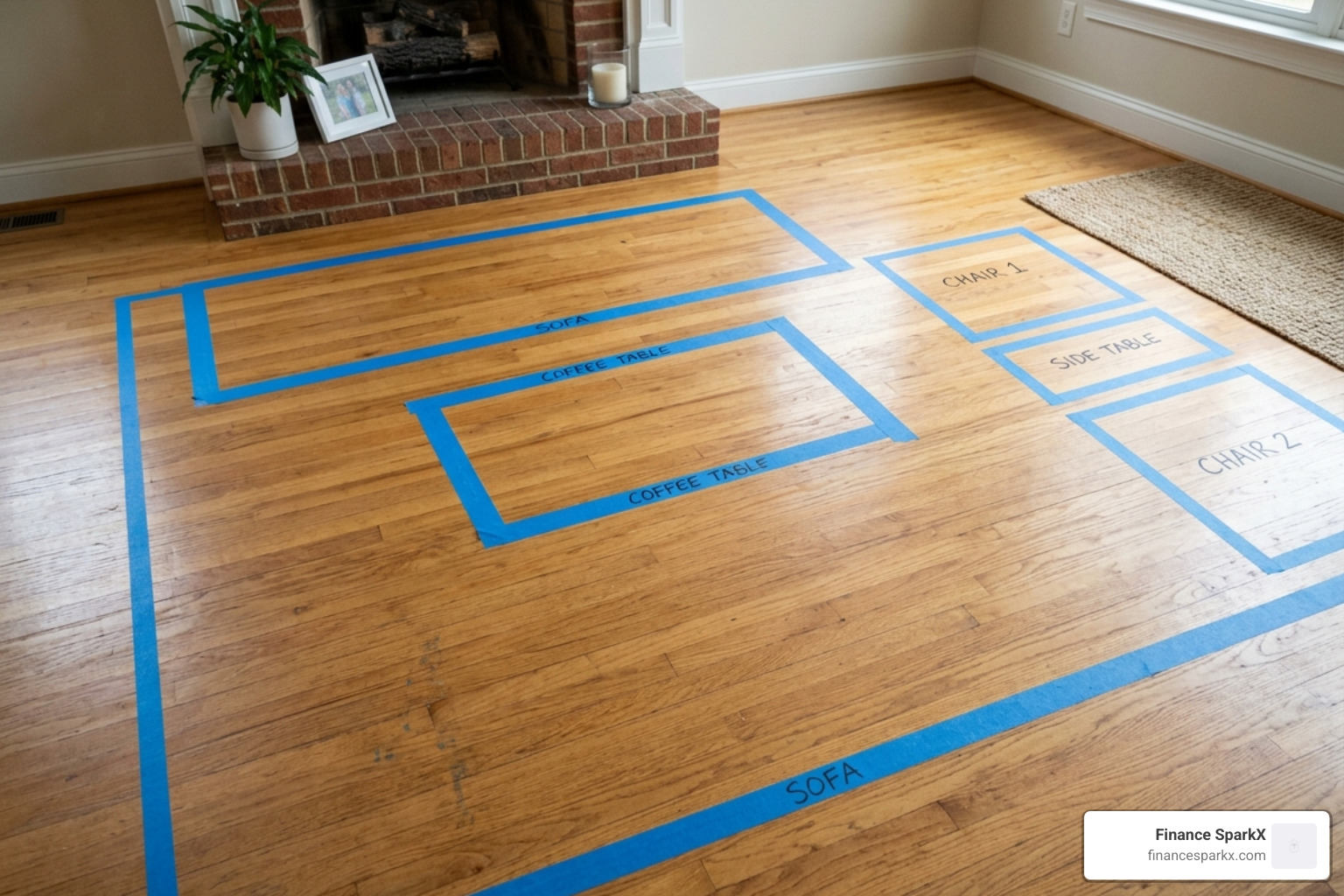
One of our favorite “lazy” but brilliant hacks is using blue painter’s tape. Once you have the measurements of the furniture you’re eyeing, tape the dimensions directly onto your floor. This allows you to physically walk through the space.
Are your pathways clear? You generally need 30 to 36 inches for major walking paths to avoid feeling like you’re navigating an obstacle course. Sightlines are also crucial; when you sit on the sofa, what do you see? Testing this prevents the common mistake of “wall-hugging,” where all furniture is pushed to the perimeter, leaving a vast, awkward void in the center.
Defining Your Personal Style Vibe
To create a cohesive system, we use the “leading lady” concept. Every room needs one focal point—perhaps a stunning fireplace, a large piece of art, or a bold velvet sofa—that acts as the star. Everything else should be the “back-up singers,” supporting the star without competing for attention.
When mixing styles, we swear by the 80/20 rule: 80% of the room should be one dominant style (like Modern Contemporary), while 20% can be a “surprise” element (like a vintage heirloom). This creates visual weight and character, preventing the room from looking like a sterile furniture showroom.
Mastering the Best Interior Design Tips for Color and Lighting
Color and light are the most powerful tools in our design kit. They can make a small room feel infinite or a cold room feel cozy. However, they are also where most DIY designers feel the most stuck.

Choosing a Cohesive Color Palette
The most reliable formula we use is the 60/30/10 rule. We dedicate 60% of the room to a dominant neutral shade (usually walls and rugs), 30% to a secondary color (upholstery or curtains), and 10% to a bold accent tone (pillows, art, or vases).
In April 2026, the trend has shifted toward “warm minimalism.” Instead of high-contrast blacks and whites, we are seeing tonal textures—think layers of mushroom, greige, and sand. This creates depth without visual noise. If you’re looking for a deep dive into these trends, the Interior Design: The Complete Guide to Every Style, Room & Trend in 2026 | MeltFlex is an excellent resource.
Layering Light for Warmth and Ambiance
Relying on a single overhead “boob light” is a design crime. To create a professional look, we layer three types of light:
- Ambient: General overhead lighting (ideally on a dimmer).
- Task: Focused light for reading or cooking.
- Accent: Decorative light, like picture lights on art or battery-operated sconces.
Always use “warm white” bulbs (around 2700K). Cool-white LEDs can make a beautiful home feel like a doctor’s office. To maximize natural light, we keep layouts low near windows and use mirrors to bounce sunlight into darker corners.
Furniture, Rugs, and the Art of Proper Scale
When a room feels “off,” the culprit is almost always scale. We’ve all seen it: a tiny rug floating in a massive room, or a sectional so large you have to turn sideways to walk past it.
Selecting Furniture with Proper Scale and Proportion
In 2026, we are seeing a move toward curved sofas and oversized kitchen islands that serve as the heart of the home. However, regardless of the trend, the furniture must earn its keep. In smaller spaces, we prioritize multifunctional furniture—like an upholstered coffee table that doubles as an ottoman.
| Room Size | Recommended Sofa Scale | Recommended Rug Size |
|---|---|---|
| Small (under 150 sq ft) | Apartment-size (72″-80″) or “leggy” sofa | 5′ x 8′ or 6′ x 9′ |
| Medium (150-250 sq ft) | Standard 3-seater (84″-90″) | 8′ x 10′ |
| Large (250+ sq ft) | Large Sectional or two sofas | 9′ x 12′ or 10′ x 14′ |
“Leggy” furniture—pieces where you can see the floor underneath—creates a sense of airiness in tight quarters. For more expert advice on sizing, check out How to Decorate a Living Room, According to Designers.
Grounding Your Space with the Best Interior Design Tips for Rugs
A rug that is too small is the fastest way to make a room look disjointed. As a rule of thumb, an 8×10 rug is the minimum for most living rooms. At the very least, the front two legs of your sofa and chairs must sit on the rug.
For high-traffic areas, we love wool for its durability and natural stain resistance. If you’re on a budget, try the “jute layering” trick: buy a large, inexpensive jute rug to fill the space, then layer a smaller, plush patterned rug on top. It looks custom and expensive for a fraction of the cost.
Small Space Hacks and Budget-Friendly Decor Secrets
You don’t need a mansion to have a home that feels expansive. Some of the best interior design tips involve using optical illusions to trick the eye into seeing more space and light than actually exists.
Using the Best Interior Design Tips for Optical Illusions
Mirrors are essentially “fake windows.” Placing a large floor mirror opposite a light source can double the visual depth of a room. Another pro tip: hang your curtain rods 4-6 inches above the window frame and let the fabric hit the floor. This draws the eye upward, making your ceilings feel significantly higher.
In bathrooms, floating vanities create more visible floor space, which makes the room feel less cramped. Similarly, a glass coffee table in a small living room provides a surface without adding “visual weight,” allowing the rug and floor to be seen through it.
Sourcing Art and Decor Without Overspending
Beautiful art shouldn’t cost a fortune. We often design custom art in Canva, print it at a discount, and use high-end frames from thrift stores. A large, DIY canvas art piece (at least 36×48 inches) creates a much stronger focal point than a “gallery wall” of tiny, cluttered frames.
Other budget-friendly hacks we love:
- Hardware Upgrades: Swap builder-grade kitchen knobs for solid brass or matte black versions. It’s the “jewelry” of the home.
- Contact Paper: Use high-quality marble-look contact paper to refresh tired countertops or shelves.
- Botanical Elements: A large dried branch from your backyard in a tall floor vase costs $0 but looks like a high-end sculpture.
For more ways to fix common mistakes on a budget, see 21 Home Interior Design Tips to Fix Common Decor Mistakes.
Creating a Lived-In, Sustainable, and Productive Home
At Finance SparkX, we believe the ultimate luxury is a home that supports your daily routines while respecting the planet. Sustainable living isn’t just a buzzword; it’s about choosing quality over quantity.
We advocate for natural materials like FSC-certified wood and burl wood furniture, which is currently seeing a massive surge in popularity (up 5,000% in searches!). These organic elements bring a warmth and character that “fast furniture” simply can’t match. To keep your home productive, integrate your tech seamlessly—hide your router in a decorative basket and use cord hiders to eliminate visual clutter.
Embrace the “wabi-sabi” philosophy—the beauty of imperfection. A home should feel lived-in, not staged. Use performance fabrics like Crypton for your sofa so you can actually eat and live on it without fear. Finally, practice seasonal rotation. Swapping heavy velvets for light linens as the seasons change keeps your space feeling fresh and helps you stay connected to your environment.
Frequently Asked Questions about Interior Design
What are the most common interior design mistakes to avoid?
The biggest mistake we see is “wall-hugging”—pushing all furniture against the walls. Pull your sofa out just 3-6 inches to let the room breathe. Other common errors include improper scale (rugs too small), relying on a single “boob light” for illumination, and buying matching furniture sets that lack personality. Also, avoid short curtains; they should always hit the floor!
How do I incorporate personal touches without looking messy?
Use the “rule of three.” Group objects in odd numbers of varying heights and textures. To keep surfaces from looking cluttered, use a tray to “corral” smaller items like candles and books. This makes the items look like a curated collection rather than a mess. Inherited furniture and personal artifacts should be given space to shine rather than being buried under generic decor.
What are the top interior design trends for 2026?
2026 is all about “lived-in luxury.” We’re seeing a rise in “Scandi-warm” (Scandinavian design with earthier tones), fluted and ribbed textures on cabinetry, and “artichoke green” as a dominant accent color. Unfitted kitchens—using standalone furniture pieces instead of matching built-in units—are also making a major comeback for a more organic, collected feel.
Conclusion
Effortless design isn’t about perfection; it’s about creating a functional system that works for your life. By applying these best interior design tips—from mastering scale and lighting to embracing sustainable, high-quality materials—you can transform any space into a sanctuary. The best homes are those that reflect the journey of the people living inside them.
Ready to take the next step in your home journey? Start your home transformation today with our DIY guides and eco-conscious decor tips at Finance SparkX.
