
The Low-Maintenance Secret to a Thriving Indoor Aloe Vera Plant
Aloe vera plant care indoors is simpler than most people think — and getting it right comes down to a handful of key habits.
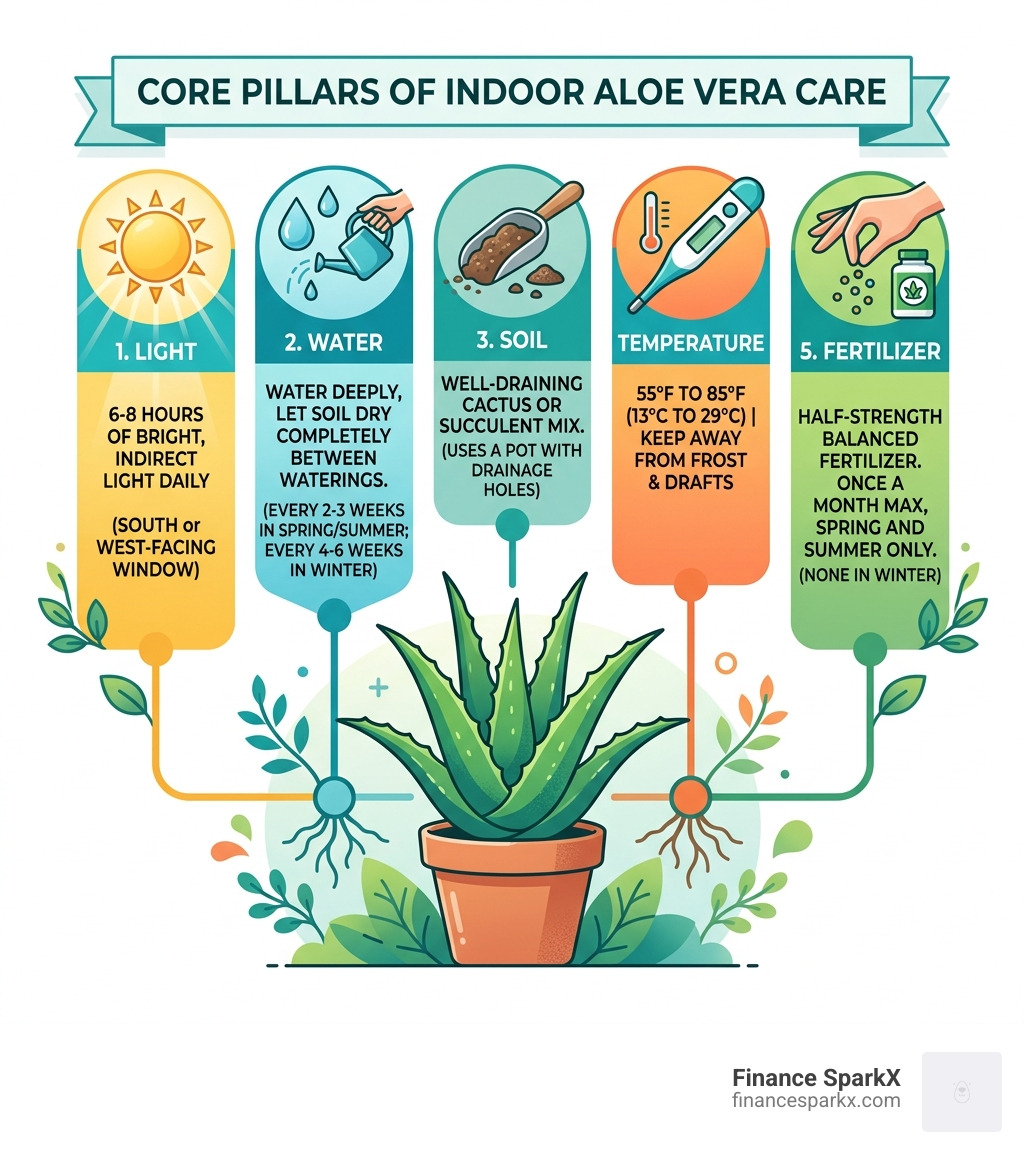
Quick answer: How to care for aloe vera indoors
| Care Factor | What to Do |
|---|---|
| Light | 6-8 hours of bright, indirect light daily (south or west-facing window) |
| Watering | Every 2-3 weeks in spring/summer; every 4-6 weeks in winter |
| Soil | Well-draining cactus or succulent mix |
| Pot | Terra-cotta with at least one drainage hole |
| Temperature | 55°F to 85°F (13°C to 29°C) — keep away from frost |
| Fertilizer | Half-strength balanced fertilizer, once a month max, spring and summer only |
| Repotting | Every 2-3 years, or when root-bound |
Aloe vera is one of the most forgiving houseplants you can own. It stores water in its thick leaves, tolerates neglect, and rewards you with a ready supply of soothing gel for minor burns and skin irritations. It practically takes care of itself — as long as you don’t overwater it.
The most common mistake? Treating it like a thirsty tropical plant. Overwatering is the number one killer of indoor aloe, and a dark corner is a close second.
The good news: a sunny windowsill, the right pot, and a relaxed watering schedule are genuinely all you need. This guide walks you through every step — from light and soil to pests, propagation, and safe gel harvesting.
Mastering Aloe Vera Plant Care Indoors: Light and Temperature
When we talk about aloe vera plant care indoors, light is the engine that drives the plant’s health. In their native arid environments of the Arabian Peninsula and North Africa, these succulents bask in intense sun. Inside our homes, we need to replicate that energy without turning the plant into a “crispy critter.”

Ideally, your aloe needs 6 to 8 hours of bright, indirect light every day. We find that placing your plant near a south-facing or west-facing window provides the best results. However, there is a fine line to tread. While they love the sun, the glass in our windows can act like a magnifying glass. If the light is too intense and direct, especially during the scorching afternoon hours of April 2026, the leaves can actually develop sunburn.
Temperature-wise, aloe vera is quite comfortable in the same conditions we enjoy. They thrive in temperatures between 55°F and 85°F (13°C to 29°C). According to The Ultimate Aloe Vera Plant Care Guide, maintaining this range ensures the plant doesn’t go into shock. If you move your plant outdoors during the summer, always bring it back inside before the thermometer hits 50°F. Aloe is definitely not frost-tolerant; a single night of freezing temperatures can turn those plump, gel-filled leaves into a mushy mess.
Avoiding Leaf Scorch and Etiolation
We often see two extremes when it comes to light issues: sunburn and “legginess.”
- Sunburn (Leaf Scorch): If your aloe leaves start developing a reddish-brown or orange hue, it’s likely getting too much direct sun. Move it a few feet back from the window or use a sheer curtain to filter the light.
- Etiolation (Leggy Growth): If your aloe is stretching toward the light, becoming thin, pale, and spindly, it’s starving for sunshine. This is “etiolation.” The plant is literally trying to grow toward the nearest light source.
If your home doesn’t have a sunny window, don’t worry! We can use technology to help. A 10-20 watt full-spectrum LED grow light placed 6-12 inches above the plant for 10-12 hours a day works wonders. You can even use smartphone light meter apps to check if your chosen spot meets the “bright indirect” criteria.
The Art of Watering and Soil Selection
If light is the engine, soil and water are the fuel and cooling system. The golden rule of aloe vera plant care indoors is this: when in doubt, don’t water. Aloe vera is a succulent, meaning it stores its own water supply in those thick, fleshy leaves. It would much rather be bone-dry for a week than sit in soggy soil for an hour.
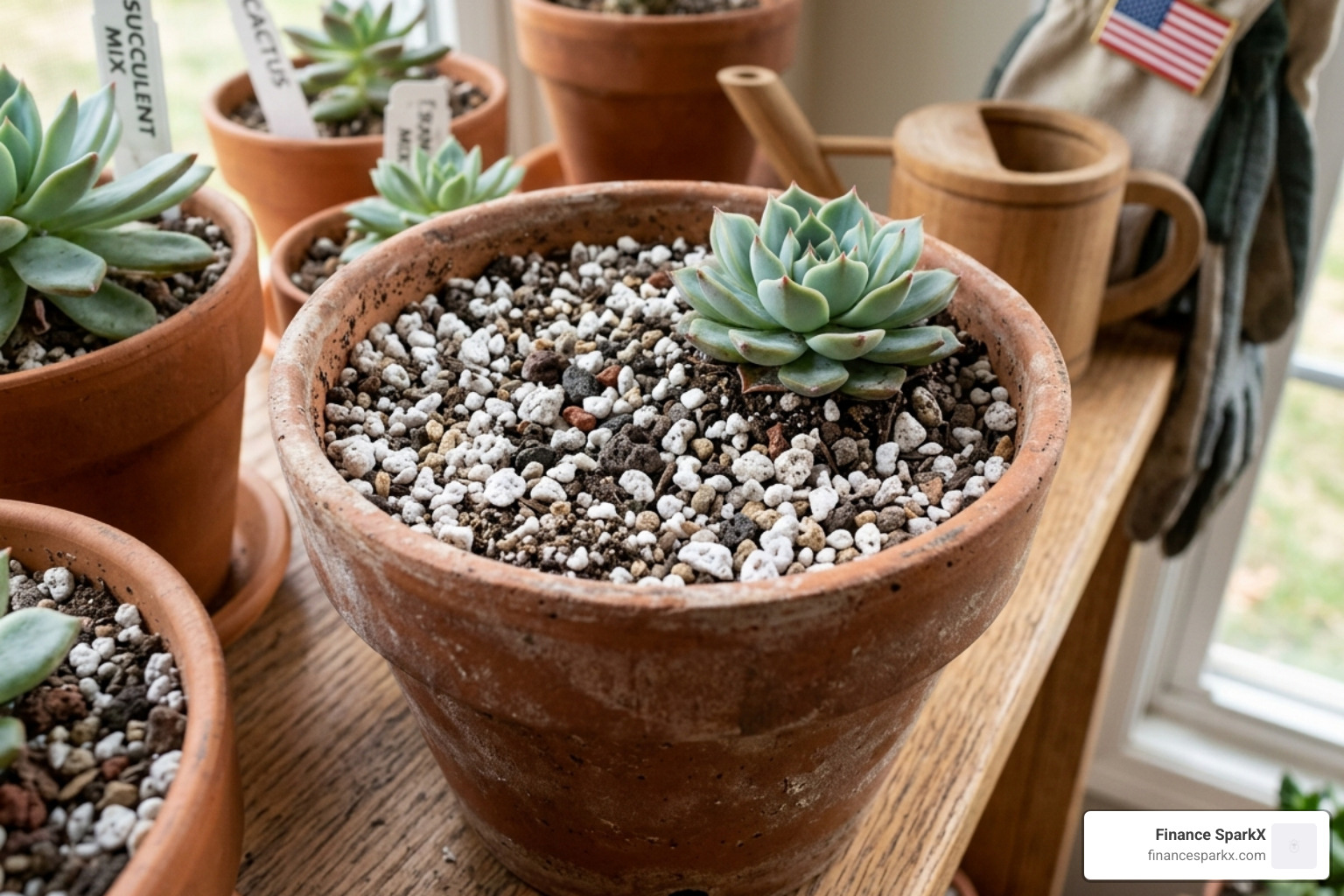
The foundation of a healthy aloe is the soil and the pot. We always recommend using a well-draining cactus or succulent potting mix. These mixes usually contain perlite, lava rock, or coarse sand to ensure water moves through quickly. For the pot, terra-cotta is our favorite choice. Because terra-cotta is porous, it allows the soil to breathe and helps excess moisture evaporate. Whatever material you choose, a drainage hole is non-negotiable.
To water correctly, use the “soak-and-drain” method. Pour water onto the soil until it runs out of the bottom drainage holes, then stop. Empty the saucer immediately; never let your aloe sit in a pool of water.
Perfecting the Watering Schedule for Aloe Vera Plant Care Indoors
Forget the calendar. Watering on a set schedule (like “every Monday”) is a recipe for disaster because indoor conditions change with the seasons. Instead, use the “finger test.” Stick your finger about 2 inches into the soil. If it feels even slightly damp, wait. If it’s bone dry, it’s time for a drink.
| Symptom | Overwatered Aloe | Underwatered Aloe |
|---|---|---|
| Leaf Texture | Soft, mushy, or translucent | Thin, shriveled, or wrinkled |
| Color | Yellowing or browning at the base | Brown, dry tips |
| Soil State | Constantly damp or moldy | Pulled away from the edges of the pot |
| Root Health | Black, slimy (Root Rot) | Brittle and dry |
As noted in the Aloe Vera Plant Care Guide: How to Grow, Water & Propagate | SucculenCare, seasonal adjustments are vital. In the spring and summer (the growing season), you might water every 2-3 weeks. In the winter, when the plant goes dormant, you may only need to water every 4-6 weeks.
Maintenance, Repotting, and Propagation
Maintaining your aloe isn’t just about survival; it’s about helping it thrive for the ten to twenty years it can live. Part of this involves feeding. Aloe vera doesn’t need much “food” because it is adapted to poor soils. We suggest applying a balanced, water-soluble fertilizer diluted to half-strength just once a month during the spring and summer. Skip the fertilizer entirely in autumn and winter.
Repotting is usually necessary every 2-3 years. You’ll know it’s time when the plant becomes “root-bound” (roots circling the inside of the pot or poking out the drainage hole) or if the plant becomes so top-heavy that it threatens to tip over. When you repot, choose a container that is only 1-2 inches wider than the current one.
As the plant matures, it will likely produce “pups”—tiny baby clones of itself growing at the base. Learning How To Take Care of an Aloe Vera Plant includes knowing when to give these babies their own space.
Propagating Pups for Successful Aloe Vera Plant Care Indoors
Propagation is one of the most rewarding parts of aloe vera plant care indoors. It’s like getting free plants for your friends!
- Wait for the right size: Don’t remove pups too early. Wait until they are at least 3-4 inches tall, or about one-fifth the size of the mother plant.
- Separate carefully: Remove the whole plant from the pot. Use a clean, sharp knife to cut the pup away from the mother, ensuring the pup keeps some of its own roots.
- The Callusing Process: This is the most important step. Don’t plant the pup immediately! Let the cut end sit out in the air for 1-2 days to “callus” (dry over). This prevents rot once it hits the soil.
- Planting: Place the pup in a small pot with succulent mix.
- Patience: Wait at least a week before watering for the first time. This gives the roots a chance to settle and reduces transplant shock.
Troubleshooting Common Pests and Diseases
Even the toughest plants have bad days. For indoor aloe, the most common issues are related to moisture and tiny hitchhikers.
Pests like mealybugs, scale, and spider mites can occasionally appear. Mealybugs look like tiny bits of white cotton tucked into the crevices of the leaves. Scale manifests as small, hard brown bumps. To treat these, you can dab them with a cotton swab dipped in 70% isopropyl alcohol. For more widespread issues, a natural insecticide like neem oil works well.
According to Aloe Vera Plant Care 101 – Bob Vila, prevention is the best medicine. Keep your plant’s leaves clean and ensure there is good airflow around the pot to discourage pests from settling in.
Identifying Fungal Issues and Leaf Discoloration
Most diseases in aloe vera are fungal and almost always caused by too much water.
- Root Rot: If the base of the plant turns brown and mushy and the leaves start to fall over, the roots are likely rotting. You can try to save it by removing the plant, cutting away the slimy black roots, letting the plant dry out for a day, and repotting in fresh, bone-dry soil.
- Soft Rot: This causes the leaves to turn into a watery, foul-smelling mush. This is often fatal, so remove affected leaves immediately to try and save the rest of the plant.
- Yellow Leaves: This can be a sign of the beginning of overwatering or a lack of light. Check the soil moisture first!
- Drooping Foliage: If the leaves are thin and drooping, the plant might actually be thirsty. If they are fat and drooping, it’s likely overwatered.
Harvesting and Safety Considerations
One of the best perks of aloe vera plant care indoors is having a living first-aid kit. However, you shouldn’t just hack away at a young plant. Wait until your aloe is mature (usually 3-4 years old) before harvesting.
To harvest, select a large, mature leaf from the outer edge of the plant. Use a clean, sharp knife to cut it as close to the base as possible.
Important: Once cut, you will notice a yellow sap leaking out. This is called aloin (or latex). It can be irritating to the skin and is a potent laxative if ingested. Stand the leaf upright in a glass for 10-15 minutes to let the yellow latex drain out before you slice the leaf open to get to the clear, soothing gel inside.
Toxicity to Pets and Humans
While the clear inner gel is famous for its healing properties, the rest of the plant requires caution.
- For Humans: Never ingest home-grown aloe vera unless you are an expert in processing it. The aloin can cause severe stomach cramps and is even considered a potential carcinogen in high quantities.
- For Pets: Aloe vera is toxic to dogs, cats, and horses. It contains saponins and anthraquinones. If ingested by your furry friends, it can cause vomiting, diarrhea, tremors, and lethargy. We recommend keeping your aloe on a high shelf or in a room your pets can’t access.
Frequently Asked Questions about Aloe Vera
Why are my aloe vera leaves turning brown and mushy?
This is the classic sign of overwatering and root rot. The plant has taken in more water than it can store, and the cell walls are collapsing. Stop watering immediately, check the drainage, and consider repotting into fresh, dry soil.
Can my indoor aloe vera plant produce flowers?
It is possible, but rare! An indoor aloe needs to be very mature (at least 4 years old) and receive a massive amount of light to bloom. In the summer, a mature plant might send up a tall spike with yellow or orange tubular flowers, but don’t be discouraged if yours stays strictly green—indoor blooming is a rare treat.
How long can an indoor aloe vera plant live?
With proper aloe vera plant care indoors, these plants are incredibly long-lived. It is common for a well-cared-for aloe to live for 10 to 20 years. Some “family heirloom” aloes have been known to live even longer, being passed down through generations along with their many pups!
Conclusion
At Finance SparkX, we believe that a balanced lifestyle starts with a home environment that is both productive and eco-conscious. Mastering aloe vera plant care indoors is a perfect example of this philosophy. It’s a sustainable way to bring nature inside, purify your air, and provide a natural remedy for life’s minor scrapes—all while requiring very little of your most precious resource: time.
By following these simple steps—prioritizing bright indirect light, resisting the urge to overwater, and using the right well-draining soil—you can ensure your aloe thrives well into the 2030s. Whether you’re a seasoned gardener or a self-proclaimed “black thumb,” the aloe vera is a resilient companion that rewards a little bit of knowledge with a lifetime of growth.
