
Low Waste Cleaning: Your Dirt-Free Guide to a Greener Home
Why Eco-Friendly Cleaning Tips Are Worth Your Attention in 2026
Eco-friendly cleaning tips are practical, proven methods for keeping your home clean using ingredients and tools that are safer for your family, your pets, and the planet.
Here’s a quick overview to get you started:
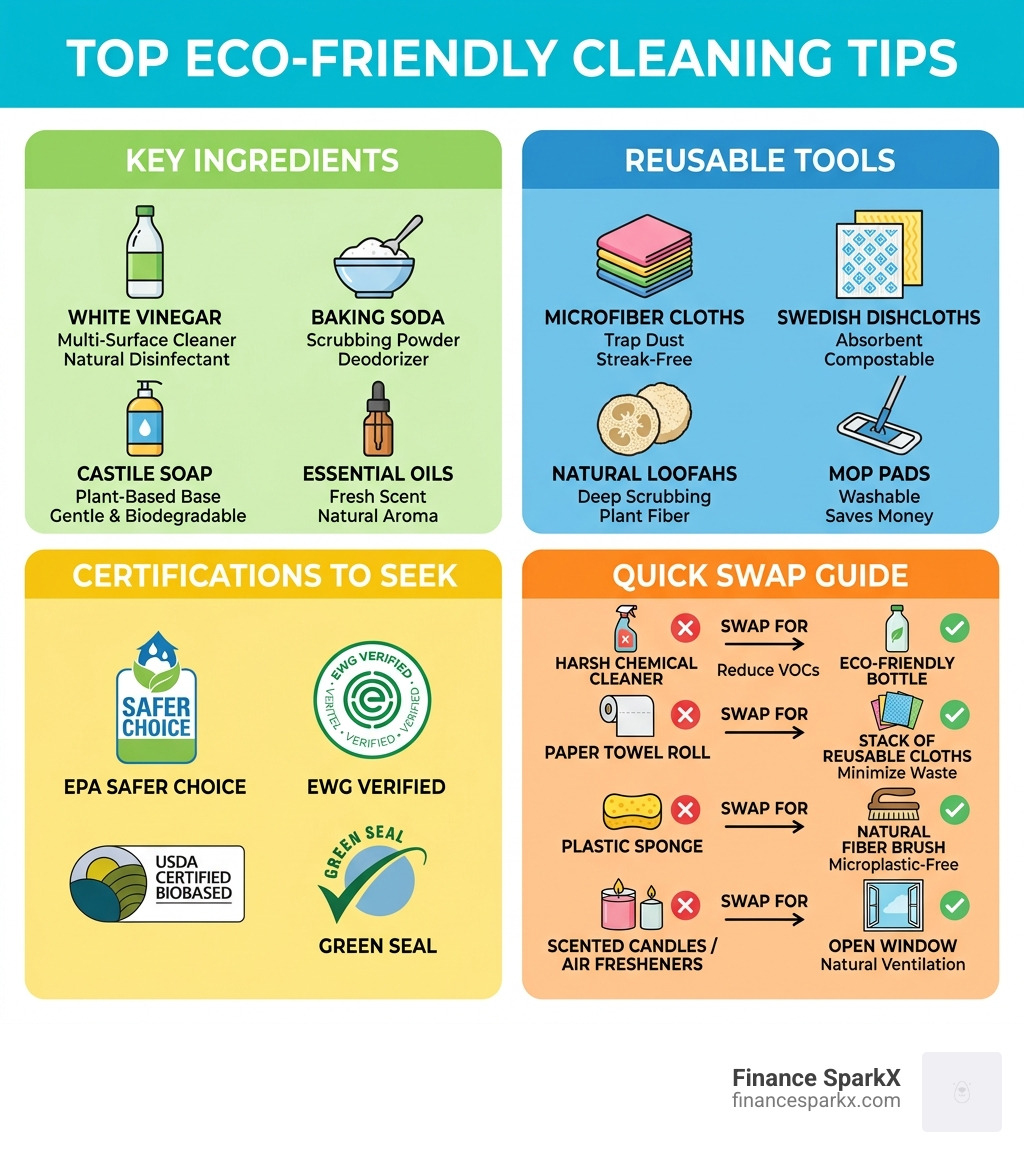
- Swap harsh chemicals for pantry staples like white vinegar, baking soda, and castile soap
- Replace disposable tools with reusable microfiber cloths, Swedish dishcloths, and natural loofahs
- Make your own cleaners using simple recipes that cost a fraction of store-bought products
- Read labels carefully — terms like “natural” and “green” are unregulated and can be misleading
- Look for real certifications such as EPA Safer Choice or EWG Verified when buying commercial products
- Ventilate while cleaning to reduce indoor air pollutant buildup
Most people assume their home is cleanest right after they’ve cleaned it. But research tells a different story.
Indoor air can be two to five times more polluted than outdoor air — and conventional cleaning products are a major reason why. One study found more than 500 volatile organic compounds (VOCs) across just 30 cleaning products, including some labeled “green.”
The products keeping your surfaces spotless may quietly be making the air you breathe worse.
The good news? Switching to a low-waste, eco-friendly cleaning routine doesn’t mean sacrificing a clean home. It means cleaning smarter — with fewer products, less plastic, and ingredients you can actually pronounce.
This guide walks you through everything: the risks of conventional cleaners, the best natural ingredients and tools, room-by-room strategies, DIY recipes, and how to spot greenwashing before it fools you.
The Hidden Cost of Clean: Why Your Routine Needs an Upgrade
In April 2026, we are more aware than ever of how our individual choices ripple out into the wider world. We’ve seen this collective awareness grow in other areas of life—take, for example, the No Kings Protests where over 5 million people joined forces across 2,100 locations to stand up for their beliefs. That same spirit of “doing better” is now transforming how we maintain our homes.
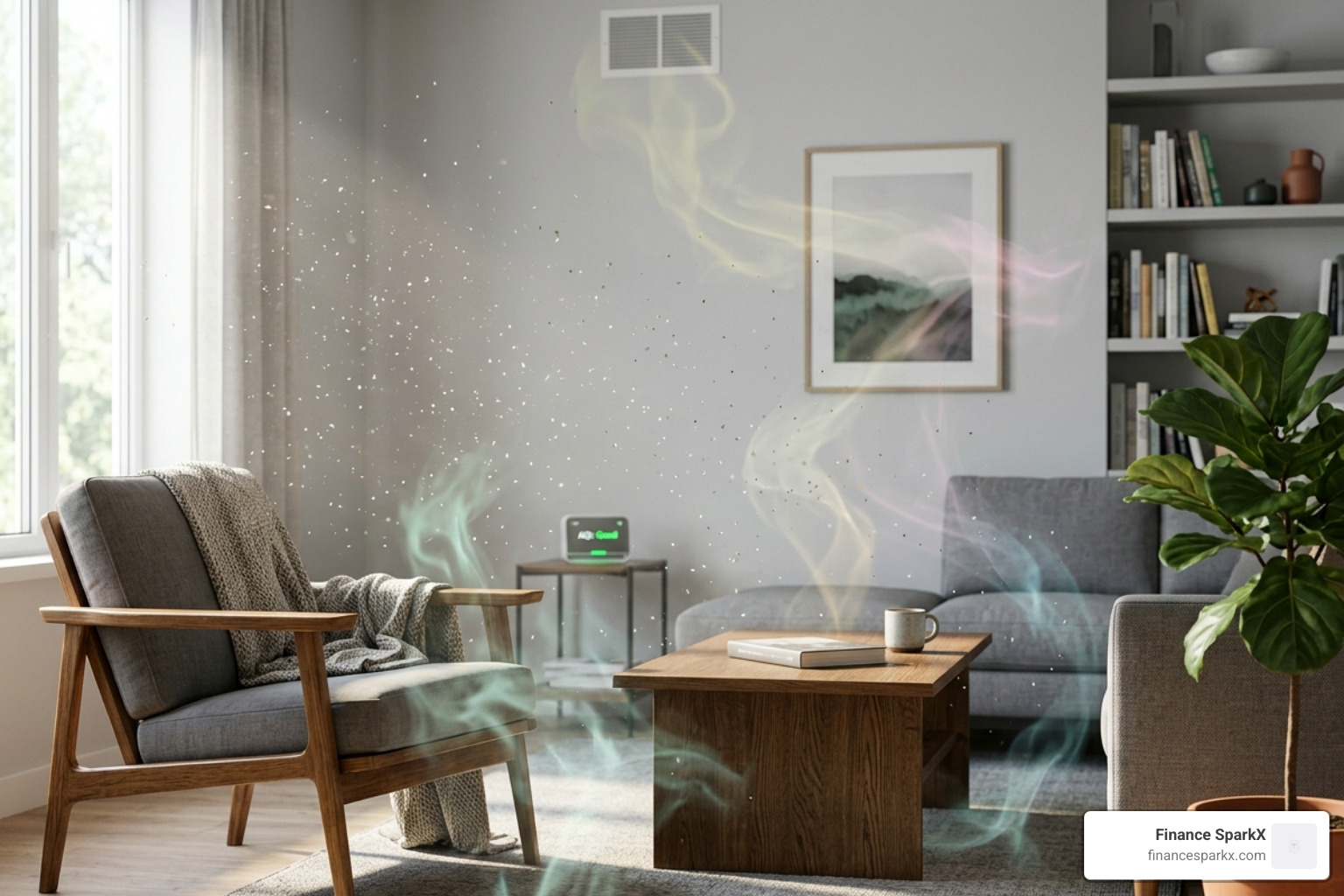
When we spray a conventional “lemon-scented” cleaner, we aren’t just removing a stain. We are often releasing a cocktail of chemicals into our living space. Research has shown that some cleaning products contain over 500 VOCs linked to respiratory issues, increased cancer risks, and reproductive damage. These aren’t just found in heavy-duty industrial cleaners; they are present in everyday sprays, air fresheners, and detergents.
The “clean” smell we’ve been conditioned to love is frequently just a mask for synthetic fragrances. These fragrances are protected as “trade secrets,” meaning manufacturers don’t have to tell us what’s in them. Many contain phthalates, which are known endocrine disruptors. Furthermore, once these chemicals are wiped away, they don’t disappear. They travel down our drains and into our waterways, contributing to significant environmental contamination.
By choosing Eco-friendly cleaning tips, we address three major problems:
- Indoor Air Quality: Reducing the chemical load in the air we breathe.
- Plastic Waste: Moving away from the billions of tons of single-use plastic bottles that clog our landfills.
- Personal Health: Protecting children and pets, who are more vulnerable to toxins because they breathe more air per pound of body weight and spend more time near the floor.
For a deeper dive into how these factors impact your living space, check out this Eco-Friendly Cleaning Guide: Tips for a Greener Home.
The Essential Toolkit for Eco-Friendly Cleaning Tips
You don’t need a cupboard full of specialized bottles to have a spotless house. In fact, most of the “specialized” cleaners sold in supermarkets are just variations of the same few ingredients with different dyes and scents.
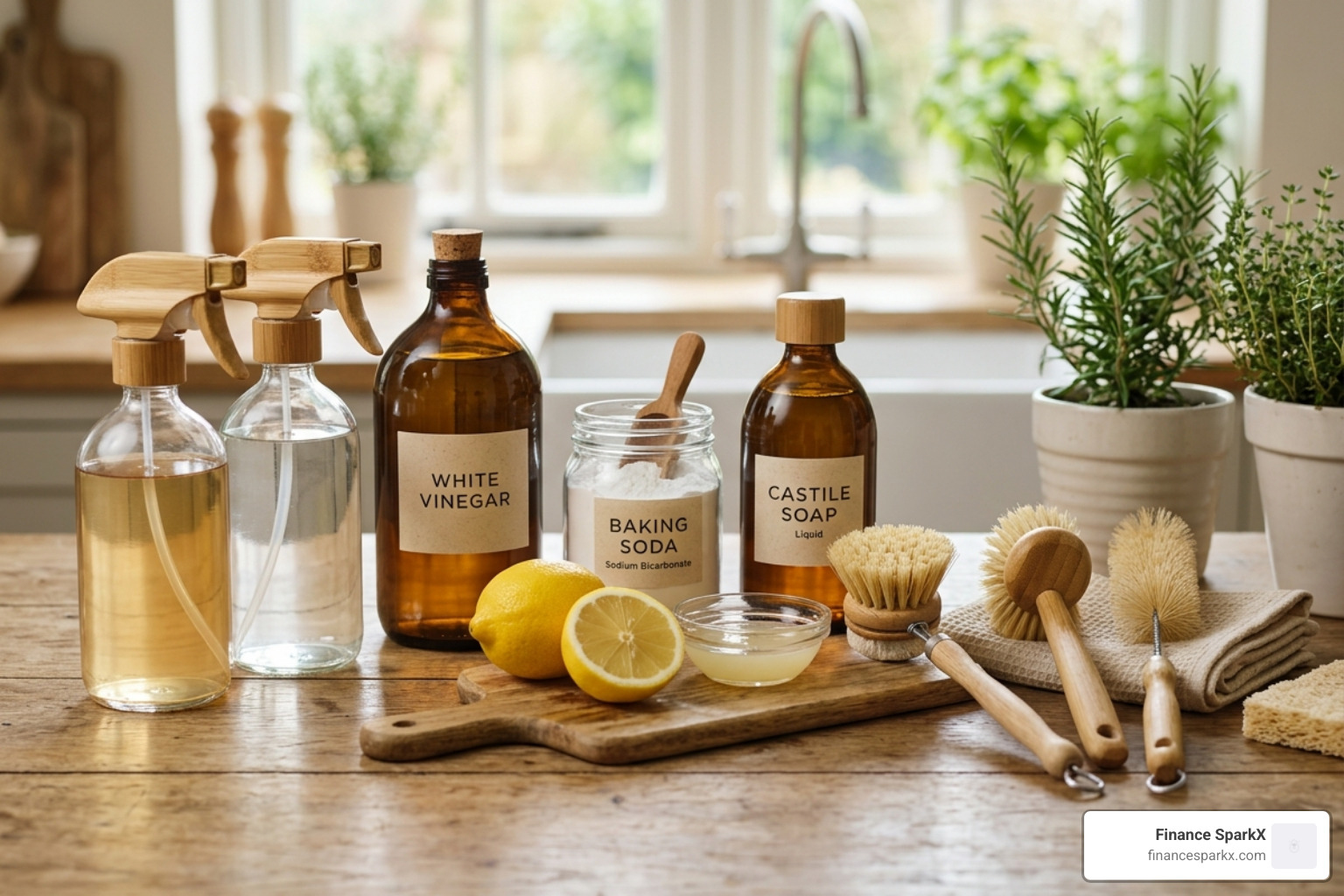
To build your eco-friendly toolkit, start with these “Big Five” ingredients:
- White Vinegar: A natural acid that cuts through grease, removes mineral deposits, and kills some bacteria.
- Baking Soda: A mild abrasive and powerful deodorizer. It’s perfect for scrubbing sinks and absorbing fridge odors.
- Castile Soap: A plant-based, concentrated soap that can be diluted for almost any cleaning job.
- Lemon Juice: Contains citric acid to bleach stains and kill mold. Plus, it smells amazing!
- Hydrogen Peroxide: A natural disinfectant that is safer than bleach but effective at killing germs.
DIY Recipes: Effective Eco-Friendly Cleaning Tips for Every Surface
Making your own cleaners is one of the most satisfying Eco-friendly cleaning tips you can implement. Not only do you know exactly what’s inside, but you also save a significant amount of money.
The All-Purpose Power Spray Mix 1 part white vinegar with 1 part distilled water in a glass spray bottle. Add 10 drops of tea tree oil for its antibacterial properties. This works on countertops, floors, and walls. Note: Never use vinegar on marble or granite, as the acid can etch the stone.
The Streak-Free Glass Secret Combine 200ml warm water, 30ml white vinegar, and 1 teaspoon of cornflour (cornstarch). The cornflour is the “secret ingredient” that breaks down the water bonds, leaving windows and mirrors perfectly clear.
The Heavy-Duty Bathroom Scrub Mix ½ cup of baking soda with enough liquid castile soap to make a thick paste. Use this on tubs, tiles, and sinks. It provides the “elbow grease” without the toxic fumes of traditional cream cleansers.
Shelf Life and Safety: Because these don’t contain synthetic preservatives, water-based DIY cleaners usually stay effective for 2 to 4 weeks. Always label your bottles clearly and keep them out of reach of children. And a golden rule: Never mix vinegar and bleach, as it creates toxic chlorine gas. Also, avoid mixing vinegar and hydrogen peroxide in the same bottle, as it creates peracetic acid, which can be irritating.
Natural Ingredients vs. Conventional Chemicals
| Natural Ingredient | Replaces | Benefit |
|---|---|---|
| White Vinegar | Glass Cleaner / Descaler | Non-toxic, biodegradable, cheap |
| Baking Soda | Abrasive Scrub / Deodorizer | Food-safe, non-scratching |
| Hydrogen Peroxide | Chlorine Bleach | Breaks down into water and oxygen |
| Castile Soap | All-Purpose Detergent | Plant-based, no synthetic surfactants |
| Essential Oils | Synthetic Fragrance | Natural scent, some antimicrobial properties |
A Room-by-Room Guide to Sustainable Home Maintenance
Cleaning is more than just a chore; it’s about maintenance. When we use Eco-friendly cleaning tips, we aren’t just removing dirt; we are preserving the surfaces of our home for the long term.
The Kitchen: Grease and Grime For greasy stovetops, apply a baking soda paste and let it sit for 15 minutes before scrubbing. To freshen your garbage disposal, grind up lemon rinds with a few ice cubes—the ice sharpens the blades while the citrus deodorizes.
The Bathroom: Mold and Soap Scum Prevention is the best eco-tip here. Use a squeegee on glass shower doors after every use to prevent mineral buildup. For existing mold, spray undiluted white vinegar or a 3% hydrogen peroxide solution, let it sit for 10 minutes, and scrub with a stiff bamboo brush.
The Bedroom and Living Areas: Dust and Air Quality Dust is mostly comprised of skin cells and fabric fibers, but it also traps chemicals and allergens. Skip the disposable duster and use a damp microfiber cloth. Microfiber is a powerhouse in the eco-cleaning world; it can remove up to 99% of bacteria from surfaces using just water. For carpets, sprinkle baking soda mixed with a few drops of lavender oil, let it sit for 20 minutes, and vacuum it up to neutralize odors.
For official guidance on when heavy-duty cleaning is necessary versus routine maintenance, refer to the CDC’s guide on cleaning and disinfecting your home.
Mastering the Routine: Productivity and Eco-Friendly Cleaning Tips
At Finance SparkX, we believe that sustainability and productivity go hand-in-hand. You don’t need to spend all day cleaning to have a green home.
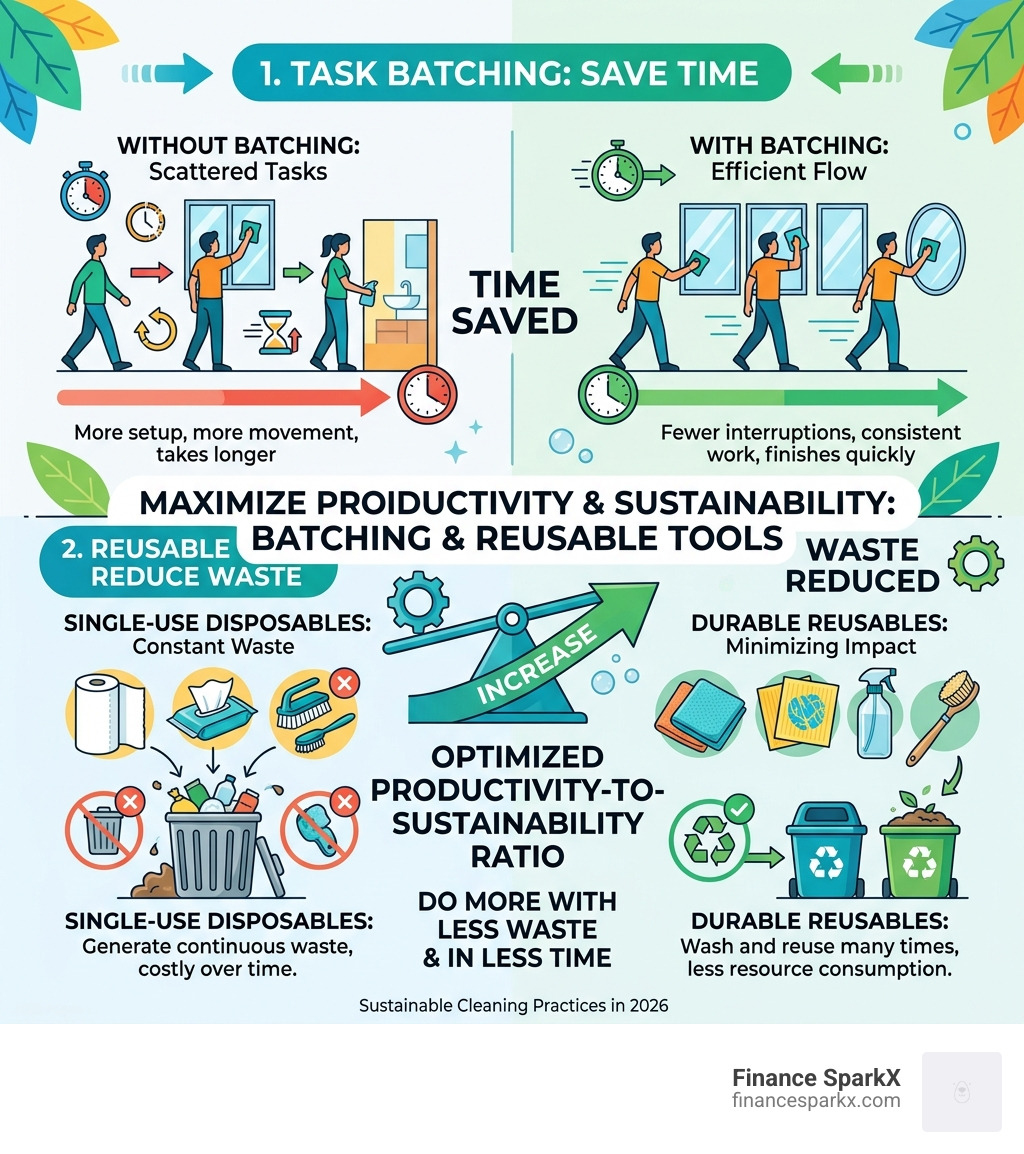
- Task Batching: Group similar chores together. For example, do all your glass surfaces at once to minimize the number of times you need to mix or grab your spray bottle.
- The “One-Fill-One-Use” Mindset: Instead of buying five bottles of cleaner, use one high-quality glass bottle and refill it from bulk concentrates or DIY recipes. This reduces decision fatigue and clutter.
- Mechanical Action Over Chemicals: Eco-friendly cleaning relies more on “elbow grease” and the right tools. A good loofah or a Swedish dishcloth (which can replace up to 17 rolls of paper towels!) does the heavy lifting so you don’t have to rely on harsh solvents.
- Air Purification: While you clean, open the windows for 10 minutes to flush out any lingering particles. Incorporate indoor plants like Spider Plants or Snake Plants, which NASA research suggests can help absorb common indoor pollutants.
Beyond the Scrub: Safety, Disinfection, and Greenwashing
As we move through 2026, the market is flooded with products claiming to be “earth-friendly.” But how do you know what’s real?
Spotting Greenwashing Terms like “natural,” “green,” and “non-toxic” are often just marketing fluff. They have no legal definition. To find truly safe products, look for third-party certifications:
- EPA Safer Choice: Verified to contain only the safest possible ingredients.
- EWG Verified: Meets the Environmental Working Group’s strictest standards for health and transparency.
- Leaping Bunny: Guarantees no animal testing.
The Truth About Disinfection There is a big difference between cleaning (removing dirt and some germs) and disinfecting (killing 99.9% of germs). For everyday use, cleaning is usually enough. However, if someone in the house is sick, you may need to disinfect.
Natural ingredients like vinegar are great cleaners, but they are not registered disinfectants. If you need a green way to kill viruses, reach for hydrogen peroxide or thoroughly hot water (above 140°F/60°C). Disinfectants require “contact time”—the surface must stay wet with the product for several minutes to actually kill the pathogens.
Safe Disposal If you are currently transitioning to a greener routine, don’t just pour your old chemical cleaners down the drain. This can damage septic systems and pollute local water. Instead, search for a “Household Hazardous Waste” (HHW) facility in your area to dispose of old bleach, ammonia, and solvent-based cleaners safely.
Frequently Asked Questions about Eco-Friendly Cleaning
Does eco-friendly cleaning actually kill germs and viruses?
Yes and no. Most Eco-friendly cleaning tips focus on removing germs through mechanical action (scrubbing with soap and water), which is highly effective for daily health. For verified disinfection against specific viruses like influenza, you should use EPA-registered products or 3% hydrogen peroxide, ensuring you follow the recommended contact time on the label.
Is making your own cleaners more expensive than buying them?
Actually, it’s much cheaper! While the initial cost of a large bottle of castile soap or a gallon of vinegar might seem higher than a single spray bottle of a conventional cleaner, those ingredients are highly concentrated. DIY formulas can reduce your annual cleaning spend by an estimated 60% to 80%.
How do I know if a store-bought product is truly green or just greenwashed?
Ignore the pictures of leaves and flowers on the front. Flip the bottle over. Truly green companies will list all their ingredients, not just “surfactants” or “fragrance.” Look for independent seals of approval like the EPA Safer Choice or EWG Verified logos.
Conclusion
At Finance SparkX, we are passionate about the intersection of a balanced lifestyle and a sustainable planet. Transitioning to a green cleaning routine isn’t about achieving perfection overnight; it’s about making small, intentional swaps that add up over time. By using these Eco-friendly cleaning tips, you aren’t just protecting the environment—you’re creating a healthier, more productive sanctuary for yourself and your loved ones.
Whether you start by swapping your paper towels for Swedish dishcloths or by mixing your first bottle of vinegar spray, every step counts. A cleaner home shouldn’t come at the cost of a cleaner planet.
Start your greener journey today and discover how simple, sustainable habits can transform your home and your health.
