
Accessorize Your Home the Sustainable Way
Why Sustainable Home Accessories Are Worth Your Attention in 2026
Sustainable home accessories are decor items made from natural, recycled, or ethically sourced materials — free from harmful chemicals like VOCs and formaldehyde — that are better for your health, your home, and the planet.
Here are the top picks worth knowing about:
- Eco-friendly lighting — lamps made from bio-based PLA, wood fibers, and repurposed steel (e.g., Kakta Table Lamp, Kakta Pendant)
- Handcrafted stone decor — natural onyx bowls, trays, and vases with no synthetic treatments
- Sustainable kitchen accents — FSC-certified wood holders, plant-based bioplastic vases, and plastic-free tools
- Natural fiber baskets and storage — rattan, seagrass, and organic linen pieces
- Artisan-made decorative trays — handmade with natural pigments and cork bases
Most conventional home decor is made with materials that quietly work against you. Particle board releases formaldehyde. Synthetic finishes off-gas VOCs. Flame-retardant coatings linger in indoor air for years.
The problem isn’t just environmental — it’s personal.
The good news: in 2026, the market for genuinely sustainable, non-toxic home accessories has never been stronger. From 3D-printed lamps made with Swedish forest scrap fibers to hand-carved Peruvian wood holders that support indigenous communities, beautiful and responsible options now exist at nearly every price point.
This guide cuts through the noise and shows you exactly what to look for — and what to buy.
What Defines Sustainable Home Accessories?

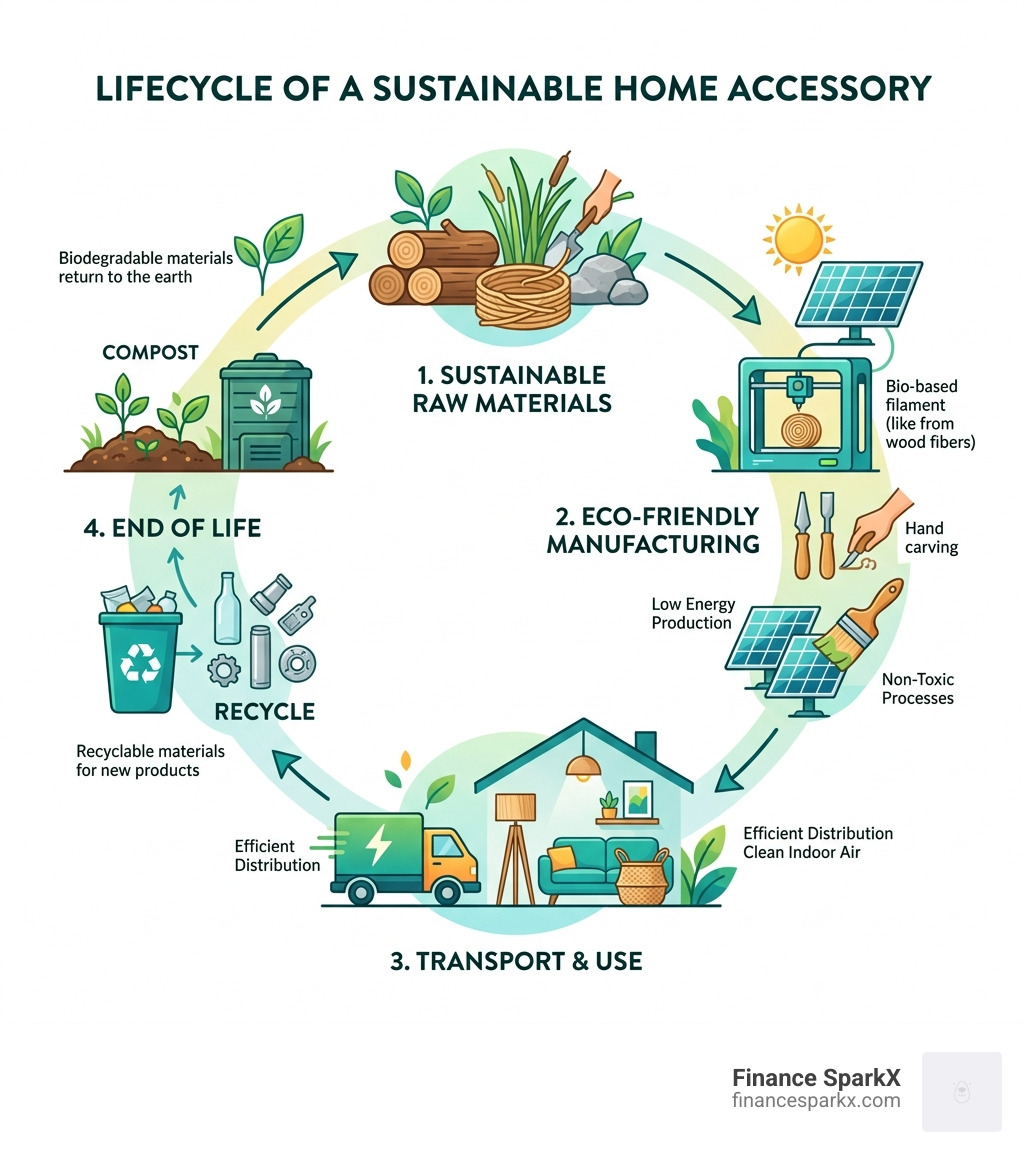
When we talk about sustainable home accessories, we are looking at a product’s entire journey. It isn’t just about what the item is made of, but how it impacts the world from the moment it’s created until the day it’s no longer needed.
The biggest difference between sustainable and conventional decor lies in the “invisible” ingredients. Conventional items often rely on Volatile Organic Compounds (VOCs) and formaldehyde. These chemicals are common in mass-produced glues, paints, and synthetic fabrics. Because modern homes are increasingly airtight to save energy, these toxins get trapped inside, leading to poor indoor air quality.
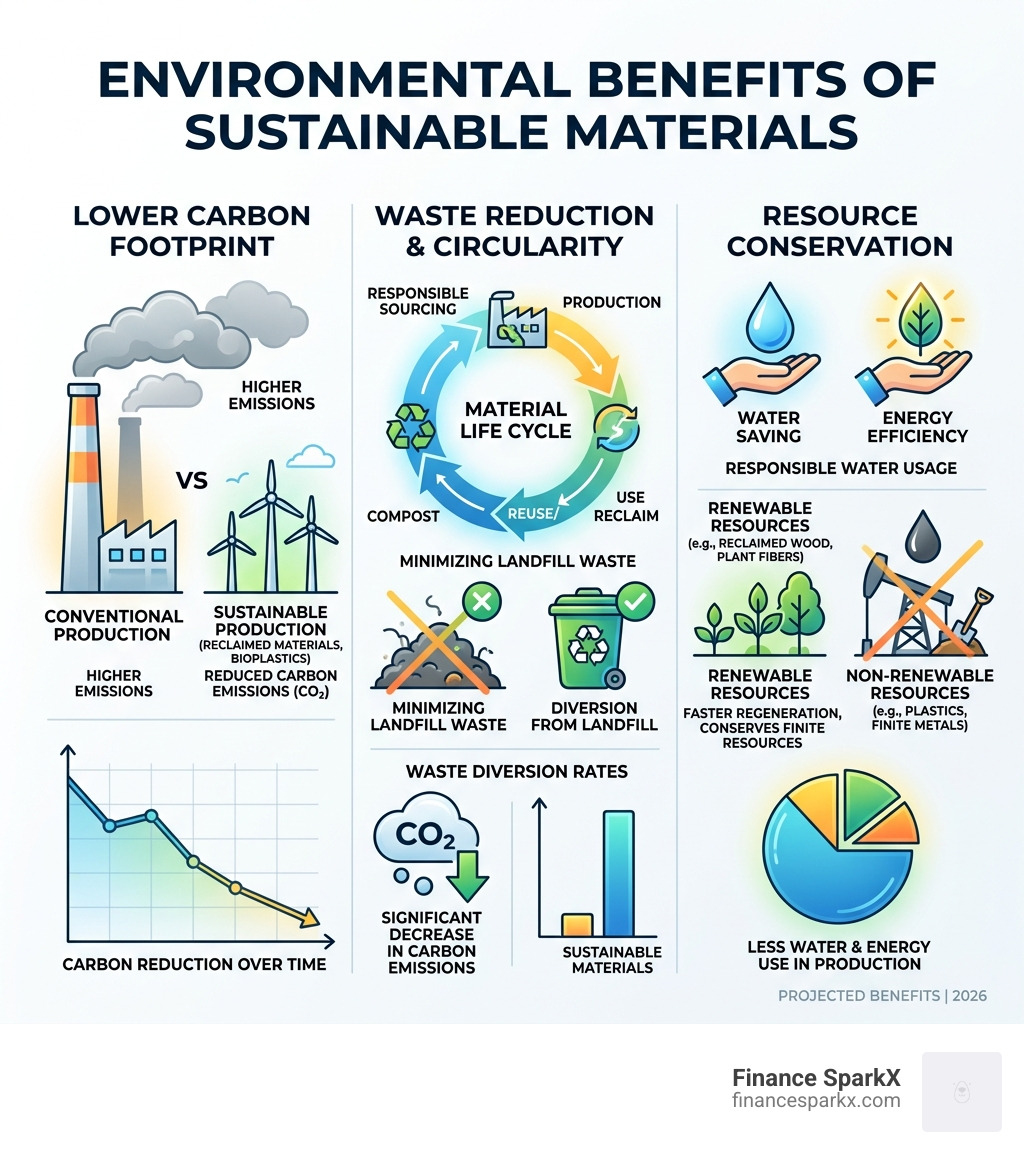
Sustainable accessories, by contrast, prioritize a circular economy. This means they are designed to be repaired, recycled, or safely composted. They often utilize regenerative design, where the materials used (like bamboo or certain bio-plastics) actually help restore ecosystems rather than depleting them.
| Feature | Conventional Decor | Sustainable Accessories |
|---|---|---|
| Primary Materials | Plastic, MDF, Particle Board | Solid Wood, Stone, Bio-composites |
| Finishes | Synthetic lacquers, VOC-heavy paints | Natural oils, waxes, plant pigments |
| Health Impact | Potential off-gassing of toxins | Nontoxic and hypoallergenic |
| End of Life | Landfill-bound | Compostable, recyclable, or repairable |
| Supply Chain | Complex, multi-country shipping | Often localized or Fair Trade |
Common Materials in Sustainable Home Accessories
To choose the right sustainable home accessories, you need to know your materials. Here are the stars of 2026:
- Reclaimed Wood and Bio-based PLA: Innovations in 3D printing have changed the game. The Kakta Table Lamp Large is a perfect example, utilizing PLA (polylactic acid) mixed with wood scrap fibers from the Swedish forest industry.
- Recycled and Repurposed Steel: Using repurposed steel from industrial side streams can save up to 90-95% in emissions compared to virgin steel production. It’s a massive win for the climate.
- Natural Stone: Materials like Onyx are not only stunning but also durable. They are formed over millions of years and require significantly less energy to process than synthetic plastics.
- Eco-friendly Composites: Items like the Arco Decorative Tray – handmade tray – Ember Collective use natural pigments and wax sealers, proving that functional items can be both beautiful and earth-friendly.
- Natural Fibers: Rattan, seagrass, and organic linen remain staples because they are renewable and biodegradable.
Key Certifications for Eco-Friendly Decor
Don’t just take a brand’s word for it. Look for these “gold standard” labels:
- FSC (Forest Stewardship Council): Ensures wood is harvested responsibly without destroying forests.
- GOTS (Global Organic Textile Standard): The leading standard for organic fibers, covering both environmental and social criteria.
- OEKO-TEX: Certifies that textiles are free from harmful levels of more than 100 substances.
- Fair Trade: Guarantees that artisans were paid fair wages and worked in safe conditions.
- CertiPUR-US: Specifically for foam products, ensuring they are made without ozone depleters or heavy metals.
Top Sustainable Home Accessories for a Modern Interior
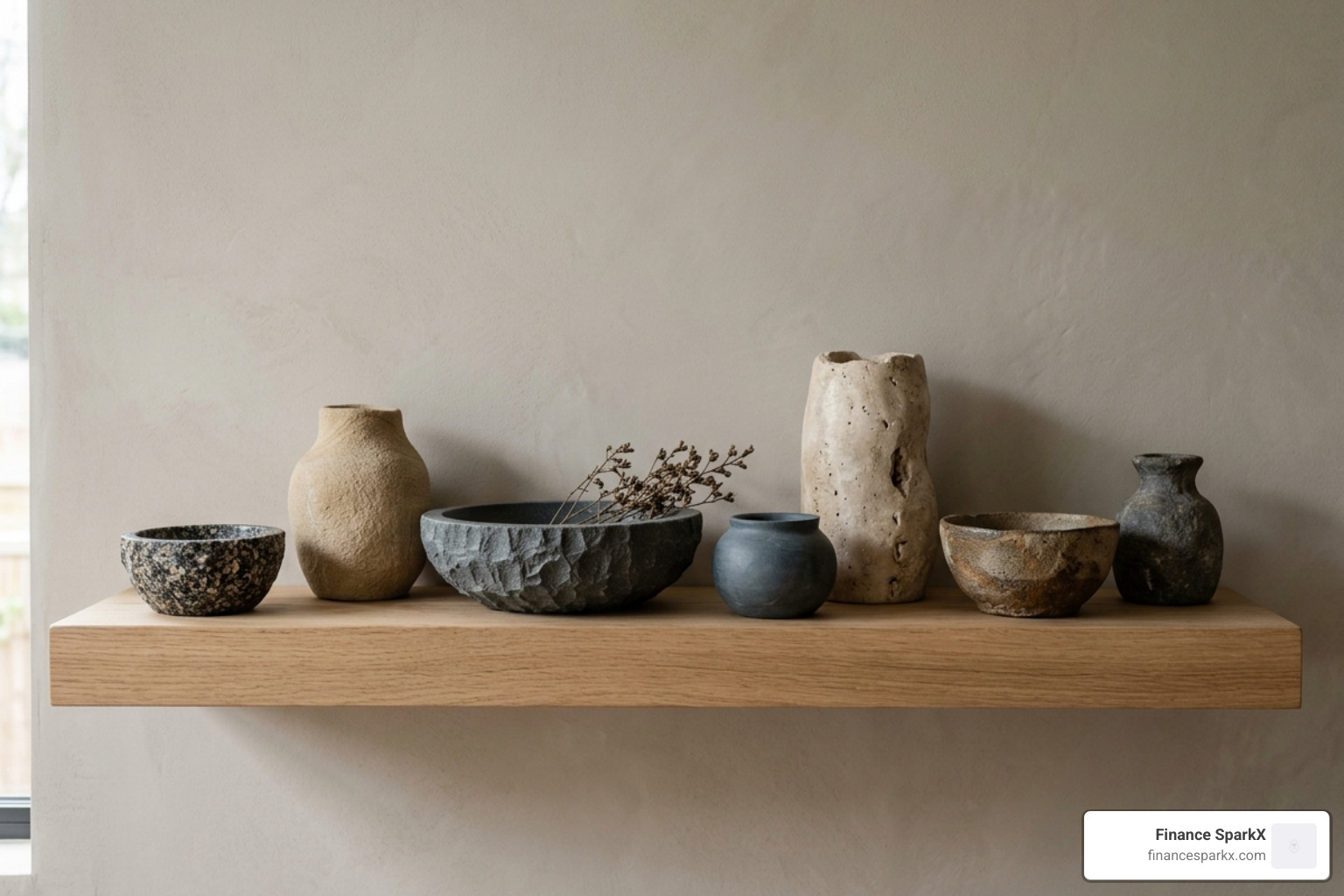
Modern interiors in 2026 are moving away from “fast furniture” and toward organic minimalism. This style embraces the Japanese philosophy of Wabi-Sabi—finding beauty in imperfection. Whether it’s a tiny air bubble in a handmade tray or a unique grain in a piece of stone, these variations tell a story of authenticity.
Eco-Friendly Lighting and Sculptural Accents
Lighting is the jewelry of the home, but it shouldn’t cost the earth. The Kakta Pendant demonstrates how high design meets high ethics. By using 3D-printing technology, manufacturers can use specific blends—like 40% wood scrap fibers or 10% cellulose—to create shades that diffuse a soft, ambient glow.
The use of repurposed industrial steel for bases and frames further reduces the carbon footprint. Best of all, these pieces are often designed with replaceable parts, so if a cord wears out, you don’t have to toss the whole lamp.
Sustainable Kitchen and Dining Accents
The kitchen is often the most plastic-heavy room in the house, but we can change that. Switching to a Sustainable Wood Paper Towel Holder is a great start. These are often made from Capirona wood sourced from the Peruvian Amazon, supporting over 10 native communities through localized supply chains.
For floral arrangements, consider the Timber Vase – Minted Space. It blends reclaimed wood with plant-based bioplastics to create a sculptural centerpiece that is waterproof yet compostable at the end of its life.
Handcrafted Stone and Decorative Storage
If you want something that will literally last a lifetime, look to stone. Brands like SAÉA | Eco-Friendly Home Goods | Sustainable Home Decor utilize natural Onyx from Balochistan, Pakistan. Because stone is non-toxic and non-allergenic, it doesn’t leach chemicals into your environment.
Onyx pedestal bowls and catchall trays are perfect for organizing jewelry or keys. They are finished with non-toxic sealers, maintaining the stone’s natural translucency while ensuring the piece remains durable for decades.
Practical Tips for Selecting Sustainable Home Accessories
Buying sustainable home accessories is an investment in your future. Here is how we recommend shopping to get the most value:
- Prioritize Localized Supply Chains: Look for “one-country” models. When materials are sourced and manufactured in the same region, the carbon footprint from shipping drops significantly.
- Check for Carbon-Neutral Shipping: Many platforms now offset the carbon emissions of every shipment.
- Avoid “The Nasties”: Stay away from chemical flame retardants and petroleum-based finishes. If you can’t pronounce the ingredients on the label, it’s probably not great for your indoor air.
- Look for Mechanical Joinery: In wooden accessories, look for pieces held together by clever woodworking (like dovetails) rather than toxic glues.
- Embrace Vintage Curation: The most sustainable item is the one that already exists. Mixing vintage finds with new sustainable home accessories creates a layered, “collected” look that feels much more personal than a showroom.
Frequently Asked Questions about Sustainable Decor
What is the difference between nontoxic and sustainable accessories?
While they often go hand-in-hand, they aren’t identical. “Sustainable” refers to the environmental impact—how the materials were grown and whether they are renewable. “Nontoxic” refers to the impact on you—ensuring the product doesn’t off-gas harmful chemicals like formaldehyde into your home. We always aim for products that are both.
How do sustainable accessories improve indoor air quality?
Conventional decor can release VOCs for years. By choosing untreated hardwoods, natural stone, and plant-based fabrics, you eliminate these sources of pollution. This leads to fewer respiratory irritants and a healthier living environment for pets and humans alike.
Are handcrafted artisan pieces better for the environment?
Generally, yes. Small-batch production uses less energy than massive factories. Furthermore, supporting artisans helps preserve ancestral traditions and provides fair wages to global communities. When you buy a handmade tray or a hand-carved vase, you are supporting a person, not a giant corporation.
Conclusion
At Finance SparkX, we believe that your home should be a sanctuary that fuels your productivity and peace of mind. Integrating sustainable home accessories into your decor isn’t just a trend for 2026; it’s a foundational step toward a balanced, eco-conscious lifestyle.
By choosing items that are durable, non-toxic, and ethically made, you reduce the “decision fatigue” of constantly replacing broken, cheap goods. You create a space that looks beautiful and works for your health, not against it. Whether you are starting with a single 3D-printed lamp or a set of hand-carved stone coasters, every conscious choice counts.
Ready to transform your space? Start your sustainable home transformation today and discover how a greener home leads to a more productive life.
