
A Beginner’s List of Unstoppable Indoor Succulents
Why Indoor Succulents for Beginners Are the Easiest Way to Go Green at Home
Indoor succulents for beginners are one of the simplest, lowest-effort ways to bring life and style into your home — no green thumb required.
Here are the best options to start with right now:
| Succulent | Light Needs | Watering Frequency | Pet Safe? |
|---|---|---|---|
| Snake Plant | Low to bright indirect | Every 2-3 weeks | No |
| Jade Plant | Bright indirect | When top soil is dry | No |
| Aloe Vera | Bright direct | Every 3-4 weeks | No |
| Zebra Plant (Haworthia) | Low to bright indirect | Every 2-3 weeks | Yes |
| Christmas Cactus | Bright indirect | Once a week | Yes |
| Panda Plant | Bright indirect | Just enough to prevent shriveling | Yes |
| Pencil Cactus | Bright direct | Every 3-4 weeks | No |
Succulents store water in their thick leaves and stems. That means they can go weeks without attention — perfect if you’re busy, forgetful, or just starting out.
But here’s the honest truth: not every succulent sold at your local shop is actually easy to keep alive. Many popular varieties look beautiful on the shelf but struggle indoors without the right conditions. The key is choosing the right species from the start.
Most beginners fail not from neglect, but from too much care — overwatering is the number one killer of indoor succulents. The good news? Once you understand a few simple rules about light, water, and soil, these plants practically take care of themselves.
In April 2026, succulents remain one of the top trending plants for eco-conscious home decor — and for good reason. They’re low waste, long-lived, and endlessly stylish.
Below, we break down the best beginner-friendly indoor succulents, how to care for them, and how to avoid the most common mistakes.
Top 7 Low-Maintenance Indoor Succulents for Beginners
When we talk about indoor succulents for beginners, we are looking for plants that “thrive on neglect.” In our experience at Finance SparkX, the best plants for a productive home office or a balanced living space are those that don’t demand a daily schedule. Here are the seven “unstoppable” varieties that will make you look like a pro gardener by April 2026.
1. Snake Plant (Sansevieria trifasciata)

If you are looking for the absolute king of low-maintenance plants, the Snake Plant is it. Native to tropical West Africa, these plants are famous for their vertical, sword-like leaves. They are perfect for dark corners or offices because they tolerate low light better than almost any other succulent. They also act as natural air purifiers, making them a staple for a healthy home environment. We recommend watering them only once every 2-3 weeks; they would much rather be bone-dry than sitting in a puddle.
2. Jade Plant (Crassula ovata)
Often called the “Money Plant,” the Jade Plant is a symbol of prosperity and resilience. These South African natives look like miniature trees with their thick, woody stems and fleshy green leaves. They love bright, indirect light and can live for decades—some are even passed down through generations! The trick to a happy Jade is to touch the top soil; if it’s dry, it’s time for a drink.
3. Aloe Vera
Widespread and incredibly useful, Aloe Vera is a must-have. Not only does it look great on a sunny kitchen windowsill, but its sap has been used for centuries to soothe burns and heal wounds. It needs bright light (ideally from a South or West window) and only requires watering every 3-4 weeks. It’s a functional piece of “living decor” that fits perfectly into a sustainable lifestyle.
4. Zebra Plant (Haworthiopsis)
The Zebra Plant as a Houseplant is a beginner’s dream. These small, slow-growing succulents have striking white horizontal stripes (tubercles) on dark green leaves. They stay compact, usually under 6 inches, making them ideal for bookshelves or desks. Unlike many other succulents, they are quite happy in partial shade and are generally non-toxic to pets.
5. Christmas Cactus (Schlumbergera)
Unlike the desert-dwelling varieties, the Christmas Cactus is a tropical succulent from the mountains of Brazil. It prefers a bit more humidity and indirect light. It’s famous for its stunning winter blooms. To keep it happy, we suggest a “pebble tray” (a tray with water and stones under the pot) to boost humidity without drowning the roots.
6. Panda Plant (Kalanchoe tomentosa)
This Madagascar native is covered in tiny silvery hairs, giving it a soft, fuzzy texture. The edges of the leaves often have dark brown spots, resembling a panda’s fur. It’s incredibly hardy and can go a long time without water. In fact, you should only water it just enough to keep the leaves from shriveling.
7. Pencil Cactus (Euphorbia tirucalli)
For those who want a unique, geometric look, the Pencil Cactus offers a mass of thin, green branches. It’s a fast grower but be careful: its milky sap is toxic and can irritate the skin. Always wear gloves if you’re pruning or propagating this one. It loves the brightest spot in your house and very little water.
Pet-Safe Succulents for Beginners
If you share your home with furry friends, safety is a priority. Here are the top pet-safe options from our list:
- Zebra Plant (Haworthiopsis)
- Christmas Cactus
- Echeveria (most varieties)
- Burro’s Tail
- Hens and Chicks
Essential Care: Light, Water, and Soil Basics
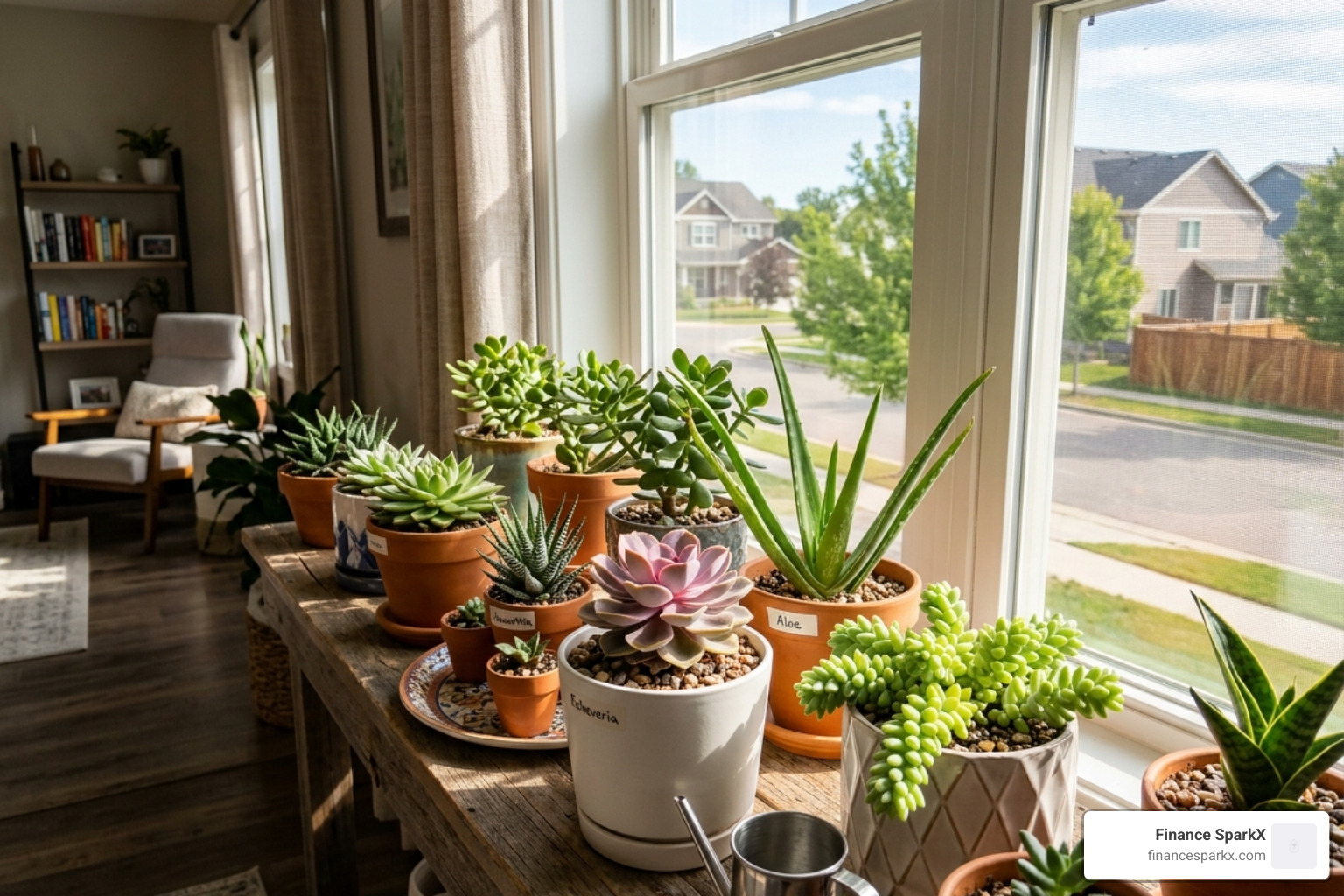
To keep your indoor succulents for beginners thriving, you need to mimic their natural arid habitats. This means focusing on three pillars: drainage, light, and the “wet-dry” cycle.
Light and Location: Finding the Best Spot for Indoor Succulents for Beginners
Most succulents need about 10 hours of bright light daily. However, “bright light” doesn’t always mean “direct scorching sun.”
- South-Facing Windows: These are the “gold mines” for succulents like Aloe and Jade. They provide the most consistent, intense light.
- East/West Windows: Great for Haworthia or Zebra plants that prefer bright but indirect light.
- The “Etiolation” Warning: If your succulent starts stretching out, becoming tall, pale, and “leggy,” it’s screaming for more light. This is called etiolation.
- Rotation: We always recommend rotating your pots every week. This ensures all sides of the plant get equal light, preventing them from leaning toward the window.
Watering and Soil: Preventing Root Rot in Indoor Succulents for Beginners
The fastest way to kill a succulent is with kindness—specifically, too much water. Succulents are prone to root rot if they sit in damp soil.
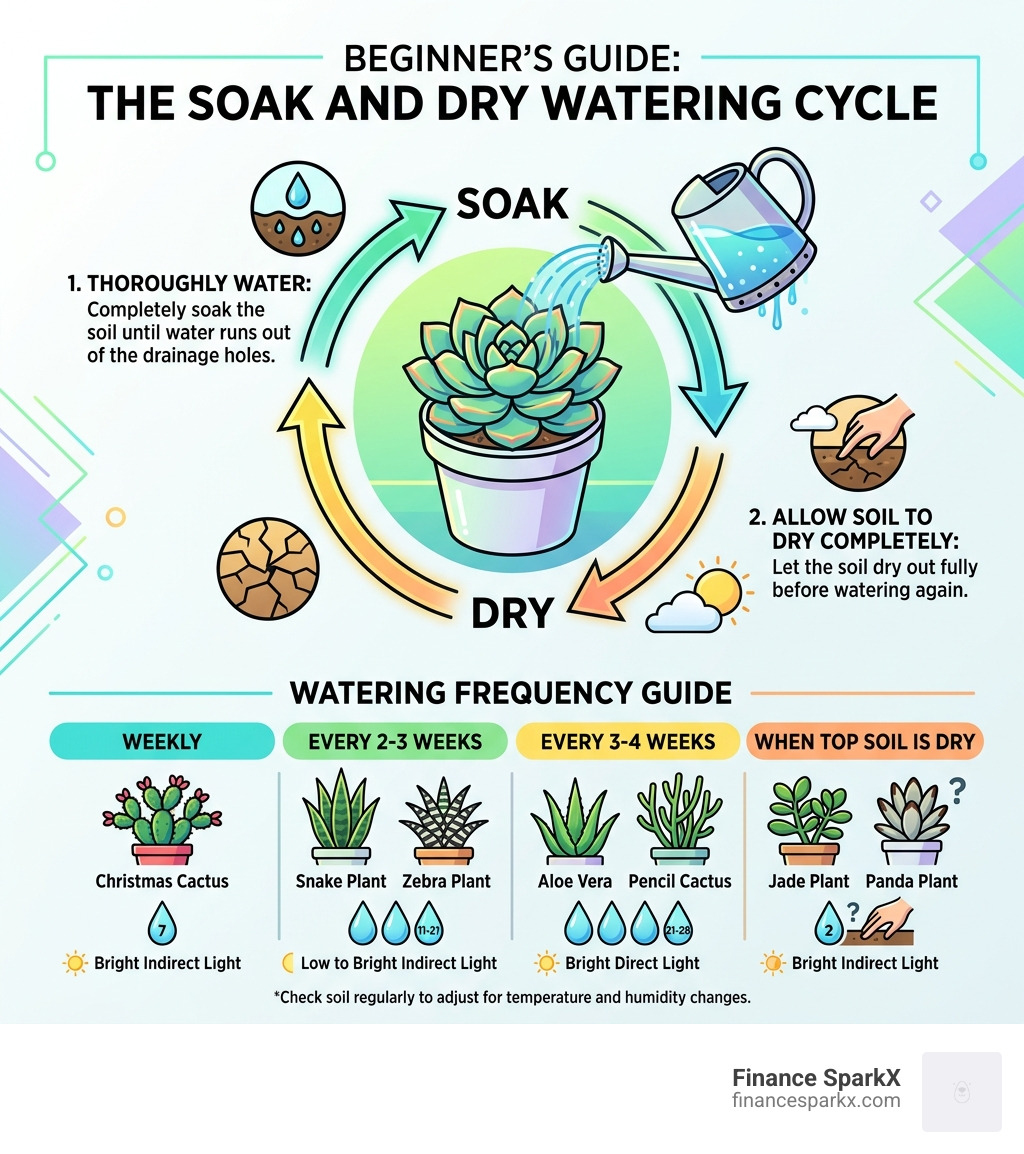
The “Soak and Dry” Method:
- Pour water into the soil until it runs out of the drainage holes at the bottom.
- Empty any excess water from the saucer immediately.
- Wait until the soil is completely dry (check 2-3 inches down) before watering again.
Soil and Pots Table: Choosing the right home for your plant is half the battle.
| Material | Drainage Level | Best For |
|---|---|---|
| Terracotta/Clay | High (Porous) | Most succulents; allows soil to breathe and dry fast. |
| Plastic | Low | Moisture-loving succulents like Christmas Cactus. |
| Glazed Ceramic | Medium | Decorative use; ensure it has a large drainage hole. |
| Glass | Very Low | Avoid for beginners; no drainage leads to rot. |
Pro Tip: Always use a “Cactus and Succulent” potting mix. These are amended with perlite, sand, or pumice to ensure “sharp drainage.” At Finance SparkX, we love adding an extra handful of pumice to our mixes to maximize aeration and support a sustainable, long-term root environment.
Propagation and Troubleshooting Common Issues
One of the most rewarding parts of being a plant parent is propagation—growing new plants for free! Most indoor succulents for beginners are incredibly easy to multiply.
How to Propagate
- Offsets (Pups): Plants like the Snake Plant or Haworthiopsis concolor | Succulents and Sunshine produce “babies” at their base. Simply wiggle these free (ensure they have some roots), let the cut end “callus” (dry out) for 24 hours, and pop them in new soil.
- Leaf Cuttings: For Jade or Echeveria, gently twist off a healthy leaf. Let it sit on a dry paper towel for a few days until a scab (callus) forms. Place it on top of succulent soil and mist the roots occasionally until a tiny new plant appears.
Common Problems and Fixes
- Mealybugs: These look like tiny bits of white cotton on your plants. Don’t panic! Dip a cotton swab in 70% isopropyl alcohol and dab them directly.
- Yellowing/Mushy Leaves: This is a classic sign of overwatering. Stop watering immediately, check the roots for rot (black, slimy roots), and consider repotting into fresh, dry soil.
- Shriveled, Wrinkled Leaves: Your plant is thirsty! Give it a thorough soak.
- Leaf Drop: If healthy leaves are falling off at the slightest touch, it usually means the soil has been too wet for too long.
Frequently Asked Questions about Beginner Succulents
How often should I water my indoor succulents for beginners?
Typically, once every 2 to 3 weeks is the “sweet spot.” However, this changes based on the season. In the summer (active growth), they may need water every 10-14 days. In the winter (dormancy), you might only water once a month. Always let the soil dry out completely first.
Do succulents need direct sunlight to survive?
While most love bright light, many actually prefer bright indirect light. Direct afternoon sun through a window can actually sunburn the leaves of sensitive plants like the Zebra Plant. Aim for 6-10 hours of bright light, but use a sheer curtain if the sun feels too intense.
Why are the leaves on my succulent falling off?
If the leaves are mushy and yellow, it’s overwatering. If they are dry and crispy, it’s underwatering. If they look perfectly healthy but are just dropping, it might be a lack of light or a sudden temperature shock (like being too close to an April 2026 air conditioning vent).
Conclusion
Starting a succulent collection is more than just a decor choice; it’s a step toward a more balanced, intentional lifestyle. At Finance SparkX, we believe that integrating low-maintenance nature into your daily routine boosts productivity and fosters a sense of calm. By choosing the right indoor succulents for beginners and following these simple care steps, you can create a beautiful, sustainable indoor garden that lasts for years.
Ready to level up your home and lifestyle? More info about lifestyle services is available on our main site, where we share the latest in eco-conscious decor and home improvement. Happy planting!
