Dark Entryway Ideas: Brightening an Entrance With No Window
A problem-and-fix guide to a dim, windowless entrance: add light at console height, lift the floor and walls, place a mirror well, or lean into a deep, moody look.
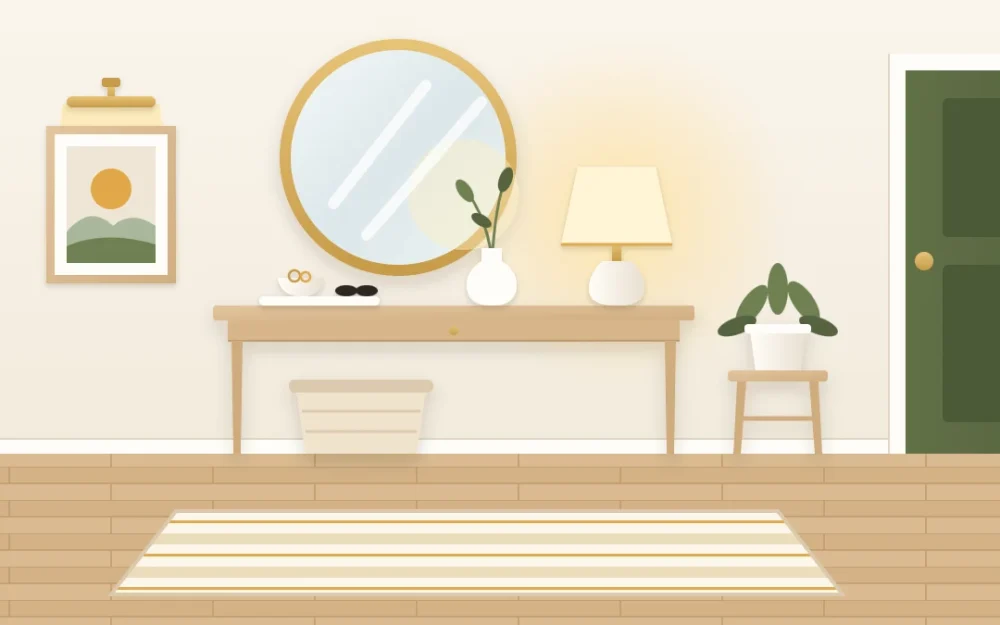
A dark entryway is rarely dark for one reason. No window is the obvious cause, but the gloom usually comes from several smaller things stacked together: a single overhead light, a floor that soaks up what little brightness there is, walls that give nothing back.
That is good news, because each of those has its own fix, and none of them requires a new window. Work through the six problems below, find the ones that describe your entrance and start with whichever is easiest. An entryway with no natural light can still feel bright, warm and welcoming.
Problem: the only light comes from overhead
One ceiling light throws brightness straight down and leaves faces, walls and corners in shadow. The space looks flat, and oddly dimmer than the bulb would suggest.
The fix: add a second source at console height. A table lamp with a pale shade spreads light sideways across the wall, which is where the eye judges how bright a room is. Where there is no socket, a rechargeable lamp does the job. A small battery picture light over a print adds a third pool of glow. The guide to layering light at the front door explains how the layers work together.
Problem: a dark floor swallows the light
Dark wood, slate-colored tile or a deep-toned mat absorbs light from above instead of returning it. In a windowless entryway, the floor may be the largest dark surface in view.
The fix: cover part of it with a pale rug. Cream, oat, soft stripes or a light pattern on a pale ground all lift the lower half of the space. A pattern is kinder to daily use by the door than a plain pale surface, and a flat weave lets the door pass over it. A rug pad suited to your floor type helps it stay in place.
Problem: matte, dark walls give nothing back
Deep, flat wall colors absorb light, and without daylight there is nothing to make up for it. Mid-tones can be worse than they look on a sample: in a dim space they tend to turn muddy.
The fix: if you are able to paint, the usual light colors for a dark entry are warm whites, creams and pale neutrals with a yellow or pink undertone, which read as soft under lamplight where cooler whites can look flat and gray. A finish with a slight sheen returns a little more light than a dead-flat one. The guide to choosing an entry palette covers undertones and how to limit the scheme.
If painting is not an option, bring in one pale panel by other means: a large light-toned artwork, a pale fabric hanging or a light console against the wall. In a rental, check your lease or ask before making changes.
Problem: nothing bounces light around
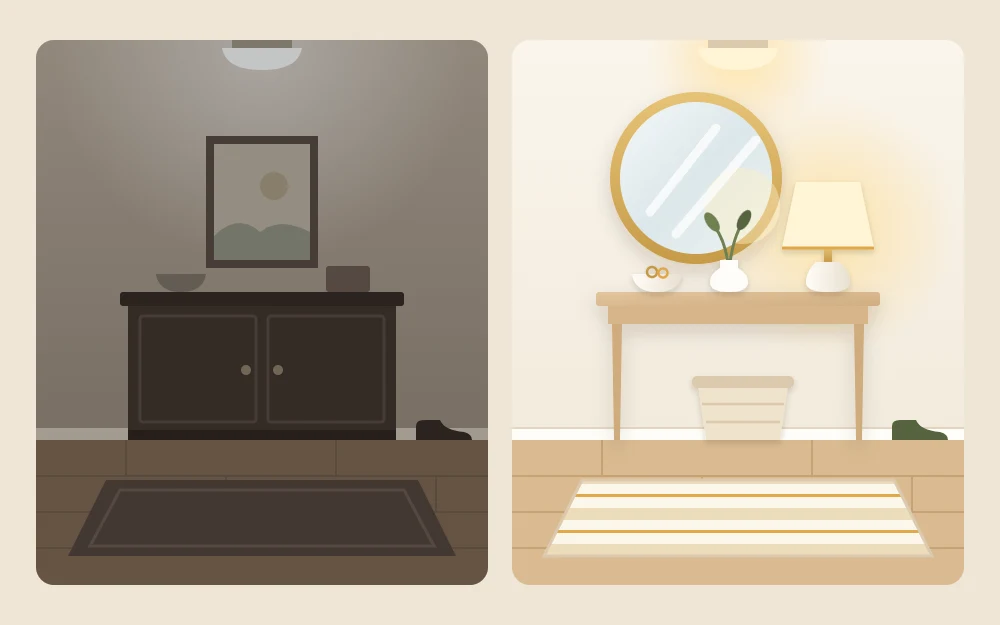
Light that hits a wall mostly stops there. Without a reflective surface, whatever brightness you have stays where it falls.
The fix: a large mirror, placed for what it reflects. Stand in the entry and find the brightest thing you can see: a doorway into a sunlit room, a glass door panel, your new lamp. Put the mirror where it catches that. A mirror facing a blank dark wall simply shows you more dark wall. Shape and sizing are covered in the guide to choosing and placing an entry mirror.
Smaller reflective touches help too: a glass lamp base, a brass tray, a glazed ceramic vase, picture frames with glass.
Before you hang anything
Choose hardware for your wall type and the weight of the mirror, and follow the manufacturer instructions. Large mirrors are heavy, so get help if you are unsure. A floor mirror that leans should be secured as its maker advises.
Problem: heavy furniture casts shadow
A dark, solid cabinet that reaches the floor blocks light and makes a deep shadow beneath and beside it. In a small dim entry, one such piece can set the mood for the whole space.
The fix: choose pieces you can see through, under or around. A console on slim legs shows the floor and wall behind it. Pale wood, painted finishes, cane and glass all look lighter than dark solid fronts. If the furniture is staying, lighten what surrounds it: a pale runner in front, a lamp on top, a light-toned basket beside it.
Problem: the bulbs are cool or mismatched
A bluish bulb in a space with no daylight can feel stark, and two different bulb colors in one small area make it look patchy. Brightness is only part of the picture; the color temperature of the light shapes the mood.
The fix: choose warm white bulbs and use the same warmth in every lamp you can see from the door. Pale, translucent shades in linen or paper spread a soft glow; dark or opaque shades send light only up and down, which suits a moodier look.
Good to know
Everything suggested here plugs in, runs on batteries or recharges. Moving, adding or replacing a ceiling light or any other wired fitting is a job for a licensed electrician, and in a rental it also needs the landlord’s permission.
The alternative: lean into the dark
Some entries will never look airy, and forcing them can produce a space that is pale but still dull. The other route is to make the darkness the point. A deep color on the walls, such as olive, ink blue or warm brown, turns a dim box into something closer to a jewel case.
This only works with warm pools of light. Place two or three low sources so they glow against the deep color: a lamp on the console, a picture light over art, a small lamp on a shelf. Add a mirror to double them, and one or two pale or metallic accents so the eye has bright points to land on.
Where to start to brighten a dark hallway entrance
If several problems apply, take them in order of effort:
- Add a lamp at console height and match the bulb warmth.
- Lay a pale rug.
- Place a large mirror to catch the brightest view.
- Swap or lighten heavy furniture.
- Reconsider the wall color last, once you have seen what the first four steps achieve.
Check the result in the evening as well as by day.
Frequently asked questions
How do you brighten an entryway that has no windows?
Add a lamp at console height so light spreads across the walls, lay a pale rug over a dark floor, and place a large mirror where it reflects the brightest thing in view. Use warm bulbs of the same tone and choose furniture on slim legs.
Should a dark entry be painted white?
Not necessarily. Warm whites and creams tend to feel softer under lamplight than cool whites, which can look flat without daylight. A deep color is also a valid choice when it is paired with several warm, low light sources and a few pale or metallic accents.
Where should a mirror go in a dark entryway?
Position it to reflect a light source or a brighter space, such as a lamp or the doorway to a sunlit room. A mirror opposite a blank dark wall only repeats the darkness, so test the spot by holding the mirror there and checking what appears in it.