Entryway Wall Decor Ideas Beyond the Mirror
Ten ways to decorate a blank entry wall without relying on a mirror, from one oversized artwork to a painted arch, with a note on which wall each idea suits.
A mirror is the default answer for a blank wall by the door, and often a good one. It is not the only one. Entryway wall decor can be art, textile, color, greenery or even the hooks you already need, and some entries look better with one of those leading and the mirror moved elsewhere or left out.
Here are ten entryway wall ideas, each with the kind of entrance it suits. Pick one to lead and, at most, one to support it. A short wall rarely needs more than that.
First, two basics: scale and height
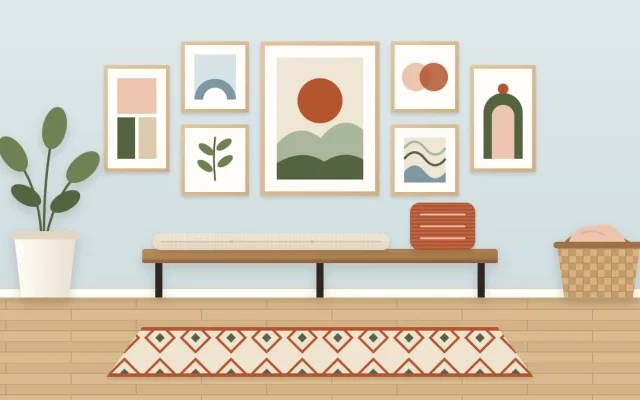
Whatever you choose, size it to the wall section or the furniture below it. One piece, or one group, that spans roughly two-thirds of the console or bench width is a loose guide that tends to look settled. Place the center of the piece or group near eye level, with about 57 in (145 cm) from the floor as a common starting point, and lower it a little when it sits above furniture so the two read together.
Art that leads
1. One oversized artwork
A single large piece is the calmest answer to what to hang in an entryway. It gives the eye one place to land and makes a small wall feel deliberate. Choose something with open areas of color so it reads from the door in a glance. It suits a wall you face as you walk in.
2. A vertical pair of prints
Two frames of the same size stacked one above the other fit the slim strip of wall between a door frame and a corner, where nothing wide will go. Keep the gap between them small, about 2 to 3 in (5 to 8 cm), so they read as one tall shape.
3. A picture ledge with leaning frames
A shallow ledge lets you overlap two or three frames of different heights and swap them whenever you like, with one fixing job instead of several. It works well above a bench, where the ledge sits clear of heads. If you would prefer a full arrangement of entryway wall art, the guide to planning a gallery wall walks through layouts and spacing.
Texture instead of glass
4. A textile or woven hanging
A woven panel, a small rug hung flat or a piece of fabric on a wooden rod brings softness to a space that is mostly hard surfaces: floor, door, hardware. It also dulls a little echo. Textiles are light and forgiving, and they suit a wall that gets brushed by coats and bags.
5. A set of woven trays or plates
Three or five flat baskets, trays or ceramic plates grouped in a loose cluster give a wall pattern and shadow. Mix the sizes, keep the materials related, and lay the group out on the floor first. This is a good choice above a console when a rectangle would feel too stiff.
Useful pieces treated as display
6. A row of decorative hooks
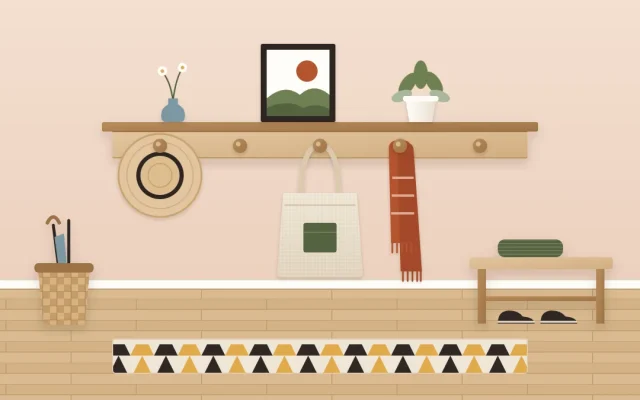
Hooks become decor when the hooks themselves are good-looking and what hangs on them is edited: one hat, one bag, a scarf. Leave a peg or two empty. The guide to styling a hook rail as part of the decor covers styles and spacing.
7. A shallow shelf with a small vignette
Where there is no room for a table, a short shelf does the job of one. Lean a small frame at the back, add one taller object and a low dish for keys, and leave some of the shelf bare. It suits the wall on the latch side of the door, where your hand lands naturally.
Color and greenery
8. A painted arch or color block
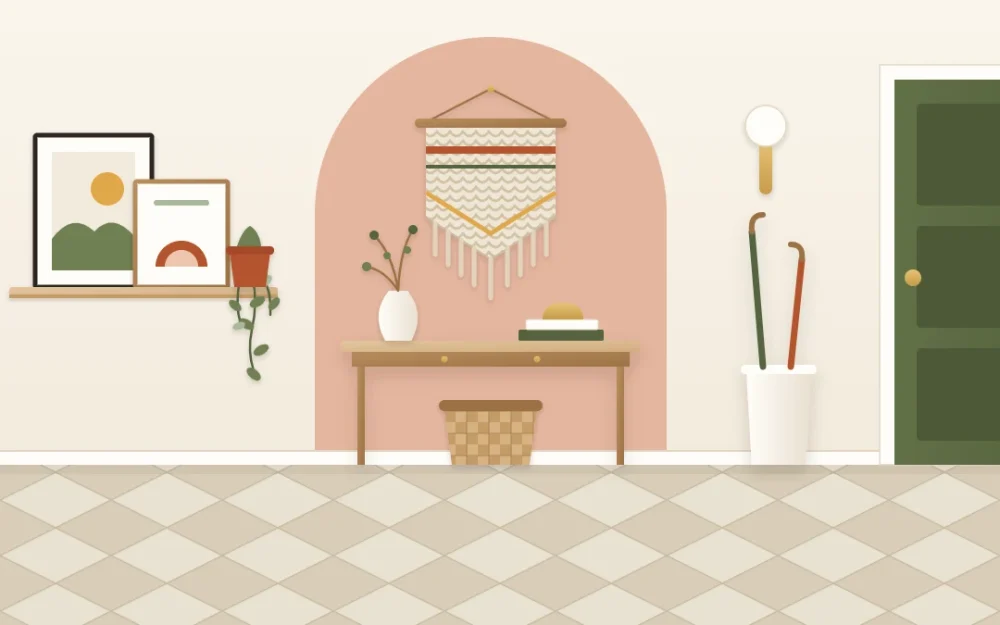
Paint can be the artwork. An arch or a plain rectangle of color behind the console frames the furniture and gives a rented-white wall a center. Make the shape a little wider than the furniture and stop it well below the ceiling. In a rental, check your lease or ask before making changes.
9. Wall-mounted planters
One or two small wall planters with trailing stems add life at eye level without using any floor. Choose plants for the light the entry really gets, or use dried stems or good faux greenery where it is dim. Use a liner so water stays inside the pot.
Light as sculpture
10. A slim wall light
A wall light with a strong shape works as an object by day and as a soft glow in the evening, and it frees the console surface. Plug-in and rechargeable wall lights are the practical options. A wired sconce is a different matter: choosing its location and installing it is a job for a licensed electrician, and in a rental it needs the landlord’s permission.
Front hall wall decor: choosing among the ten
Match the idea to the wall, not the other way around.
- The wall you face from the door: one oversized artwork, a painted arch or a woven hanging.
- A slim strip beside the door: a vertical pair, a single wall light or a short row of hooks.
- A long side wall: a picture ledge or a cluster of woven trays, kept above shoulder height where the passage is tight.
- Above a bench: hooks, a ledge or a textile, placed so nobody leans back into it.
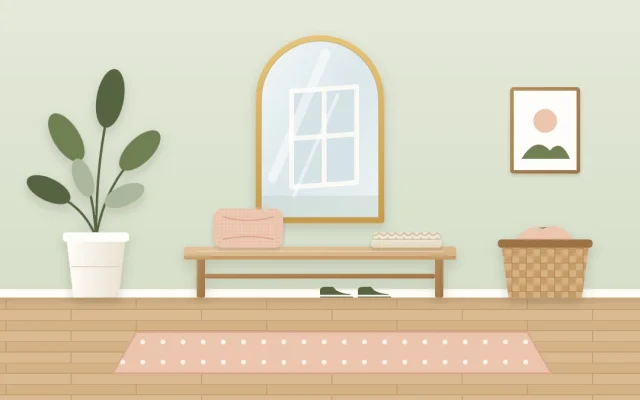
A mirror can still join any of these. It pairs especially well with the painted arch and with a wall light, which gives it something warm to reflect. Shape, size and placement are covered in the entryway mirror guide.
Hanging things securely
Most of these ideas need something fixed to the wall. Choose the hardware to suit your wall type and the weight of the piece, including whatever a shelf, ledge, hook or planter will carry once it is in use, and follow the manufacturer instructions for both the item and the fixing. For anything heavy or awkward, get help if you are unsure.
Before you hang anything
Tape a paper template of each piece to the wall and look at it from the open door. Moving paper is much easier than moving a fixing.
If fixing into the wall is not an option, several of these ideas have lower-commitment versions: a frame leaned on a console, a textile draped over a freestanding ladder, a plant on a stand. The guide to entry decor you can take with you goes through them.
Frequently asked questions
What can go on an entry wall instead of a mirror?
One large artwork is the simplest swap. A woven hanging, a picture ledge with leaning frames, a cluster of flat baskets, a painted arch behind the console or a row of good-looking hooks all work too. Choose by the shape of the wall and how close people pass to it.
How many things should hang on a small entry wall?
Usually one lead piece and, at most, one supporting piece. A short wall fills up quickly, and several small items tend to compete. If you want more pieces, group them tightly so they read as a single shape instead of scattering them.
How high should wall decor sit above a console or bench?
Close enough that the two read as one group. A gap of roughly a hand's width or a little more above a console is a common starting point. Above a bench, leave more room so nobody leans back into a frame or shelf when sitting down.