
The Ultimate Guide to Keeping Your Peruvian Apple Cactus Happy
Why Apple Cactus Care Is Easier Than You Think
Apple cactus care is straightforward once you know the basics. Here’s a quick summary:
| Care Element | What to Do |
|---|---|
| Light | 6+ hours of direct sun daily |
| Watering | Soak deeply, then let soil dry completely |
| Soil | Fast-draining cactus mix with pumice or perlite |
| Temperature | Best in USDA Zones 9-11; protect below 25°F |
| Fertilizer | Low-nitrogen feed once monthly in spring/summer |
| Toxicity | Non-toxic to humans and pets |
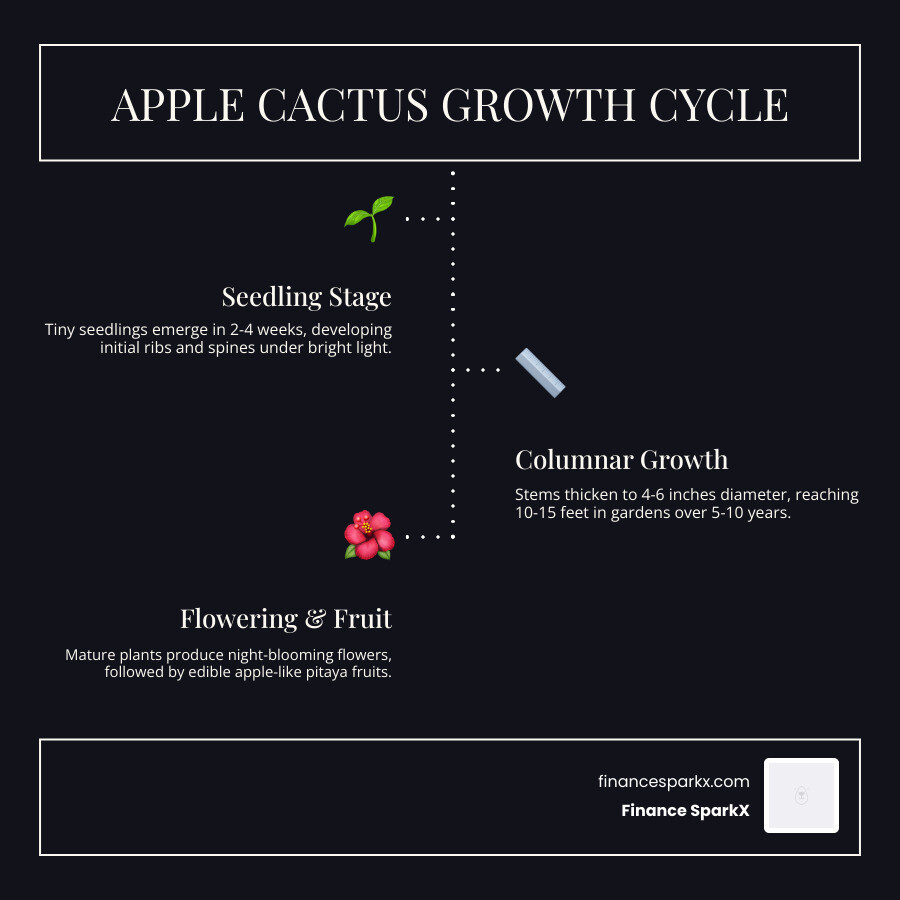
The Peruvian Apple Cactus (Cereus repandus) is one of the most rewarding plants you can grow. It’s bold, fast-growing, and surprisingly low-maintenance.
Originally from South America — Argentina, Uruguay, and Brazil — this tall columnar cactus can reach 10 to 15 feet in a typical garden setting. In the wild, it pushes past 30 feet. It earns its name from the small, apple-like edible fruits it produces after its spectacular night-blooming flowers open.
And those flowers? They bloom only at night, for a single evening, filling the air with fragrance. It’s the kind of plant that makes neighbors stop and stare.
The good news for busy homeowners: this cactus wants to be ignored. It thrives on minimal water, resists pests better than most houseplants, and asks for very little in return. The biggest mistake most growers make is actually overwatering it — not neglecting it.
Whether you’re growing it in a pot on a sunny patio or planting it as a dramatic landscape centerpiece, this guide covers everything you need to keep your apple cactus thriving.
Understanding the Basics of Apple Cactus Care
When we talk about apple cactus care, we first have to clear up a bit of a botanical mystery. Most gardeners know this plant as Cereus peruvianus, but you might also see it labeled as Cereus repandus or the Giant Club Cactus. Interestingly, the “Peruvian” part of the name is a bit of a misnomer; the plant is actually native to Brazil, Uruguay, and Argentina, rather than Peru!
Regardless of the name on the tag, this plant is a standout for its architectural habit. It grows in tall, gray-green to blue-green columns with prominent ribs (usually 5 to 9 on mature stems). These ribs are lined with areoles that sprout small, needle-like spines. As we move into May 2026, we’ve seen a massive surge in the popularity of these “living sculptures” because they fit so perfectly into modern, sustainable home designs.
One of the best features for families and pet owners is that the Peruvian Apple Cactus is non-toxic. Unlike many other exotic succulents that can cause stomach upset if nibbled by a curious cat or dog, this cactus is pet-friendly. Just keep in mind that the spines are still sharp! We recommend placing them in areas where they won’t be accidentally bumped into by roaming pets or toddlers.
For those looking for a deep dive into the botanical history and specific nursery standards, check out this Peruvian Apple Cactus: Complete Growing Guide & Care Tips for more technical insights.

Optimal Light and Temperature for Apple Cactus Care
If there is one thing this cactus loves more than anything else, it is the sun. To truly master apple cactus care, you need to think like a desert. These plants require at least 6 hours of direct sunlight daily to maintain their structural integrity. Without enough light, the plant may experience “etiolation”—a process where the stems stretch out, become thin, and turn a pale, sickly yellow.
For those of us living in USDA Hardiness Zones 9 through 11, the Peruvian Apple Cactus can live outdoors year-round. It is incredibly heat-tolerant and can handle the scorching afternoon sun of the Southwest or the humid warmth of the Southeast. However, while it is a tough cookie, it does have its limits with the cold. It can tolerate brief dips down to 25°F (-4°C), and some established plants have even survived 20°F for short periods with tip protection. If a frost is in the forecast, we suggest wrapping the tips of the columns in burlap or frost cloth to prevent “tip burn.”
Can you grow it indoors? Absolutely! But you’ll need to be strategic. We recommend placing your cactus in a large, unobstructed south-facing window. If your home doesn’t get intense natural light, you might need to supplement with full-spectrum LED grow lights for about 4 to 6 hours a day. This ensures the plant doesn’t lean toward the window and maintains its beautiful, upright columnar habit.
Soil and Watering Strategies for Apple Cactus Care
The quickest way to kill a Peruvian Apple Cactus is with kindness—specifically, too much water. In the wild, these plants are adapted to rocky outcroppings and sandy soils that drain almost instantly. Therefore, your soil choice is critical.
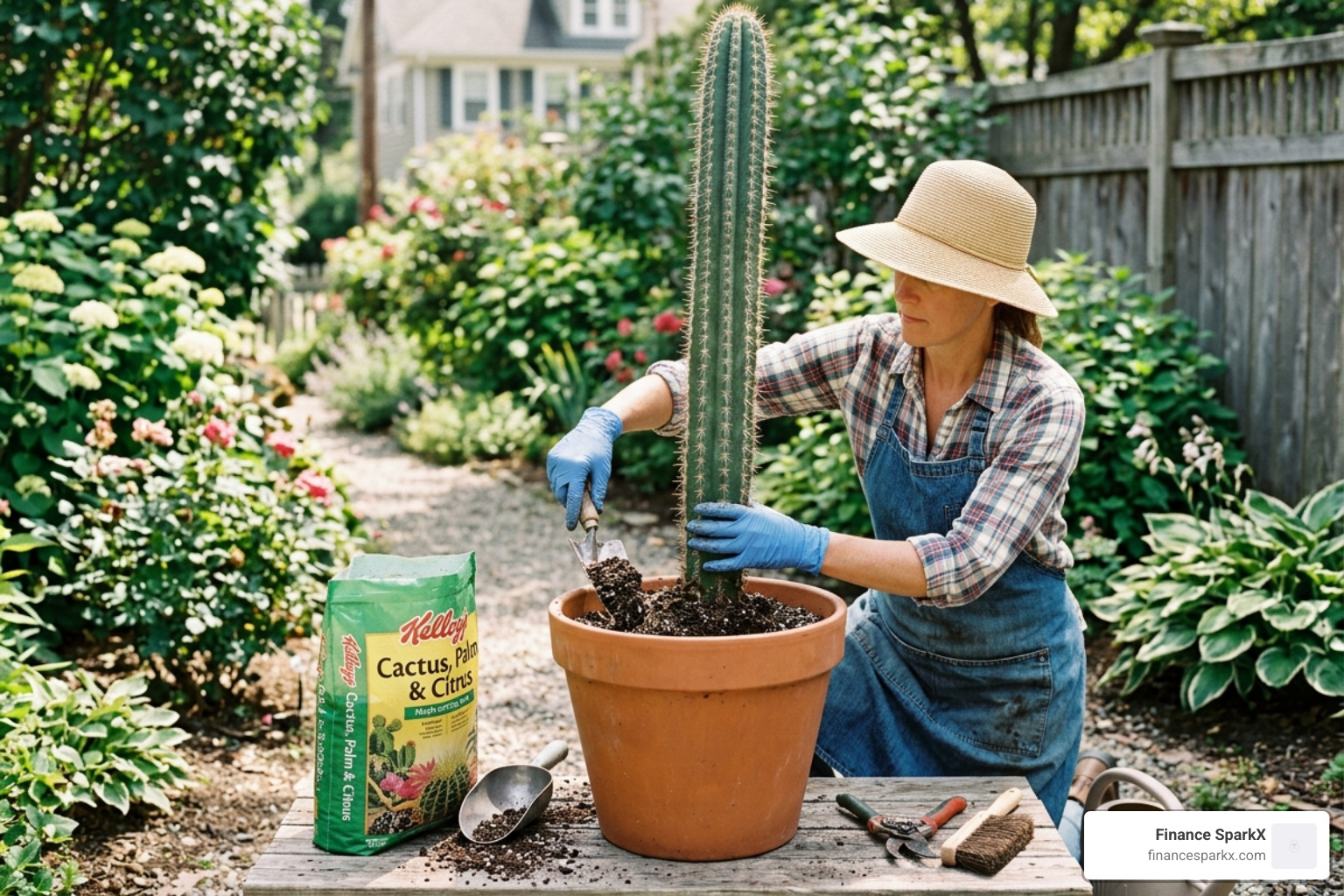
We always recommend a mineral-dominant soil mix. You can make your own by mixing:
- 40% coarse sand or decomposed granite
- 35% pumice or perlite
- 20% potting soil
- 5% charcoal (for aeration)
This ensures that water moves through the pot quickly and doesn’t sit around the roots. For watering, we advocate for the “soak and dry” method. This means you pour water slowly and evenly until it gushes out of the drainage holes at the bottom of the pot. Then, you wait. You must let the soil dry out completely—not just the top inch, but all the way to the bottom—before watering again.
During the active growing season (spring and summer), this usually means watering every 2 to 3 weeks. In the winter, the plant goes into a dormant phase. During this time, you should scale back significantly, perhaps watering only once a month or less, depending on the humidity in your home. A moisture meter can be a great DIY tool for checking the soil deep inside a large pot without disturbing the roots.
Advanced Maintenance: Fertilizing, Pruning, and Repotting
Once your cactus is established, it will start to grow—and fast! In ideal conditions, these plants can put on a foot of height every year. This means you’ll eventually need to move beyond basic watering and into more advanced maintenance.
Feeding for Success
While cacti are used to nutrient-poor soils, a little boost during the growing season can lead to more flowers and healthier fruit. We recommend using a low-nitrogen, high-potassium fertilizer (something like an NPK 5-10-5 ratio). High nitrogen can cause the cactus to grow too quickly, leading to weak, floppy stems. Apply a diluted liquid fertilizer once a month during the spring and summer. Always water your plant before fertilizing to prevent the nutrients from burning the roots.
Pruning and Structural Support
As your cactus reaches 6, 8, or even 10 feet tall, it can become top-heavy. If you’re growing it in a container, we suggest using a heavy-based pot (like terracotta or stone) to prevent it from toppling over in the wind. For very tall specimens in the landscape, you might even need to install structural support using rebar and horticultural tape.
If the plant gets too tall for your space, don’t be afraid to prune it. Pruning is best done in late winter while the plant is still dormant. Use sterilized tools to make a clean, horizontal cut. To prevent infection, we recommend dusting the open wound with sulfur powder. This helps the “wound” callous over quickly and prevents rot from entering the stem.
From Night Blooms to Edible Pitaya Fruit
The most magical part of apple cactus care is witnessing the bloom. The flowers of the Peruvian Apple Cactus are massive—often reaching 6 to 7 inches in diameter. They are creamy white, tubular, and incredibly fragrant.
However, they are nocturnal. They typically begin to open at sunset and are fully open by midnight, only to wither and close by the following morning. In nature, they are pollinated by nocturnal creatures like hawk-moths and bats. If you are growing your cactus indoors or in an area without these natural pollinators, you’ll need to step in as a “human bee.”
Hand-Pollination for Fruit
To guarantee fruit, you can hand-pollinate the flowers between 9 PM and 11 PM. Use a soft paintbrush to collect the yellow pollen from the anthers (the little stalks) and gently brush it onto the stigma (the center part of the flower). According to some horticultural trials, hand-pollination can increase your fruit yield by 40% to 60%!
If successful, the flower will fall away, and a small green fruit will begin to develop. Over the next 40 to 50 days, it will swell and turn a vibrant red or orange. These fruits, often called “pitayas” or “apple cactus fruit,” are completely thornless.
The Taste of the Desert
The fruit is a hidden gem of the succulent world. The interior is white with tiny, crunchy black seeds, much like a dragon fruit but with a sweeter, more nuanced flavor. Many describe it as a cross between a kiwi and a subtle melon or even shaved ice. It’s rich in Vitamin C, beta-carotene, and dietary fiber. You can eat it raw, toss it into smoothies, or even use it to make exotic jams.
For more on the edible properties and botanical characteristics of the fruit, the Cereus Repandus: Care Guide for the Peruvian Apple Cactus – Plant America provides an excellent breakdown of its nutritional profile.
Propagation and Troubleshooting Common Issues
One of the most sustainable ways to grow your garden is through propagation. The Peruvian Apple Cactus is incredibly easy to “clone” using stem cuttings. While you can grow them from seeds, it is a slow process that requires a lot of patience.
Propagation Methods Compared
| Method | Time to Root | Success Rate | Growth Speed |
|---|---|---|---|
| Stem Cuttings | 3-4 weeks | Very High | Fast (1ft/year) |
| Seeds | 14-28 days (germination) | Moderate | Very Slow (inches/year) |
To propagate by cuttings, simply identify a healthy “arm” or segment. Using a sterilized knife, make a smooth cut. The most important step in apple cactus care propagation is the callousing phase. You must leave the cutting in a dry, shaded spot for 10 to 14 days until the cut end is hard and dry to the touch. If you plant it too early, the moisture in the stem will cause it to rot. Once calloused, plant it 2 to 3 inches deep in dry cactus mix and don’t water it for at least two weeks.
Troubleshooting Pests and Health Issues
Even the toughest plants have bad days. Here’s what to look out for:
- Mealybugs and Scale: These look like white cotton fluff or small brown bumps. For a minor infestation, use a cotton swab dipped in 70% isopropyl alcohol to wipe them off. For larger problems, a 50/50 mix of alcohol and water with a drop of dish soap sprayed on the plant (at night to avoid sunburn) works wonders.
- Yellowing and Mushy Stems: This is the dreaded root rot. It’s almost always caused by overwatering. If caught early, you can cut off the healthy top part of the cactus, callous it, and start over.
- Sunburn: If you move an indoor cactus outside too quickly, it can get “sunburned,” appearing as permanent white or tan patches. Always acclimate your plant gradually over two weeks.
- Etiolation: If the top of your cactus is getting skinny and pale, it’s screaming for more light. Move it to a sunnier spot immediately!
For more detailed troubleshooting on specific cactus diseases like bacterial soft rot or anthracnose, refer to Growing Apple Cactus: Cereus repandus.
Frequently Asked Questions about Apple Cactus Care
How fast does a Peruvian Apple Cactus grow?
In cultivation, the growth rate is surprisingly fast for a cactus. If you provide plenty of sunlight and a little fertilizer, it can grow about 1 foot per year. While they can reach 30 feet in the wild, most home-grown specimens reach a manageable 10 to 15 feet before they start branching out significantly.
Can I grow an Apple Cactus indoors?
Yes, but with caveats. It needs a massive amount of light. If you’re short on space, look for the Monstrose variety (Cereus peruvianus monstrose). This is a natural mutation that grows in a lumpy, twisted, and more compact shape. It reaches about 10 feet max and grows much slower, making it perfect for container gardening indoors.
Is the Peruvian Apple Cactus fruit safe to eat?
Absolutely! Not only is it safe, but it’s also delicious. The fruit is ripe when it feels slightly soft to the touch and the skin is a deep red or orange. It doesn’t have spines, so you can pick it by hand. Just wash it, slice it in half, and scoop out the white flesh with a spoon.
Conclusion
At Finance SparkX, we believe that sustainable living starts in your own backyard—or even on your windowsill. Integrating a Peruvian Apple Cactus into your home isn’t just a design choice; it’s an investment in a resilient, eco-conscious “living sculpture” that gives back with beautiful blooms and tasty fruit.
By mastering the basics of apple cactus care—plenty of sun, very little water, and the right soil—you can enjoy this South American wonder for decades. Whether you’re a DIY enthusiast looking for a new propagation project or a home decorator wanting that perfect architectural focal point, the apple cactus is a perfect fit.
For more tips on productivity-focused gardening and sustainable home improvement, visit us at https://financesparkx.com/. Happy growing!
