
The Best Low Light Succulents on a Budget
The Best Low Light Succulents You Can Grow Indoors (Without a Sunny Window)
Low light succulents are plants that thrive in indirect or minimal natural light — making them ideal for apartments, offices, and rooms that don’t get much sun.
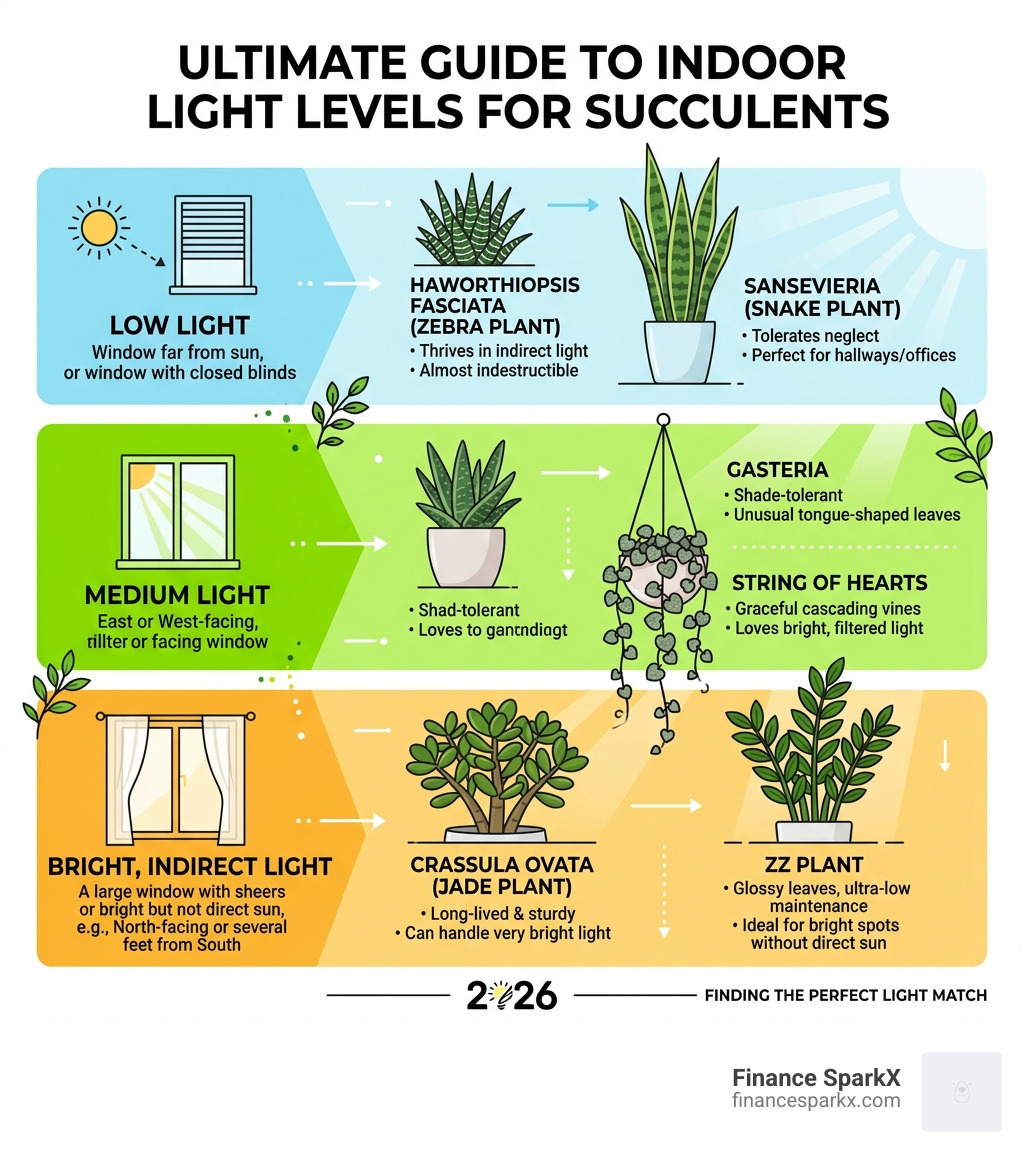
The best low light succulents for beginners include:
- Haworthiopsis fasciata (Zebra Plant) — compact, striped, nearly indestructible
- Sansevieria (Snake Plant) — tall, architectural, tolerates neglect
- Gasteria — tongue-shaped leaves, shade-tolerant, produces orange flowers
- Crassula ovata (Jade Plant) — slow-growing, long-lived, said to bring good luck
- ZZ Plant — stores water in its roots, almost impossible to kill
- String of Hearts — trailing vines, perfect for shelves or hanging planters
Most of these can survive in east- or west-facing windows. None of them will survive in complete darkness, but they ask for very little compared to most houseplants.
If you’re short on time, hate fussy plants, and want something green that actually survives — these are your picks.
Not every home gets flooded with sunshine. North-facing rooms, basement offices, and city apartments with small windows are real challenges for plant lovers. Most succulents are known for loving bright, direct sun — so it can feel like you’re stuck.
But a whole group of succulents evolved in the shade. In the wild, plants like Haworthia grow partially buried underground in South Africa, with only their leaf tips exposed to filtered light. They’re built for low light. They’re also surprisingly affordable, slow-growing, and low-maintenance — a perfect fit if you want sustainable, stylish indoor greenery without the upkeep.
This guide covers the best budget-friendly options, how to care for them, and how to display them creatively in your home or office.
Why Low Light Succulents are Perfect for Eco-Conscious Homes
In April 2026, the trend in home decor is moving away from “disposable” fast-fashion plants and toward long-term, sustainable companions. Low light succulents are the champions of this movement. Because these plants are naturally chlorophyll-rich and shade-adapted, they don’t require high-energy grow setups to stay healthy.
Many of these species, particularly those from the Haworthia genus, have fascinating biological adaptations. In their natural South African habitats, they often grow nestled under rocks or even partially submerged in the soil to protect themselves from the harsh sun. They utilize “windowed leaves”—translucent areas on their leaf tips that allow light to penetrate deep into the plant’s internal tissues for photosynthesis. A great example is the Haworthiopsis concolor, which thrives in filtered sunlight and is incredibly resource-efficient.
From an eco-conscious perspective, these plants are a win. Their slow growth rate means they don’t need frequent repotting, and their low water requirements help conserve resources. At Finance SparkX, we believe that integrating these resilient beauties into your workspace can significantly boost productivity by bringing a sense of calm and a touch of nature to your desk without the stress of high-maintenance care.

Top Varieties: The Best Low Light Succulents for Your Indoor Garden
When building an indoor garden on a budget, you don’t need to break the bank. You can often find affordable 4-pack or 6-pack sets of “indoor succulents” that include a mix of Haworthia, Gasteria, and Aloe for under $20. Here are the best varieties to look for:
- Haworthiopsis fasciata (Zebra Plant): Often called the “Zebra Cactus” (though it isn’t a cactus!), this plant can live for up to 50 years. It’s famous for its white horizontal stripes and compact size.
- Gasteria (Ox Tongue): These have thick, tongue-shaped leaves and are incredibly shade-tolerant. They are known for their beautiful, bell-shaped orange flowers that bloom annually.
- Sansevieria (Snake Plant): The ultimate “set it and forget it” plant.
- ZZ Plant (Zamioculcas zamiifolia): Technically a succulent due to its water-storing rhizomes, it thrives in the dimmest corners of a room.
- Haworthia emelyae: A slow-growing gem with triangular leaves. You can find more details on its specific needs through the RHS plant database.
Haworthiopsis Fasciata: The Resilient Zebra Plant
The Zebra Plant is the “classic” choice for low light succulents. It stays small, usually reaching only 4 to 6 inches in height and width, making it perfect for 2-inch nursery pots on a bookshelf. Its leaves are covered in white tubercles (raised bumps) that give it a striking texture.
It is a beginner’s dream because it thrives on neglect. While it prefers bright indirect light, it is very tolerant of lower light levels. One thing to watch for: if the white patterns on the leaves start to fade, it’s a sign the plant needs just a little more light. It’s also non-toxic, which is a major plus for pet owners. You can learn more about its sister species, Haworthiopsis attenuata, which looks similar but has bumps on both sides of the leaves.
Sansevieria: The Unkillable Low Light Succulents
If you have a “black thumb,” the Snake Plant (Sansevieria) is for you. Often called “Mother-in-law’s tongue,” this plant is practically unkillable. It is one of the few plants that continues to produce oxygen at night, making it an excellent bedroom companion.
Architecturally, they provide great vertical interest. Some varieties grow up to 7 feet tall, while others, like the “Bird’s Nest” Sansevieria, stay in small rosettes. They are highly drought-tolerant and can go a month or more without water in low-light conditions.
Gasteria and Gasteraloe: Unique Textures for Low Light Succulents
Gasteria species are named after their stomach-shaped flowers (“gaster” is Greek for stomach). These plants are incredibly tough. The variety ‘Little Warty’ is a fan favorite because of its bumpy, textured leaves that are fun to touch.
Gasteraloes are hybrids between Gasteria and Aloe. Varieties like ‘Twilight Zone’ offer deep green, almost black leaves with white spots, giving your desk a “subtly spooky” or celestial vibe. These hybrids combine the shade tolerance of Gasteria with the striking form of Aloe.
Essential Care Guide for Thriving in the Shade
Caring for low light succulents is different from caring for their sun-loving desert cousins. Because they aren’t in the hot sun, the soil stays moist for much longer, which increases the risk of root rot—the “kiss of death” for any succulent.
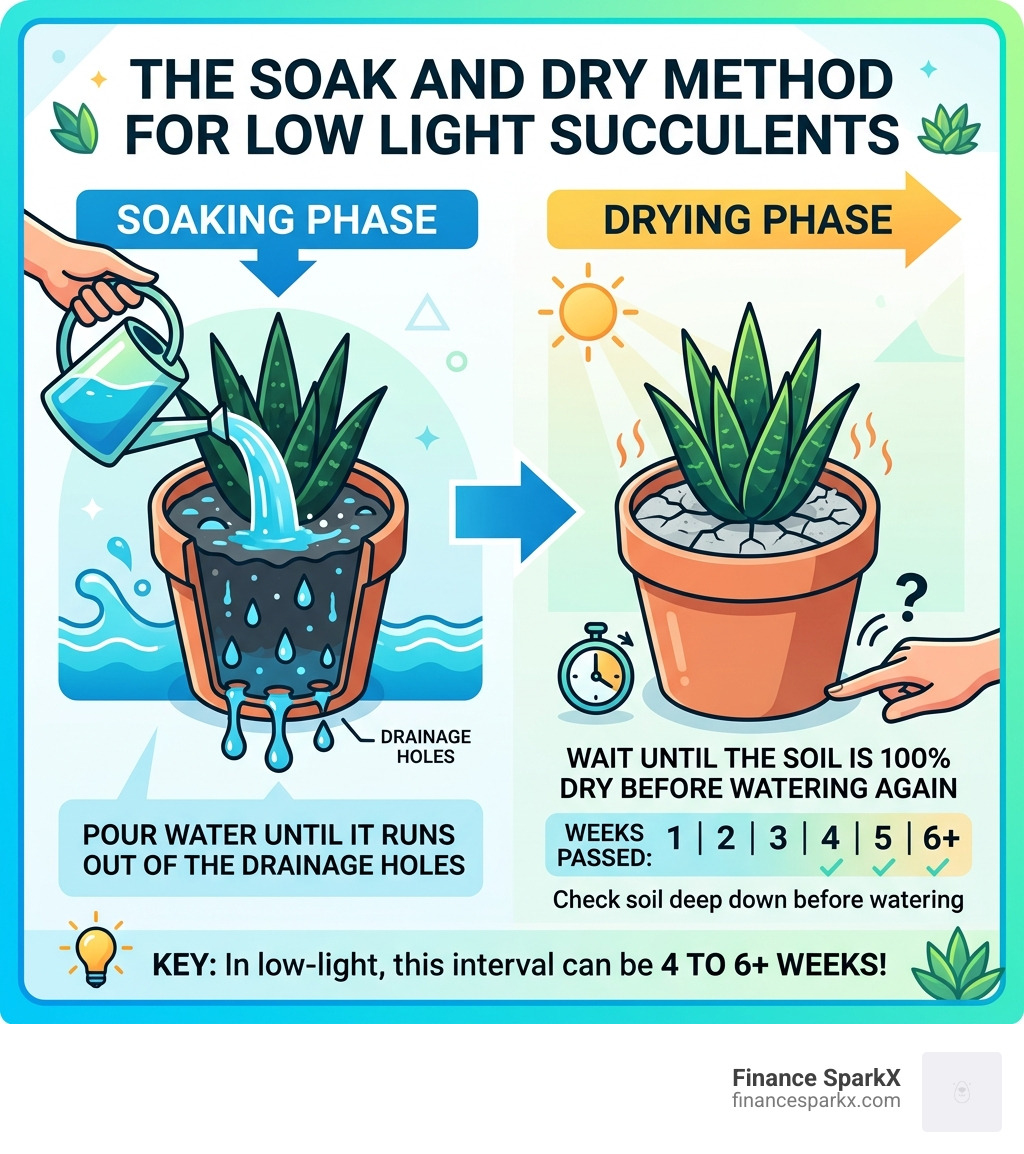
The Watering Rule: Soak and Dry
We recommend the “soak and dry” method. Pour water until it runs out of the drainage holes, then wait until the soil is 100% dry before watering again. In a low-light office, this might only happen once every 4 to 6 weeks!
Soil and Potting
Never use standard potting soil. It holds too much moisture. Instead, use a well-draining cactus compost or a mix of potting soil with perlite or coarse sand. If you’re feeling fancy, some Echeveria varieties like ‘Afterglow’ can tolerate indoor life if placed in a west-facing window, but they still need that gritty, fast-drying soil.
Temperature and Humidity
Most low light succulents thrive in standard indoor temperatures between 60 and 80 degrees Fahrenheit. They generally prefer low humidity, but rainforest epiphytes like the Mistletoe Cactus (Rhipsalis) actually enjoy a bit more moisture in the air.
| Feature | Low Light Succulent Need |
|---|---|
| Light | 2-6 hours of indirect sun |
| Water | Once every 3-6 weeks (when dry) |
| Soil | Gritty, cactus/succulent mix |
| Temperature | 60°F – 80°F |
| Best Pot | Terracotta (breathable) |
Budget-Friendly Propagation and Creative Display Ideas
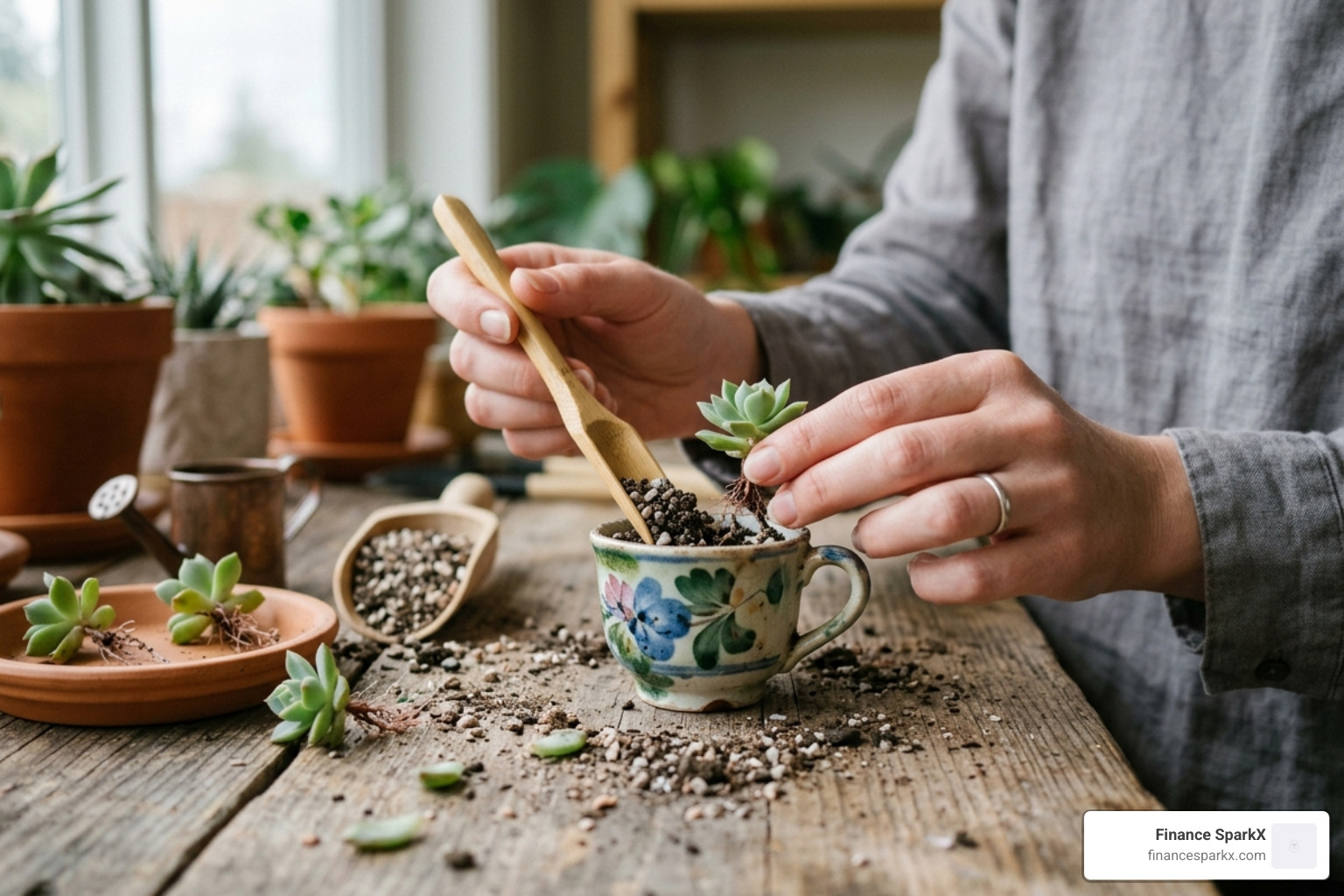
One of the best ways to grow your collection for free is through propagation. Most low light succulents produce “pups”—small baby plants that sprout at the base of the mother plant.
How to Propagate Pups:
- Gently pull the pup away from the main plant (try to get some roots).
- Let the pup “callous” over for 1-2 days in a dry spot.
- Plant it in its own small pot with well-draining soil.
For trailing plants like the String of Hearts or the tiny Conophytum minimum, you can even propagate from stem cuttings or by separating the “bodies” of the plant.
Creative Displays
- Thrifted Containers: Use old tea tins, ceramic mugs, or wooden boxes as pots. Just be sure to drill a drainage hole in the bottom!
- Vertical Gardens: Since many low light varieties are slow-growing, they work well in wall-mounted planters.
- Hanging Baskets: Use String of Pearls or Burro’s Tail to add greenery to high corners that don’t get much light.
Frequently Asked Questions about Low Light Succulents
Are these plants toxic to pets or children?
Safety is a priority for a balanced home. Most Haworthia and Gasteria species are non-toxic. However, the Snake Plant and the ZZ Plant are mildly toxic if ingested, causing stomach upset. The African Milk Tree (Euphorbia trigona) should be handled with caution as its white sap is a skin irritant and toxic. Always place these out of reach of curious pets and toddlers.
How do I know if my succulent needs more light?
The most common sign is “etiolation”—when the plant starts stretching and becoming “leggy” as it searches for the sun. You might also notice fading patterns or the plant leaning heavily toward the nearest window. If this happens, you can supplement with a small LED grow light on a timer for 6 to 8 hours a day.
Do low light succulents ever produce flowers?
Yes! While they grow and flower more slowly than full-sun varieties, many will bloom indoors. Gasteria produces beautiful orange “stomach” flowers, and Haworthia sends up long, thin stems with small white blossoms. Some, like the Mistletoe Cactus, produce tiny berries, and certain Conophytum species even have night-scented flowers.
Conclusion
At Finance SparkX, we believe that a productive life starts with a sustainable, peaceful environment. Low light succulents are the perfect bridge between eco-conscious living and modern home improvement. They are affordable, resilient, and bring a touch of the wild into the quietest corners of our homes. Whether you’re decorating a minimalist office in April 2026 or just looking for a low-maintenance friend for your bedside table, these plants offer a balanced lifestyle solution that grows with you.
Start your sustainable indoor garden today and see how a little greenery can spark a lot of joy.
