Seasonal Entryway Decor: A Simple Four-Season Swap
A swap system for seasonal touches by the door: four fixed swap points, a small palette for each season, natural materials and an off-season set that fits in one flat box.
At a glance
- Difficulty
- Easy
- Time
- About 15 to 30 minutes per season
- Best for
- Entries with a console or bench that already have a settled base palette
- Renter note
- No fixings needed if the wreath is held by a ribbon or an over-the-door hanger
What you need
- One vase used all year
- Seasonal stems or branches
- A small tray accent
- Cushion covers in seasonal colors
- A doormat or small rug
- One flat storage box
Seasonal entryway decor does not need boxes of ornaments or a full restyle every few months. The entry is small, people pass through it quickly, and a handful of well-chosen changes are noticed more than a crowd of themed objects.
The method here is a swap system. You choose four spots in the entry that change, leave everything else alone and rotate those four spots when the season turns. The whole off-season set fits in one flat box.
Why a swap beats a collection
Your console, mirror, lamp, wall color and bench are the base. They stay put all year and carry the entry’s palette. Seasonal pieces sit on top of that base like a change of scarf: enough to shift the mood, not enough to hide the outfit.
Because the swap points are fixed, nothing gets added without something else coming away, so the surface never fills up.
Step 1: Pick your four swap points
- The vase or stems. The tallest and most visible change.
- The tray accent. One small thing on the tray beside the keys: a bowl of fruit, a pine cone, a shell.
- A cushion cover on the bench. Same insert, different cover.
- The doormat or small rug just inside the door.
No bench? Replace the cushion with a folded throw in a basket or a small framed print leaned on the console. What matters is that there are four, not which four. If the tray itself needs work first, see how to style an entryway tray so the accent has a tidy frame.
Step 2: Give each season a small palette
Choose two seasonal colors that sit comfortably on your base palette and repeat them across the swap points. These are starting ideas, not rules.
| Season | Colors over the base | Stems | Tray accent |
|---|---|---|---|
| Spring | Pale green, soft yellow | Budding or blossoming branches | A small bowl of lemons |
| Summer | Blue and white, or bright citrus | Leafy green cuttings or tall grasses | Shells, or a striped cloth under the tray |
| Fall | Rust, ochre, deep olive | Dried grasses, seed heads, turning leaves | Small gourds or acorns in a dish |
| Winter | Cream, deep green, a little brass | Pine sprigs or bare twigs | Pine cones and a flameless LED candle |
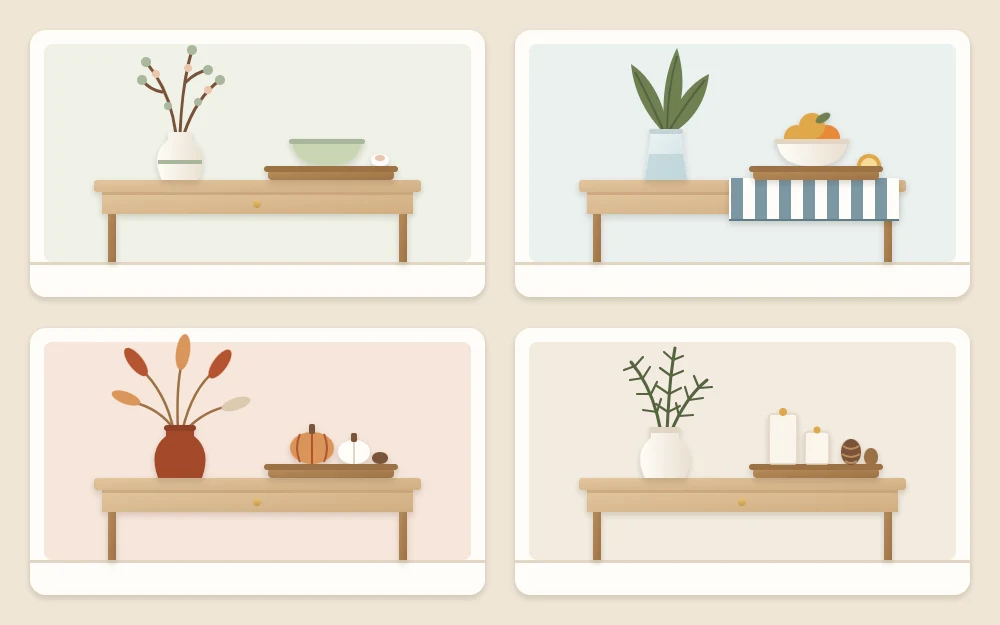
Entryway decor by season works best when the change is in color and material rather than in motifs. A rust linen cushion says fall more gracefully than a pumpkin print, and it still looks right a month later.
Step 3: Use natural seasonal materials
Much of the best seasonal material is temporary and found: prunings, a branch, fruit from the kitchen.
- Spring entryway decor: branches in bud, a pot of bulbs, a bunch of tulips.
- Summer: citrus in a bowl, herbs in a jug, one large leaf in a clear vase.
- Fall entryway decor: dried grasses, hydrangea heads, branches with colored leaves, small gourds.
- Winter: evergreen sprigs, pine cones, bare twigs, dried orange slices.
Keep stems in proportion to the vase. Roughly one and a half times its height is a pleasing rule of thumb. Fresh cuttings drop petals and needles, so set the vase on a saucer or coaster and refresh the water. For something living that stays all year, the guide to decorating with entryway plants covers choosing for the light by your door.
Tip
Use the same vase all year and change only what goes in it. A plain ceramic or glass shape in your base palette suits blossom, grasses and pine equally well.
Step 4: Add one thing on the inside of the door
A simple wreath on the inside of the front door is seen every time you leave, and it takes no floor or table space. Keep it flat and light: a hoop with a few sprigs of greenery in spring, dried grasses in fall, evergreen in winter, or just a ribbon bow.
A ribbon looped over the top of the door or an over-the-door hanger is the lowest-commitment way to hold it. If you would rather hang a wreath from a hook on the door or the wall beside it, choose the hook for the door or wall type, the weight of the wreath and the manufacturer instructions. Check that the door still closes fully and that nothing swings against glass.
Step 5: Make the swap
- Clear the four swap points and wipe the surfaces.
- Put the outgoing covers, mat and accents in the box.
- Set the new stems first, since they decide the height of the arrangement.
- Add the tray accent and the cushion cover.
- Lay the mat, then stand at the open door and remove one thing if it looks busy.
Seasonal console table decor should still leave open surface and a clear landing spot for keys. If the new pieces crowd it, the stems are too wide or the accent is too large.
Storing the off-season set in one flat box
Three seasons of covers, mats and small accents take little room if you choose them with storage in mind. Cushion covers fold flat, a small flat-woven mat rolls up, and the accents are limited to what fits in a shoebox. One shallow under-bed box holds it all.
Let the box set the limit. If something new comes in, something else leaves. Natural material goes to the compost instead of into storage, which is half the reason the system stays small.
Bridging fall and winter
The two colder seasons can share most of a set: keep the rust cushion, change dried grasses for evergreen and add a warmer light in the evening. To go further with textiles and glow once the days shorten, see the cozy entryway ideas for fall and winter.
Frequently asked questions
How often should I change entryway decor?
Four times a year is plenty for most homes, at roughly the point when the weather and the light shift. Because only four spots change, each swap is quick. Fresh stems and fruit can be refreshed in between whenever they fade, without touching the rest of the arrangement.
How do I decorate for a season without it looking themed?
Change color and material instead of adding motifs. Rust and ochre textiles with dried grasses suggest fall without a single printed pumpkin; cream wool and evergreen sprigs suggest winter. Natural materials and two repeated seasonal colors read as part of the room, where novelty items tend to look added on.
Where do I keep seasonal pieces when they are not out?
In one shallow box, such as an under-bed box, holding the folded cushion covers, a rolled mat and a small pouch of accents. Choosing pieces that store flat keeps the set small. Branches, fruit and dried stems are not stored at all, since they are replaced each season.