Narrow Entryway Ideas: Decorating a Long, Slim Hallway Entrance
Seven common reasons a corridor-like entry feels like a tunnel, each with a decorating fix: one working wall, shallow pieces, a long runner, a destination at the far end and more.
When the front door opens into a corridor, the usual advice about consoles and benches stops fitting. There is length to spare and almost no width, and anything you add risks making the walls feel closer. The narrow entryway ideas that work all share one approach: stop fighting the shape and use the length.
A tunnel feels like a tunnel for specific reasons, and each one has a fix. Find the problems below that match your hall and start with those.
Problem: both walls are busy
Hooks on one side, a shelf on the other, frames on both. In a long narrow entryway, decorating both walls at the same height squeezes the space from two directions.
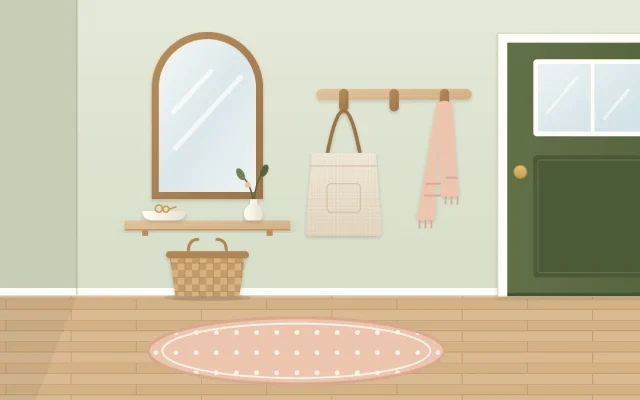
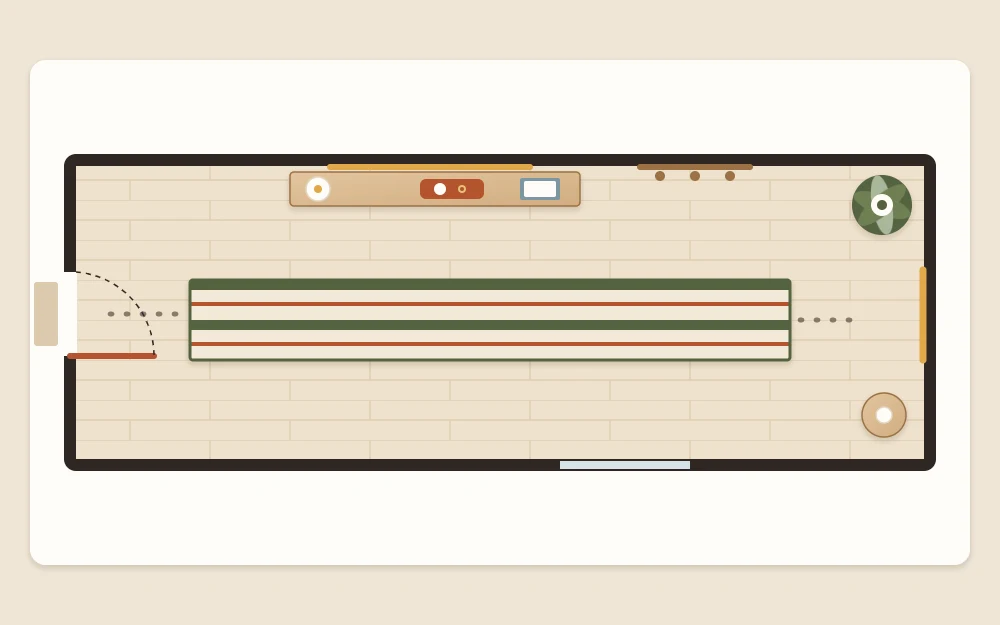
Fix: choose a working wall. Put the furniture, hooks and most of the decor on one long wall, usually the one the door does not swing against, and keep the opposite wall nearly clear. A single mirror or one flat artwork is the most the quiet wall needs. The eye then has one side to read and one side to rest on, and the passage feels wider for it.
Problem: the furniture sticks out into the path
A standard table or a deep bench turns a hallway into an obstacle course. If people turn their shoulders to pass, the piece is too deep, whatever it looks like.
Fix: go shallow. Three kinds of piece suit a tight passage:
- A picture ledge or shallow shelf, roughly 4 to 6 in (10 to 15 cm) deep, for keys, a small vase and a leaning frame.
- A slim console for narrow hall use, with about 8 to 12 in (20 to 30 cm) of depth as a common starting point and open legs so the floor shows underneath.
- A wall rail of pegs or hooks, which takes up almost no depth when it is lightly used.
Mark the depth on the floor with painter’s tape and walk past it with a bag on your shoulder before you decide. For anything fixed to the wall, choose hardware to suit your wall type and the weight it will carry, and follow the manufacturer instructions; get help if you are unsure.
Problem: the floor looks chopped up
Two or three small rugs in a row break the length into short pieces and draw attention to how tight each one is. A small mat alone by the door has a similar effect: the rest of the floor reads as leftover.
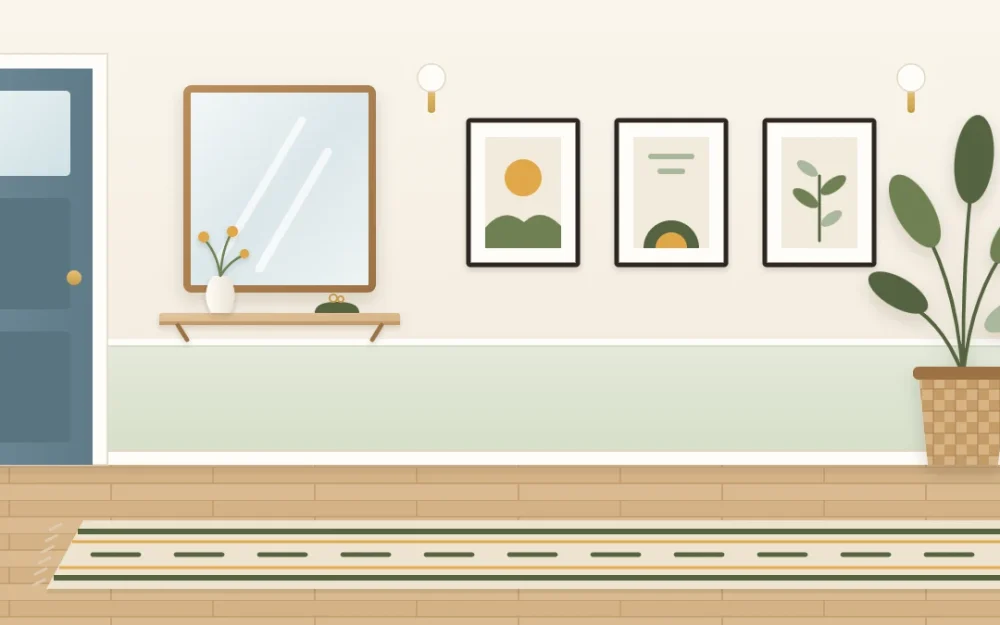
Fix: one long runner. A single runner draws the eye forward and turns the length into a feature. Lengthwise stripes or a small repeating pattern strengthen the pull. Leave an even strip of bare floor on each side so the runner does not look wedged in. Sizes, door clearance and pads are covered in the guide to entry rugs and runners.
Problem: there is nothing to walk toward
A narrow hallway entrance that ends in a blank wall or a plain door gives the eye no reason to travel. The length feels like distance instead of depth.
Fix: build a destination at the far end. Give the end wall one clear thing to look at:
- a single artwork, sized generously for the width of the wall;
- a tall plant, or a vase of branches on a small stand;
- a lit corner, with a plug-in or rechargeable lamp on a stool or a narrow shelf.
Problem: the walls feel close
Sometimes the hall simply is tight, and the walls press in however little you put on them.
Fix: a mirror on the long wall. A mirror hung flat on a side wall reflects the opposite wall and gives a sense of width that helps the space feel more open. A wide rectangular mirror, or a tall one turned on its side, suits the proportions of a corridor better than a small round one. Place it where it catches light from a doorway or a lamp, not where it reflects a crowded row of coats.
Problem: the hall has no rhythm
A long wall with one frame near the door and nothing after it looks unfinished. A long wall with unrelated pieces dotted along it looks restless.
Fix: repeat one thing at even intervals. Repetition is what turns a corridor into a gallery. Three or four frames of the same size and finish, hung in a level row with equal gaps, lead the eye down the hall in steps. Keep them flat to the wall and above shoulder height where the passage is tightest. If frames are not your choice, the roundup of wall decor for the entry has slim alternatives, including textiles and ledges.
Light can carry the rhythm too. A row of matching ceiling lights or wall lights spaced along the hall has the same stepping effect in the evening. Changing or adding wired light fixtures is a job for a licensed electrician, and in a rental it needs the landlord’s permission; rechargeable wall lights are the lower-commitment way to get the look.
Problem: the color makes it feel like a tunnel
Dark walls on both long sides, or several competing colors, close a corridor in.
Fix: light long walls, one darker end. Keep the long walls, ceiling and trim pale and close in tone so the edges blur a little. Then give the far end wall a deeper color or a darker accent, such as a strong artwork or a dark-framed mirror. A darker end wall reads as nearer, which shortens the look of the corridor and makes the proportions feel more like a room. Repeat that accent once near the door, in the runner or a vase, to tie the two ends together.
What to leave out of a narrow entry
Good narrow entryway decor is as much about what stays out. Three things work against a slim hall every time.
- Deep furniture. Anything that narrows the walking path, including chairs, wide benches and bulky cabinets.
- Clutter at shoulder height. Thick coats, deep frames and shelves that jut out where people pass. Keep that band of wall flat.
- Small rugs in a row. One runner, or bare floor, looks calmer.
Tip
Open the front door fully and take in the hall from the threshold. Whatever you notice first is what your guests notice first, so start there.
If your entrance is short as well as slim, more of a square than a corridor, the ideas for a tiny entry are a closer match.
Frequently asked questions
How deep can furniture be in a narrow entry hall?
As shallow as you can manage while still being useful. Many slim consoles are in the range of 8 to 12 inches deep, and a ledge is shallower still. Tape the footprint on the floor and walk past it with a bag before buying, because the comfortable walking path matters more than any number.
Should both walls of a narrow hallway be decorated?
It usually looks better to treat one as the working wall, with furniture, hooks and most of the decor, and to keep the other nearly clear. One mirror or a single flat artwork on the quiet side is plenty. Busy walls on both sides make the passage feel tighter.
What color helps a long, narrow entry feel less like a tunnel?
Pale, closely matched tones on the long walls, ceiling and trim help the sides recede. A deeper color or a dark accent on the far end wall then makes that wall read as nearer, so the hall looks shorter and better proportioned.