
How to Master Pallet Wood Shelf Builds Without Breaking the Bank
Why Pallet Wood Shelf Builds Are the Smartest DIY Trend in 2026
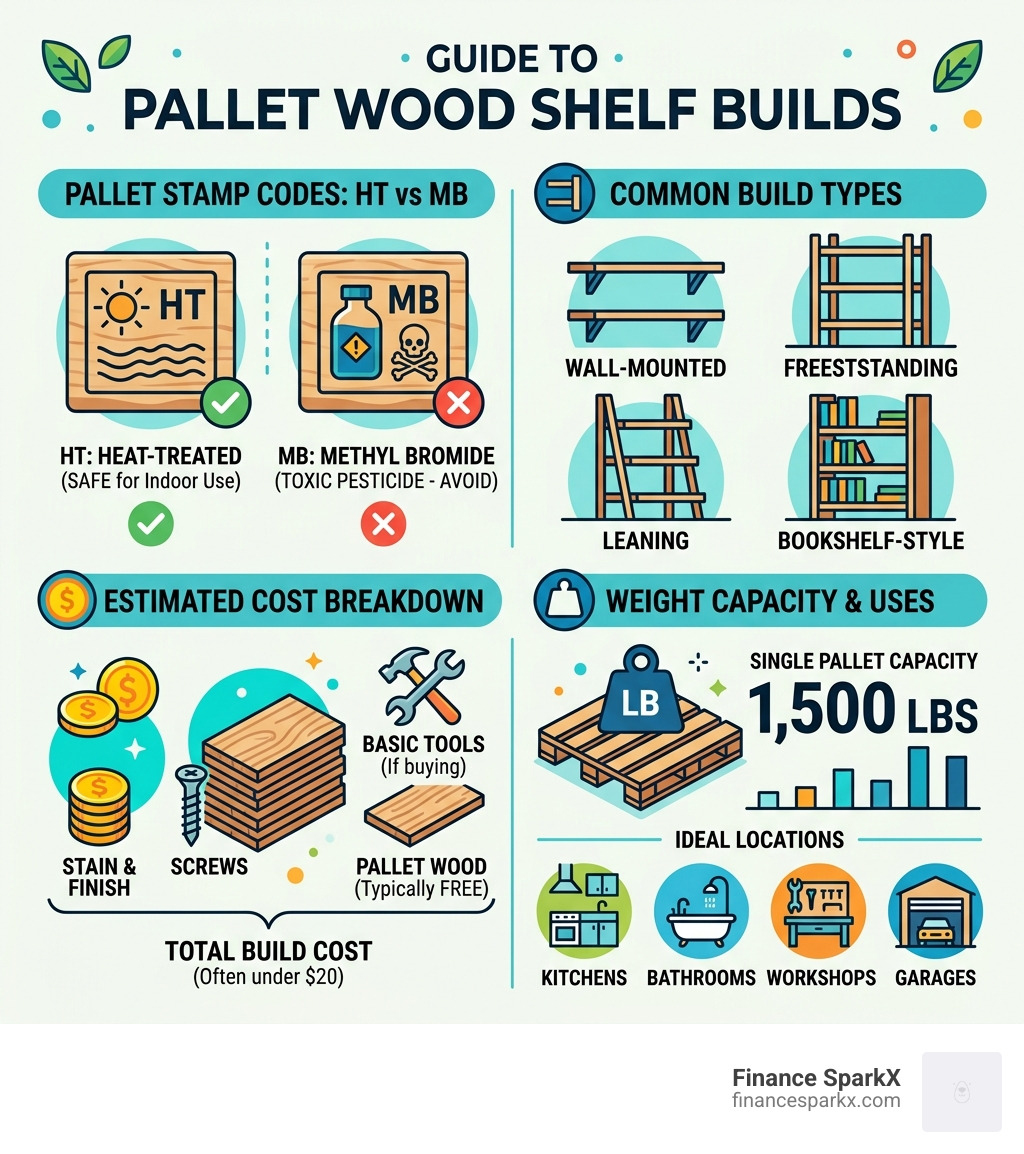
Pallet wood shelf builds are one of the most budget-friendly and eco-conscious ways to add rustic storage to your home — often for less than $20 total.
Here’s a quick overview of what you need to know:
- Cost: Most builds cost under $8–$30, including stain and finish
- Safety: Always look for an HT (heat-treated) stamp on pallets before using them indoors
- Tools needed: Drill, saw, tape measure, sandpaper, and screws
- Build types: Wall-mounted, freestanding, leaning, or bookshelf-style
- Weight capacity: A single pallet can safely hold over 1,500 pounds
- Best for: Kitchens, bathrooms, workshops, garages, and outdoor spaces
Whether you have a spare afternoon or a full weekend, pallet shelves are a genuinely beginner-friendly project. You don’t need a workshop or expensive equipment. A driveway and a handful of basic tools are enough to get started.
The appeal goes beyond price. Reclaimed pallet wood has a natural, textured look that fits rustic, farmhouse, and even industrial-style spaces. And in April 2026, with sustainable living more top-of-mind than ever, repurposing free or low-cost wood is both a smart and responsible choice.
Over 7,000 Pinterest pins are dedicated to pallet shelf ideas alone — and for good reason. The options really are almost limitless.
This guide walks you through everything: how to safely source pallets, which tools you need, how to build several shelf styles, and how to finish and mount them so they last for years.
Sourcing and Selecting Safe Reclaimed Wood
The secret to successful pallet wood shelf builds begins long before you pick up a hammer. It starts with the hunt. In April 2026, pallets are still abundantly available, but not all pallets are created equal. Some are treated with harsh chemicals, while others have lived “lives” that make them unsafe for indoor use.
First, always look for the IPPC stamp. You want to see HT, which stands for Heat-Treated. This means the wood was heated to a specific core temperature to kill pests without the use of chemicals. Avoid any pallet stamped with MB (Methyl Bromide), a powerful and toxic pesticide. If there is no stamp at all, it’s best to leave it behind, as you can’t verify its history.
Where should you look? We recommend checking with local businesses like roofing companies, small hardware stores, or garden centers. These places often have pallets they are happy to give away for free to save on disposal fees. Avoid “big box” retailers, as they often have return contracts for their pallets.
When inspecting a potential find, look for:
- Integrity: Are the boards straight and the runners solid?
- Cleanliness: Avoid pallets with heavy oil stains, strange smells, or signs of spilled chemicals.
- Moisture: Check for wood rot or mold. Reclaimed wood should be dry; if it’s been sitting in a swampy alley, it may warp or crack as it dries in your home.
According to OSHA’s research on wood dust safety, even clean wood requires care during processing, so always prioritize pallets that look well-maintained.
Safety First: Preparing for Pallet Wood Shelf Builds
Once you’ve brought your treasures home, the real work begins. Working with reclaimed wood carries risks that new lumber doesn’t, such as hidden nails and biological contaminants.
Nail removal is the most tedious but critical step. We find that a combination of a pry bar and a hammer works for most boards, but a reciprocating saw (Sawzall) with a metal-cutting blade is a game-changer. You can slide the blade between the boards and the runners to slice through the nails, leaving the nail heads in the wood for an extra-rustic look.
Before you start sanding or cutting, clean the wood. A stiff brush and some soapy water (or a diluted vinegar solution) will remove surface dirt. If you’re worried about pests, some DIYers use a pet-safe borate treatment, though starting with a clean, HT-stamped pallet usually mitigates this.
Crucially, you must protect yourself. Reclaimed wood can harbor fungi or bacteria, and the dust itself is an irritant. Always wear:
- A high-quality dust mask or respirator.
- Safety glasses.
- Heavy-duty gloves to avoid splinters.
For more on the risks associated with different wood species often found in pallets (like oak or pine), check out scientific research on wood toxicity and allergies.
Essential Tools and Disassembly Techniques
You don’t need a professional woodshop for pallet wood shelf builds, but having the right tools makes the process significantly more enjoyable. If you’re just starting out, here is our “must-have” list:
- Circular Saw or Miter Saw: For making clean, square cuts.
- Cordless Drill: Essential for assembly.
- Pocket Hole Jig: Great for “hidden” joints that look professional.
- Speed Square: To ensure your shelves aren’t wonky.
- Orbit Sander: Because hand-sanding pallet wood is a recipe for sore arms.
- Pry Bar and Mallet: For disassembling the pallet without splitting the boards.
Disassembly Technique: To get the most usable wood, don’t just bash the boards off. Use a mallet to gently tap the boards away from the runners. If a board is stubborn, use a reciprocating saw to cut the nails. Once the boards are free, trim the ends. Pallet edges are often split or “fuzzy” from the original manufacturing process; trimming just half an inch off each end with a miter saw makes the boards look instantly higher-end.
Step-by-Step Pallet Wood Shelf Builds
There are two main ways to approach a pallet shelf: using the pallet’s natural structure or using the boards to “wrap” a new frame.
The “Skeleton Frame” Method
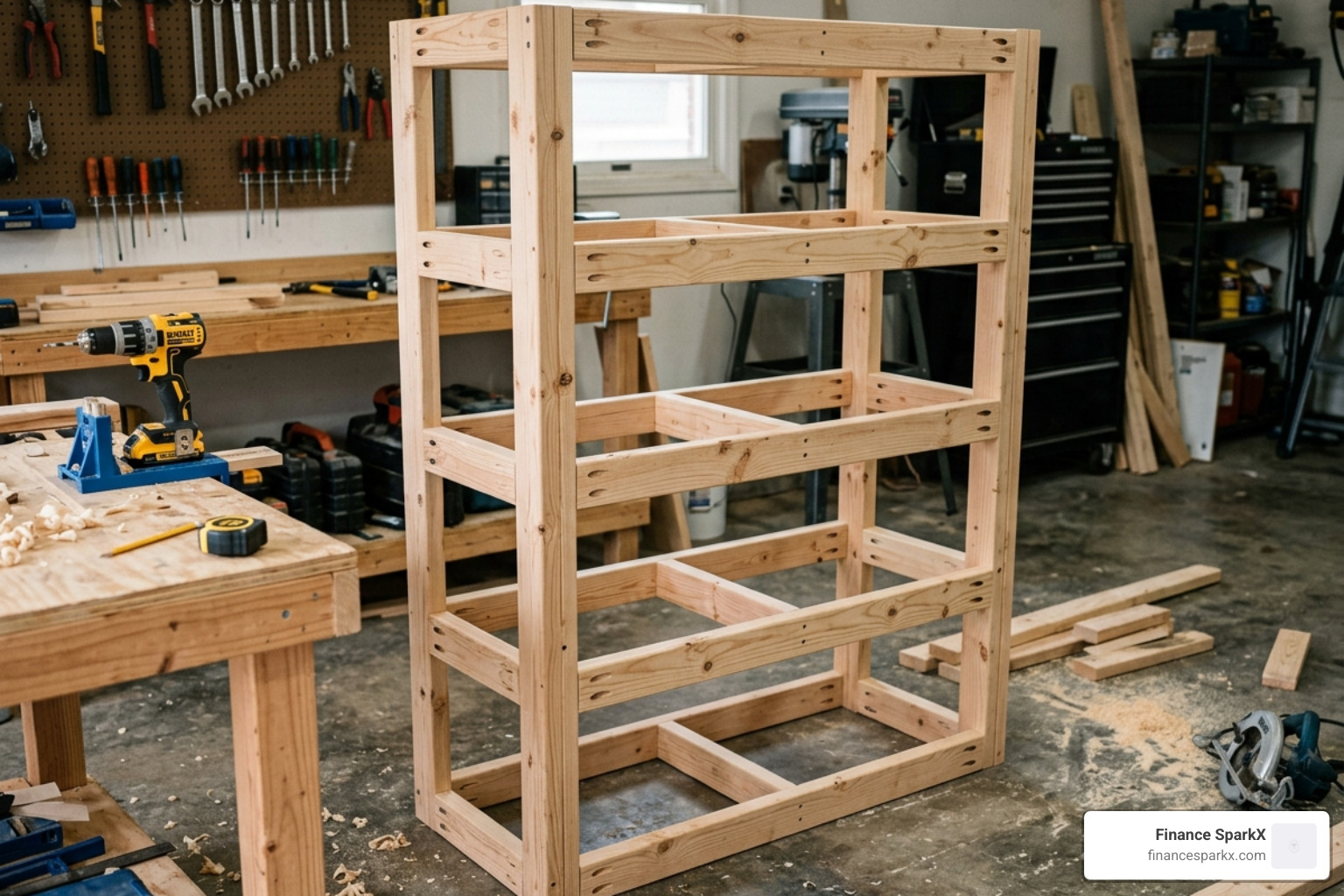
For heavy-duty bookshelves or garage storage, we recommend building a skeleton frame out of 2×4 or 2×10 lumber first.
- Step 1: Build a rectangular box using 2x4s.
- Step 2: Add horizontal supports (shelves) using pocket hole joinery.
- Step 3: “Wrap” the frame in your prepared pallet boards. This gives you the strength of new construction with the beautiful texture of reclaimed wood.
The “Half-Pallet” Wall Shelf
This is the easiest build. You essentially cut a pallet in half, use the middle runner as the bottom of the shelf, and mount it directly to the wall. It’s perfect for spice racks or wine bottles.
Comparison of Shelf Designs:
| Feature | Wall-Mounted | Freestanding | Leaning (Ladder Style) |
|---|---|---|---|
| Difficulty | Easy | Moderate | Moderate |
| Space Required | Minimal | Moderate | Small Footprint |
| Best For | Spices, Books, Decor | Pantry, Garage, Toys | Towels, Blankets, Plants |
| Weight Limit | Depends on Anchors | Very High (1,500 lbs+) | Low to Moderate |
Customizing Your Pallet Wood Shelf Builds
The beauty of DIY is customization. We love adding rustic hooks to the bottom of kitchen shelves for coffee mugs or using pre-made crates as drawers within a larger pallet bookshelf unit.
If you’re building for a workshop, consider keeping the boards “raw” and adding magnetic strips for tool storage. For a bathroom, sanding the wood to a smooth finish and adding a moisture-resistant sealer is key to preventing warping in the steam.
Finishing for Durability and Aesthetics
Finishing is where your project truly comes to life. Pallet wood is notoriously thirsty and porous, so your choice of finish matters.
The Sanding Progression: Never skip grits! Start with 80-grit to remove the rough mill marks and splinters. Move to 120-grit to smooth out the surface, and finish with 220-grit if you plan on staining or painting. Always sand in the direction of the grain to avoid swirl marks.
Finishing Options:
- Staining: We highly recommend Rustoleum Kona or similar dark stains for pallet wood. It acts like a gel stain, filling the deep grain and providing a rich, “old-world” look.
- Painting: For a shabby-chic or farmhouse look, use latex or milk paint. You can even sand the edges after painting to let the wood peek through.
- Sealing: For indoor shelves, a water-based polyurethane is easy to apply and dries fast. For outdoor or high-moisture areas (like bathrooms), use a Spar varnish or Helmsman finish, which is flexible and won’t crack when the wood expands and contracts.

Secure Mounting and Weight Capacity
One of the most “shocking” facts in woodworking is that a single, well-constructed wooden pallet can safely hold over 1,500 pounds. However, that strength is only as good as your mounting system.
For wall-mounted pallet wood shelf builds, we swear by the French Cleat. This involves cutting two boards at a 45-degree angle. One is mounted to the wall (screwed into the studs), and the other is mounted to the back of the shelf. The two “lock” together, providing incredible stability.
Safety Tips for Mounting:
- Find the Studs: Never rely on drywall anchors for heavy pallet shelves. Use a stud finder and secure your cleats or brackets directly into the wooden studs.
- Countersink Screws: Use a countersink bit so the screw heads sit flush with or below the wood surface. This prevents scratches and allows you to hide the screws with wood filler.
- Anchor Straps: If you are building a freestanding bookshelf, especially in a home with children, always use an anti-tip anchor strap to secure the top of the unit to the wall.
Frequently Asked Questions about Pallet Shelves
How much weight can a DIY pallet shelf safely hold?
If built with a solid frame and mounted into wall studs, a pallet shelf can easily hold 50–100 pounds per shelf. Freestanding units built from full pallets can hold hundreds of pounds, making them ideal for heavy garage storage.
How do I know if my pallet wood is toxic?
Check the stamp! HT is safe; MB is toxic. Also, look for “IPPC” logos. If you see a “DB” stamp, it just means it was debarked, which is neutral. Avoid pallets with colorful stains (which could be spilled chemicals) or those used to transport food or chemicals, as bacteria or toxins can seep into the wood fibers.
What is the cheapest way to finish reclaimed wood?
The absolute cheapest way is to leave it raw, but that’s not great for durability. A simple “wipe-on” finish made from equal parts boiled linseed oil and mineral spirits is very affordable and brings out the natural beauty of the wood. Alternatively, leftover house paint diluted with water can create a beautiful “color wash” for pennies.
Conclusion
Mastering pallet wood shelf builds is about more than just saving money — it’s about the satisfaction of turning “trash” into a functional piece of art. At Finance SparkX, we believe that sustainable living and productivity go hand-in-hand. By choosing to reclaim materials, you’re reducing waste while creating a customized environment that works for your specific lifestyle.
Whether you’re organizing a chaotic workshop or adding a rustic touch to your living room, pallet wood is the ultimate “blank canvas.” It’s durable, versatile, and, best of all, tells a story.
Ready to take your home improvement to the next level? More info about sustainable home improvement is available on our main site, where we dive deeper into eco-conscious DIY and productivity hacks for a balanced life. Happy building!
