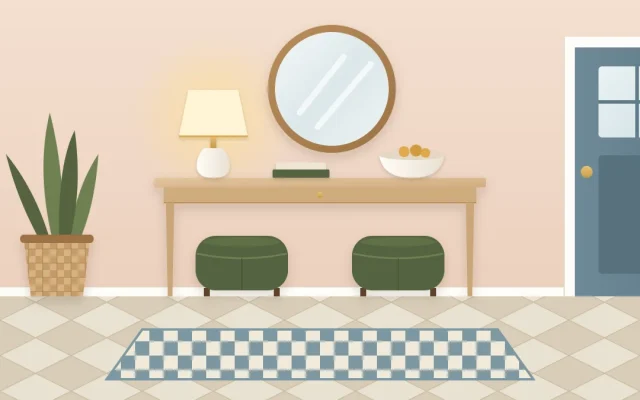
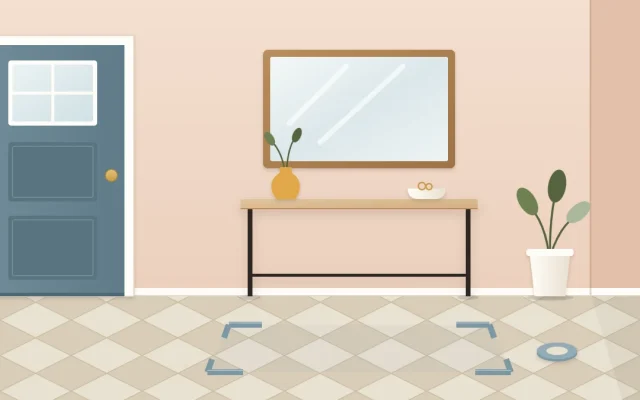
How to Style an Entryway Console Table Step by Step
A repeatable seven-step method for a console by the door: clear it, set the anchor above, add height at one end, balance the other, add something natural and leave room for keys.
At a glance
- Difficulty
- Easy
- Time
- About 30 to 45 minutes
- Best for
- Entries with a console table against a wall that looks bare or cluttered
- Renter note
- No fixings needed if the art or mirror leans on the table; ask before fixing anything to the wall
What you need
- A mirror or one piece of art
- A table lamp or tall vase
- Two or three books
- A bowl or small object
- A plant or stems
- A small tray or dish for keys
A console by the door tends to drift toward one of two states. Either it holds a single lonely bowl and looks unfinished, or it holds everything that has come through the door this week and looks buried. Both come from the same cause: nobody decided what the surface is for.
Good console table styling is less about owning the right objects and more about the order you place them in. The method below takes about half an hour, uses things you probably already have, and can be repeated whenever the table slides back into chaos.
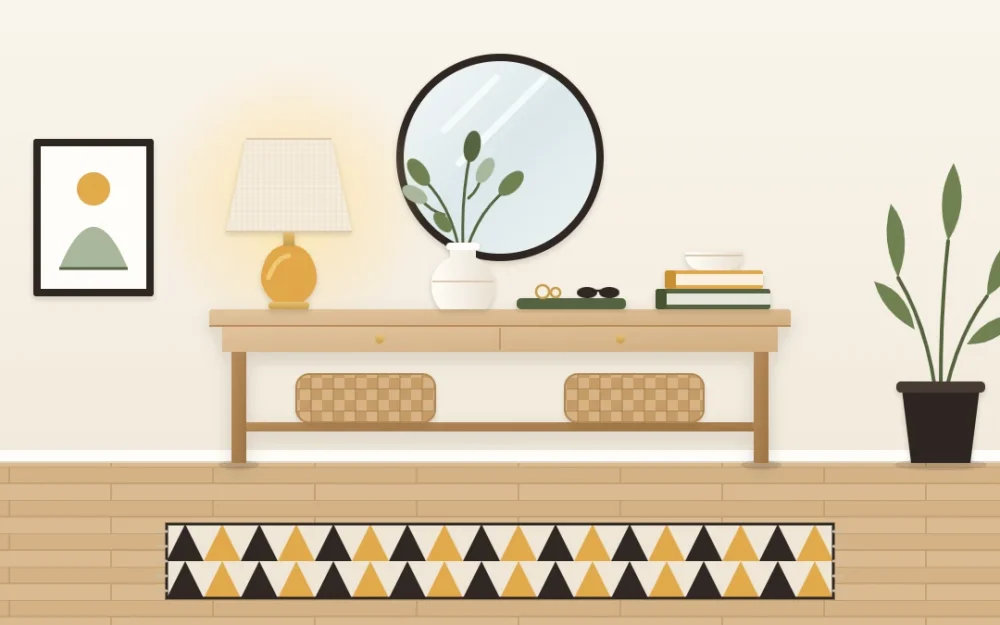
What a styled console is made of
Look at any entry table that feels right and you will find the same few parts:
- one large shape on the wall above,
- one tall element at one end,
- a lower, wider group at the other end,
- something natural,
- a clear place for keys, and empty surface between them all.
If you want to know how to style a console table in one sentence, that list is it. The steps simply put the parts down in the order that makes each decision easy.
The method, step by step
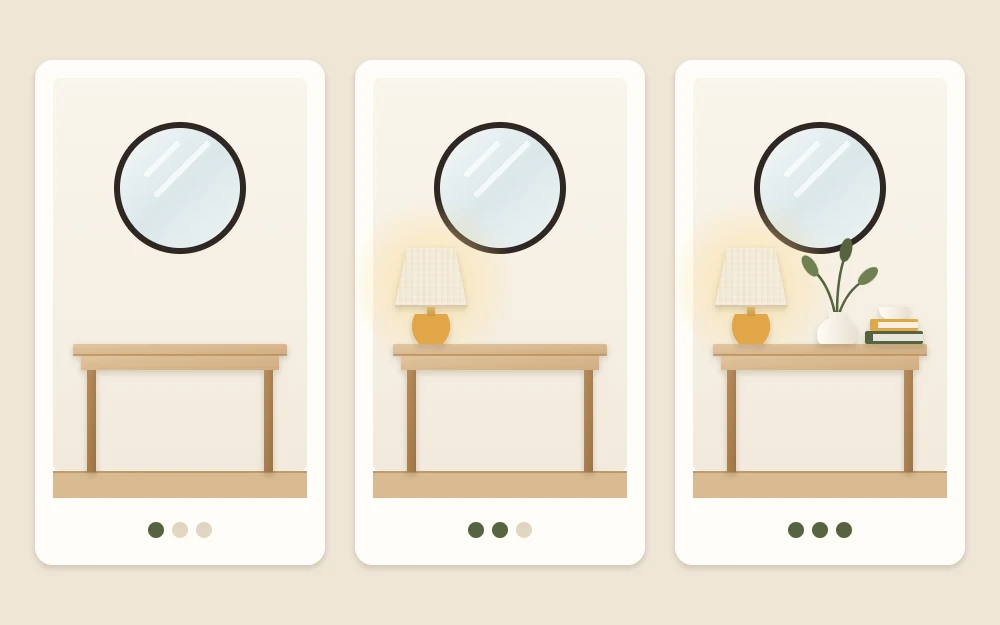
- Clear the surface. Take everything off, wipe the top, and set the items on the floor where you can see them.
- Set the anchor above. Position the mirror or artwork first, since everything on the table relates to it. As a loose guide it should be about two-thirds of the table’s width and sit roughly 6 to 8 in (15 to 20 cm) above the top, close enough that table and wall read as one arrangement.
- Add height at one end. Place a lamp or a tall vase of stems toward the left or right end, not in the center. It should overlap the lower part of the mirror or art slightly. Choose a lamp tall enough to balance the piece above; the guide to choosing an entryway table lamp covers the proportions.
- Balance the other end with something lower and wider. Two or three stacked books with a small object on top, or a broad bowl, give the opposite end visual weight without repeating the height. The two ends should feel equal, not identical.
- Add one living or natural element. A small plant, a vase of green stems, a branch, a piece of driftwood or a bowl of pine cones. One is enough. It softens the hard edges of frames, books and ceramics.
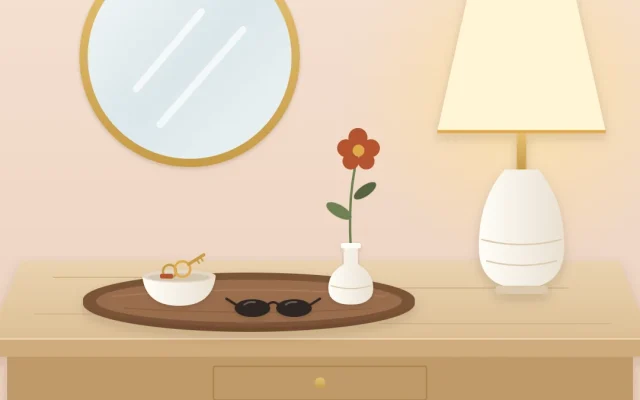
- Leave a landing spot. Give keys and sunglasses a small dish or tray near the front edge, on the side closest to the door. Then leave at least a third of the surface bare. Empty space is what makes the rest look arranged.
- Step back to the door and edit. Stand where a visitor would and look for a few seconds. Remove one thing. If nothing looks missing, leave it off.
Why odd numbers and uneven heights look better
Three ideas sit behind most console table decor ideas, and knowing them lets you adjust the method to any table.
Group in odd numbers
Three objects form a small triangle that the eye moves around; two objects form a pair that it compares. Groups of three or five tend to look relaxed, while even groups look formal. A matching pair of lamps is the deliberate exception, and it suits a long, symmetrical table.
Vary the heights
Aim for a tall, a medium and a low item across the surface, so the outline rises and falls instead of running flat. If everything is the same height, raise one piece on a couple of books.
Overlap a little
Let the lamp shade cross the edge of the mirror, or a stem lean in front of a frame. Slight overlaps connect the layers.
Repeat one color
Choose a single color and let it appear two or three times: in the lamp base, in a book spine, in the bowl. Keep everything else in neutrals such as wood, cream, black or glass. This one move does more for entryway console decor than any individual object, because it makes unrelated things look chosen together.
Tip
Pull the repeated color from something already fixed in the entry, such as the rug or the inside of the front door, so the table ties in with the space around it.
Quick fixes when it still looks off
If the result is not quite right, the cause is usually one of these.
- It looks cluttered. Too many small things. Swap three little objects for one larger one, or gather the small ones onto a tray so they read as a single item. See the guide to styling an entryway tray.
- It looks bare. The items are too small for the table. Add height first, with taller stems or a bigger lamp, before adding more pieces.
- It looks lopsided. One end is both tall and heavy. Move the books or bowl to the opposite end from the lamp.
- The whole thing looks too small or too large for the wall. That is a furniture question, not a styling one. Check the proportions in the guide to entryway console table size.
- The top looks good but the table seems to float. Open legs can leave a blank gap beneath. Baskets, stools or a single large object can ground it; the options are compared in what to put under a console table.
A note on the piece above
Entry table styling depends on the mirror or art being secure and at the right height, so settle that before you fuss over the objects below.
Before you hang anything
Pick hanging hardware to suit your wall type and the weight of the mirror or frame, and follow the manufacturer instructions. Get a second pair of hands for a heavy mirror if you are unsure. In a rental, check your lease or ask before making changes; leaning the art on the table against the wall is a lower-commitment option.
Keeping it styled
A console by the door is a working surface, so it will collect things. Once a week, return to step six: empty the landing spot, take away anything that does not belong, and check from the door. Replace stems when they fade, and change one object with the season if you like variety. The structure stays the same, which is why resetting it takes two minutes instead of thirty.
Frequently asked questions
How many things should be on an entryway console table?
There is no fixed number, but five to seven objects is a comfortable range for an average table, counting a stack of books or a filled tray as one. More important than the count is leaving about a third of the surface empty, so the pieces you keep have room to be seen.
Should a console table be styled symmetrically?
It can be, and a matching pair of lamps on a long table looks calm and formal. For most entries, an asymmetrical arrangement feels more relaxed and leaves more usable surface: something tall at one end, something lower and wider at the other, so the two sides balance without mirroring each other.
Where do keys and mail go on a styled console?
Give them one container, such as a small tray, dish or lidded box, on the side of the table nearest the door. Anything that lands there is allowed to be untidy. Keeping daily items inside that single boundary is what lets the remaining surface stay styled between weekly resets.