
The Best Large Houseplants to Transform Your Space in 2026
The best large houseplants for most homes combine easy care with serious visual impact. Here’s a quick look at the top picks:
| Plant | Light Needs | Maintenance Level | Pet Safe? |
|---|---|---|---|
| Snake Plant | Low to medium | Very low | No |
| ZZ Plant | Low to medium | Very low | No |
| Monstera Deliciosa | Medium to bright indirect | Low | No |
| Rubber Tree | Bright indirect | Low | No |
| Kentia Palm | Low to medium | Low | Yes |
| Fiddle Leaf Fig | Bright indirect | Medium | No |
| Bird of Paradise | Bright indirect | Low-medium | No |
| Corn Plant (Dracaena) | Low to medium | Very low | No |
| Parlor Palm | Low to medium | Low | Yes |
| Money Tree | Bright indirect | Low | Yes* |
*Mild toxicity if ingested — check with your vet.
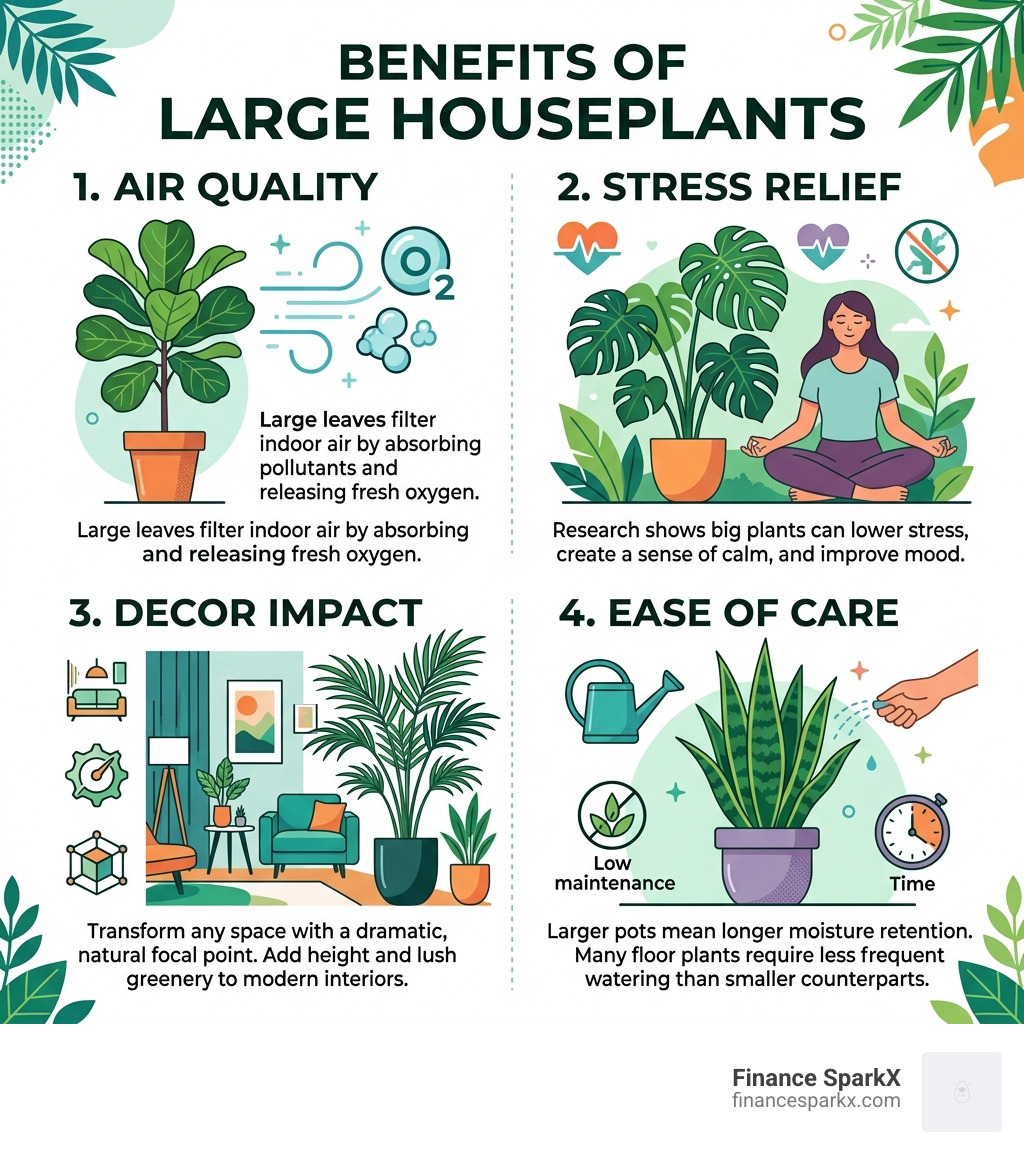
There’s something different about walking into a room with a towering Monstera or a graceful Fiddle Leaf Fig in the corner. It just feels better in there.
And it’s not just a feeling. Research backs it up. Plants can lower stress, improve focus, and even help clean the air. For busy homeowners who want a greener, calmer space without a lot of upkeep, large houseplants are one of the smartest upgrades you can make.
The good news? You don’t need a green thumb. Many of the most impressive floor plants are also the most forgiving. A bigger pot means more soil, which holds moisture longer — so large plants are often easier to care for than small ones.
Whether you’re filling an empty corner, refreshing a home office, or just starting your indoor jungle, this guide covers everything you need to know.
The 10 Best Large Houseplants for Beginners
If you are just starting your journey into indoor gardening in April 2026, you want plants that offer high impact with low drama. We have curated a list of the best large houseplants that are notoriously difficult to kill and incredibly rewarding to grow.
1. Snake Plant (Sansevieria)
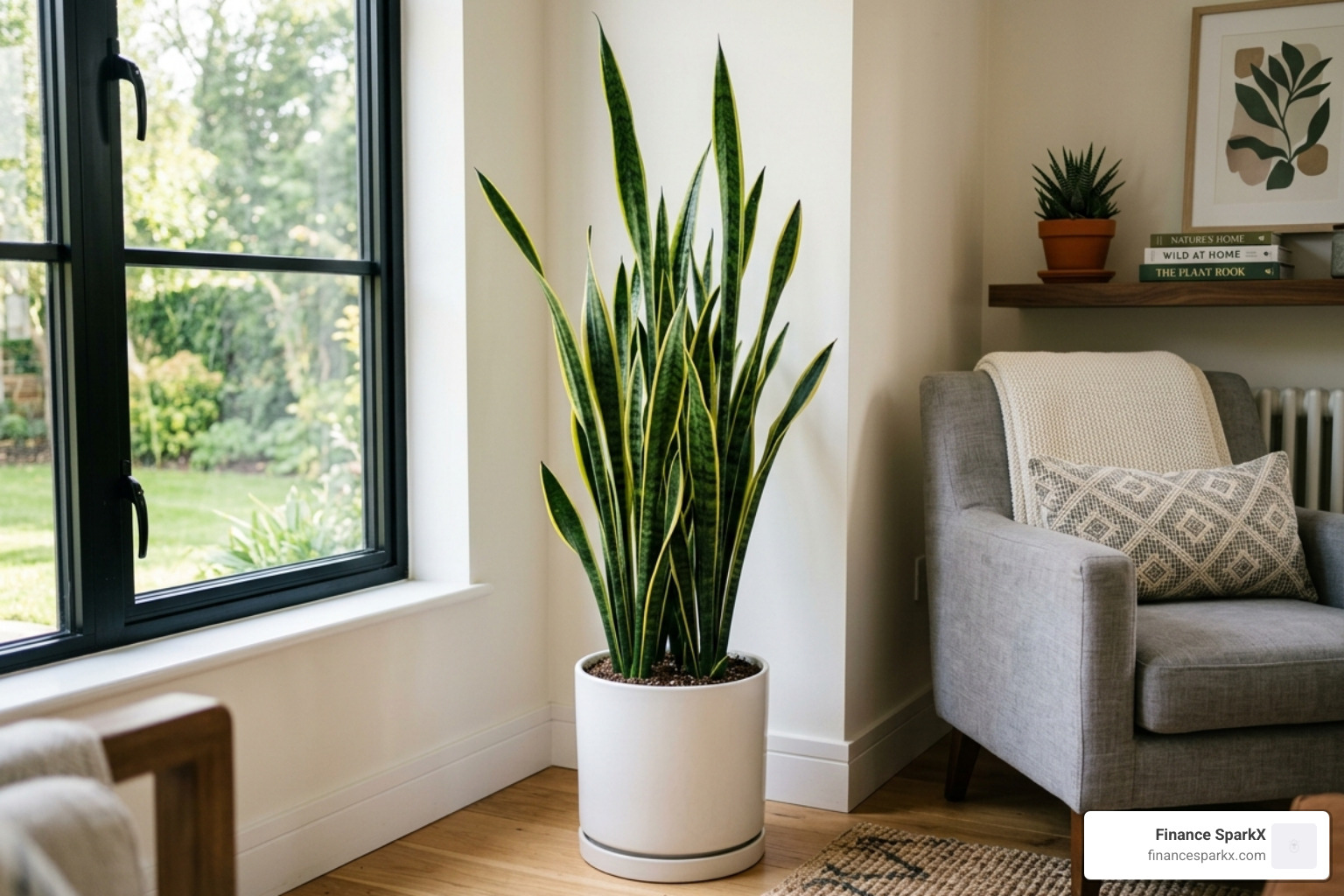
The Snake Plant is the undisputed heavyweight champion of low-maintenance greenery. It thrives on neglect, tolerates low light, and only needs water when the soil is bone dry. In a bedroom, it’s a productivity powerhouse because it converts CO2 into oxygen while you sleep.
2. ZZ Plant (Zamioculcas zamiifolia)
If you have a “dungeon” of an apartment, the ZZ plant is for you. It features waxy, deep green leaves and can survive months without water thanks to its underground rhizomes. It is the definition of “set it and forget it.”
3. Monstera Deliciosa (Swiss Cheese Plant)
The iconic “Swiss Cheese Plant” is a must-have for that urban jungle vibe. Its broad, heart-shaped leaves develop unique holes (fenestrations) as it matures. Given a moss pole for support, these can grow up to 10 feet tall indoors!
4. Rubber Tree (Ficus elastica)
Rubber plants are fantastic because they grow fast and reach up to 6 feet tall quite easily. For those who love a pop of color, the Ficus Ruby offers stunning pink-variegated leaves, while the Ficus Shivereana provides a unique “camouflage” look with speckled olive-green foliage.
5. Fiddle Leaf Fig (Ficus lyrata)
While sometimes called “dramatic divas,” Fiddle Leaf Figs are manageable if you find their “happy place” with bright, indirect light and leave them there. They can reach 6 to 10 feet, creating a stunning architectural focal point.
6. Kentia Palm (Howea forsteriana)
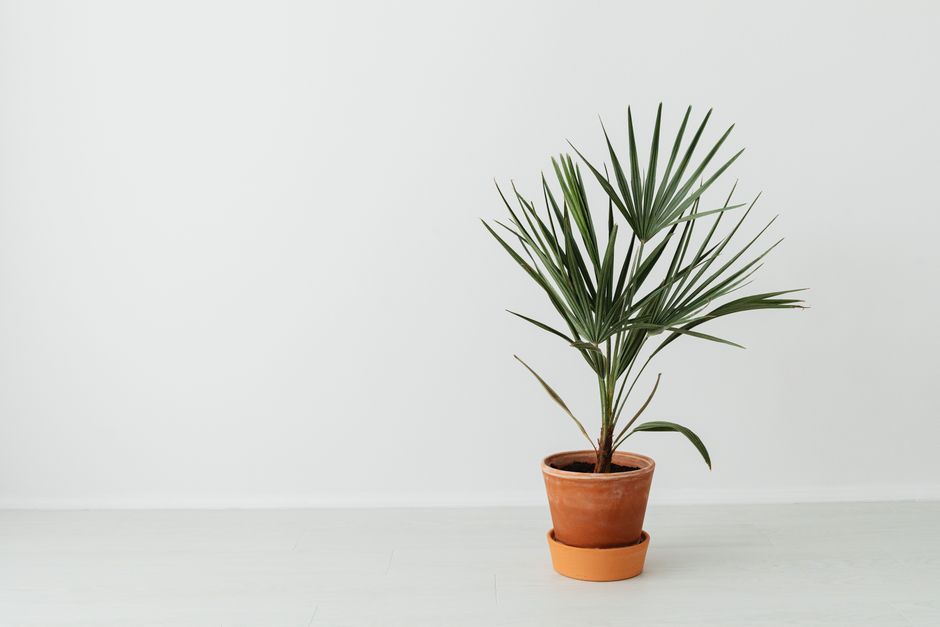
The Kentia Palm is the “quiet luxury” of the plant world. It grows slowly, meaning it won’t outgrow its space quickly, and it handles lower light better than most palms. Since it grows so slowly, we recommend buying a larger specimen if you want immediate height.
7. Corn Plant (Dracaena fragrans)
With its woody trunk and fountain-like leaves, the Corn Plant looks like a piece of living furniture. It’s incredibly hardy and perfect for adding height to a room without taking up too much floor width.
8. Bird of Paradise (Strelitzia nicolai)
The Giant White Bird of Paradise is for those who want massive, banana-like leaves and a tropical feel. It needs bright light to thrive but is relatively easy to care for once its light needs are met.
9. Money Tree (Pachira aquatica)
The Money Tree is often sold with a beautiful braided trunk. It’s a fast grower that can reach over 10 feet tall. It’s also famous in Feng Shui for bringing good luck and fortune. You can find beautiful large specimens at The Sill that come ready to style.
10. Philodendron Giganteum
If you really want to change the scale of a room, the Philodendron giganteum is the way to go. Its leaves can reach up to 4 feet in length! It’s a “scandent” climber, meaning it loves a trellis or just a big corner to call its own.
Essential Care for Your Indoor Giants
Caring for the best large houseplants is slightly different than managing a tiny succulent on your desk. Because these plants have more soil mass, they are actually more resilient. Here is how to keep them thriving.
Light Requirements
Understanding light is the secret to plant success.
- Low Light: North-facing windows or spots at least 10 feet away from a window. (Snake Plants, ZZ Plants).
- Medium Light: 2-4 hours of sun, often found in east or west-facing rooms. (Money Trees, Dracaenas).
- High/Bright Indirect Light: 5+ hours of sun, but not hitting the leaves directly (which can cause sunburn). (Fiddle Leaf Figs, Rubber Trees).
Watering and the “Liquid Love” Mistake
The most common way to kill a floor plant is overwatering—or what we like to call “giving it too much liquid love.”
- The Finger Test: Always stick your finger two inches into the soil. If it’s still damp, wait a few days.
- Drainage is Non-Negotiable: Never let your plant sit in a saucer of water. This leads to root rot.
- Seasonal Adjustments: In April 2026, as the days get longer, your plants will wake up and need more water. In the winter, you should significantly cut back.
Humidity and Fertilizing
Most large plants are tropical. They love humidity! If your home is dry, consider misting them or using a humidifier. For feeding, use a balanced liquid fertilizer once a month during the spring and summer. Skip the “food” in the winter when the plant is resting.
Repotting and Maintenance
Large plants only need repotting every 2-3 years. If you see roots peeking out of the drainage holes, it’s time for a bigger home. Pro Tip: Dust the leaves! Large leaves on Fiddle Leaf Figs and Rubber Trees act like solar panels. If they are dusty, the plant can’t “eat” sunlight efficiently. Wipe them down with a damp cloth to keep them shiny and healthy.
Styling and Decorating with Large Houseplants
At Finance SparkX, we believe your home should be both productive and eco-conscious. Large plants are the ultimate “green” decor.
- Entryways: Use a Fiddle Leaf Fig or a Bird of Paradise to create a dramatic first impression for guests.
- The Home Office: A Kentia Palm or Snake Plant near your desk can improve air quality and help you stay focused during long work sessions.
- Living Room Corners: Large plants are perfect for filling “dead space” behind sofas or in empty corners.
- Narrow Spaces: If you have a tight spot, the Spineless Yucca grows straight up and neat, making it a perfect fit.
- Adding Height: If your plant isn’t quite tall enough yet, use a stylish plant stand. This adds instant height and makes the plant a more prominent focal point.
Safety and Selection Strategies
When you are out shopping for the best large houseplants, don’t just grab the first one you see. Look for these signs of a healthy specimen:
- Check the Roots: If possible, peek at the bottom. Roots should be firm, not mushy.
- Look for New Growth: Small, bright green leaves at the top are a great sign the plant is happy.
- Inspect for Pests: Check the undersides of leaves for any tiny webs or spots.
Pet-Friendly vs. Toxic Best Large Houseplants
If you have furry roommates, safety is the top priority. Many popular plants are unfortunately toxic if chewed on.
- Pet-Friendly Giants: Parlor Palms, Areca Palms, Kentia Palms, and Money Trees are generally safe.
- Toxic to Pets: Monstera, Snake Plants, ZZ Plants, and all Ficus varieties (like Rubber Trees and Fiddle Leaf Figs) can cause stomach upset or irritation.
Always check the ASPCA’s Toxic and Non-Toxic Plant List before bringing a new giant home.
How to Buy and Grow the Best Large Houseplants on a Budget
Let’s be honest: a 6-foot Fiddle Leaf Fig can be expensive! If you’re looking to save money while building your indoor jungle, here are our favorite hacks:
- Buy Small, Grow Big: Rubber plants and Monsteras grow incredibly fast. Buying a specimen in a 10-inch pot (usually much cheaper) can result in a 6-foot “floor plant” within two years.
- Big Box Stores: You can often find great deals at stores like IKEA or Home Depot. Just be sure to “quarantine” the plant away from others for a week and check for pests.
- Propagation: Ask a friend for a cutting! Rubber trees are easy to grow from a simple stem cutting in water.
- Use Taller Pots: You can make a medium-sized plant look like a “specimen” plant simply by placing its nursery pot inside a taller, decorative planter.
Frequently Asked Questions
Which large houseplants grow the tallest indoors?
The Norfolk Island Pine can reach 5-8 feet indoors, while a Rubber Plant can hit the ceiling (about 8-10 feet) if you let it! Monstera Deliciosa also has massive height potential if it has a sturdy moss pole to climb.
How do I prevent brown leaf tips on large plants?
Brown tips are often caused by low humidity or chemicals in tap water. Dracaenas and Palms are particularly sensitive to fluoride. Try using filtered water or rainwater, and increase the humidity around the plant with a tray of pebbles and water.
Are large plants easier to care for than small ones?
Surprisingly, yes! Because they live in larger pots, they have more soil mass. This means the soil stays moist longer, giving you a “buffer” if you forget to water for a few days. They are more established and resilient than tiny, fragile saplings.
Conclusion
Creating an indoor jungle doesn’t have to be a full-time job. By choosing the best large houseplants for your specific light and space, you can enjoy a more beautiful, productive, and eco-conscious home. Whether it’s the architectural beauty of a braided Money Tree or the indestructible nature of a Snake Plant, these giants are ready to anchor your space.
At Finance SparkX, we’re all about helping you find that perfect balance between a busy lifestyle and a sustainable, green home. We hope this guide inspires you to add a little more “life” to your living room this year!
