
Succulents That Like Indirect Light More Than a Tan
Not All Succulents Need a Sunny Windowsill
Succulents for indirect light are a real thing — and there are more great options than most people realize.
Quick answer: the best succulents for indirect light include:
| Succulent | Type | Light Need |
|---|---|---|
| Zebra Haworthia (Haworthiopsis attenuata) | Tabletop | Bright indirect to low |
| Snake Plant (Dracaena spp.) | Tabletop/floor | Low to indirect |
| ZZ Plant (Zamioculcas zamiifolia) | Tabletop/floor | Low to indirect |
| Gasteria / Ox Tongue | Tabletop | Indirect |
| Panda Plant (Kalanchoe tomentosa) | Tabletop | Bright indirect |
| String of Hearts (Ceropegia woodii) | Hanging | Bright indirect |
| String of Pearls (Senecio rowleyanus) | Hanging | Bright indirect |
| Mistletoe Cactus (Rhipsalis baccifera) | Hanging | Low to indirect |
| Holiday Cactus (Schlumbergera) | Tabletop | Indirect |
Most succulents crave full sun. But a surprising number of them actually prefer the softer light of an east- or west-facing window — and a few can manage in dimmer spots too.
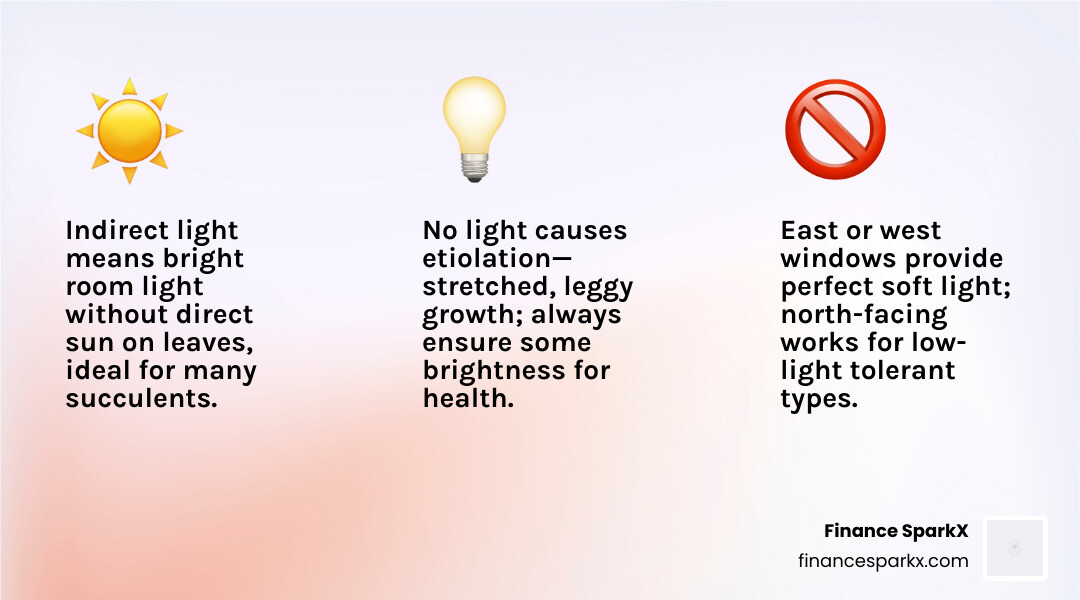
The catch? “Indirect light” doesn’t mean no light. Every succulent on this list still needs some natural or artificial light to stay healthy. A completely dark room won’t work. But a bright room without direct sun? That’s plenty for the right varieties.
If you’ve ever killed a succulent by overwatering it in a dim corner, you’re not alone. The good news is that with the right plant and the right setup, low-maintenance indoor succulents are very achievable — even for a busy household.
Top Succulents for Indirect Light: Tabletop and Hanging Varieties
When we think of succulents, we often picture desert landscapes with scorching sun. However, many species have evolved to grow in the shadows of boulders or under the canopy of larger plants. In our homes, these are the champions of the bookshelf and the stars of the north-facing window.
The Haworthiopsis attenuata (Zebra Plant) – World of Succulents is a quintessential example. These rosettes can reach up to 6 inches (15 cm) in height and 5 inches (12.5 cm) in diameter. They are famous for their white, warty tubercles that look like zebra stripes against dark green leaves. Because they are slow-growing and tolerate “semi-shaded” positions, they are perfect for office desks where natural light might be limited.
If you are a self-proclaimed “black thumb,” the Snake Plant (Dracaena) and the ZZ Plant (Zamioculcas zamiifolia) are your best friends. These aren’t just succulents for indirect light; they are practically indestructible. The ZZ plant stores water in thick rhizomes underground, allowing it to survive weeks of neglect. Similarly, Snake Plants can reach heights of 4 feet or stay compact, depending on the variety, and they are one of the few plants that can actually “survive” in a dim corner, even if they prefer a bit more light to “thrive.”
Another fantastic indoor choice is the Haworthiopsis concolor | Succulents and Sunshine, which grows up to 6 inches (15 cm) tall. It thrives on neglect and filtered sunlight, making it an ideal entry point for beginners in April 2026.
Best Tabletop Succulents for Indirect Light
For those of us looking to decorate coffee tables or nightstands, tabletop varieties offer architectural interest without taking up too much real estate.
- Haworthia fasciata: Often confused with its cousin H. attenuata, the Zebra Haworthia grows about 5-6 inches tall and wide. It’s a slow grower that won’t outgrow its pot quickly.
- Panda Plant (Kalanchoe tomentosa): This Madagascar native is a crowd favorite because of its fuzzy, velvet-like leaves. It reaches 12-18 inches tall and wide. We love the “pussy ears” nickname it sometimes gets!
- Gasteria (Ox Tongue): Named for its tongue-shaped leaves, this plant is incredibly hardy. Some varieties, like Gasteria glomerata, are compact and produce beautiful orange flowers.
- Haworthiopsis longiana: If you want something a bit more substantial, Haworthiopsis longiana – World of Succulents features rosettes that can reach up to 12 inches (30 cm) in height. Interestingly, its leaves can turn red if the light gets too intense, which is its way of telling you it needs a bit more shade.
These tabletop varieties are generally slow-growing, meaning they require fewer resources and less frequent repotting. This fits perfectly with our goal of sustainable, low-maintenance living.
Trailing Succulents for Indirect Light
Trailing succulents add a vertical dimension to your decor, draping elegantly from shelves or hanging baskets.
- String of Hearts (Ceropegia woodii): With vines that can reach up to 12 feet long, this is a showstopper. It prefers bright, indirect light to keep its heart-shaped leaves vibrant.
- String of Pearls (Senecio rowleyanus): This plant looks like a string of green peas and can dangle 2-3 feet. It’s a bit more sensitive to overwatering, so ensure the soil dries out completely.
- Burro’s Tail (Sedum morganianum): Its pendant stems can grow up to 4 feet long. Be careful when moving it, as the fleshy leaves pop off easily (though you can propagate those fallen leaves!).
- Mistletoe Cactus (Rhipsalis baccifera): Unlike desert succulents, this is an epiphyte from the South American rainforest. It loves indirect light and slightly more humidity than its prickly cousins.

Mastering Care for Low-Light Succulents
Caring for succulents for indirect light requires a slight shift in mindset compared to sun-loving varieties. Because they aren’t under the hot sun, they don’t “sweat” out moisture as quickly.
| Feature | Tabletop Succulents (e.g., Haworthia) | Hanging Succulents (e.g., String of Pearls) |
|---|---|---|
| Watering | Every 3-4 weeks | Every 2-3 weeks |
| Soil Type | Coarse cactus mix | Well-draining with perlite/peat |
| Pot Material | Terracotta is best | Plastic or ceramic (with drainage) |
| Growth Rate | Very slow | Moderate to fast |
The golden rule for all succulents, especially those in lower light, is to prevent root rot. We highly recommend using terracotta pots because the porous clay allows the soil to breathe and dry out faster. Whatever pot you choose, it must have drainage holes.
For soil, a specialized cactus compost or a DIY mix of potting soil, coarse sand, and perlite works wonders. Even the beautiful Echeveria Elegans, which can grow up to 8 inches tall and 12 inches wide, needs this “fast-drain” environment to stay healthy. While Echeveria elegans (the “Mexican Snowball”) is often cited as a sun-lover, it can adapt to bright indirect light if you’re careful with the watering can.
Watering and Light Requirements for Succulents for Indirect Light
The “soak and dry” method is the industry standard. This means you water the soil until it runs out of the drainage holes, and then you don’t touch it again until the soil is bone-dry all the way through. In indirect light, this might only happen once a month.
Window Orientations:
- East-Facing: The “Goldilocks” zone. It provides bright morning light that isn’t too intense.
- West-Facing: Good, but can get quite warm in the afternoon. You might need to move your plants a few feet back from the glass.
- North-Facing: This is the dimmest option. While Snake Plants and ZZ Plants can survive here, most other succulents will struggle to thrive without help.
- South-Facing: Usually too intense for “indirect light” lovers. Use a sheer curtain to filter the sun.
If your home is naturally dark, don’t despair. Modern LED grow lights are a game-changer. Stationing a small tabletop grow light over your plants for 6-8 hours a day can make up for a lack of windows. We find that using a timer helps maintain a consistent “day-night” cycle, which is vital for plant health and your own productivity.
Propagation and Troubleshooting Common Issues
One of the joys of succulent parenting is propagation. Most low-light varieties are easy to multiply.
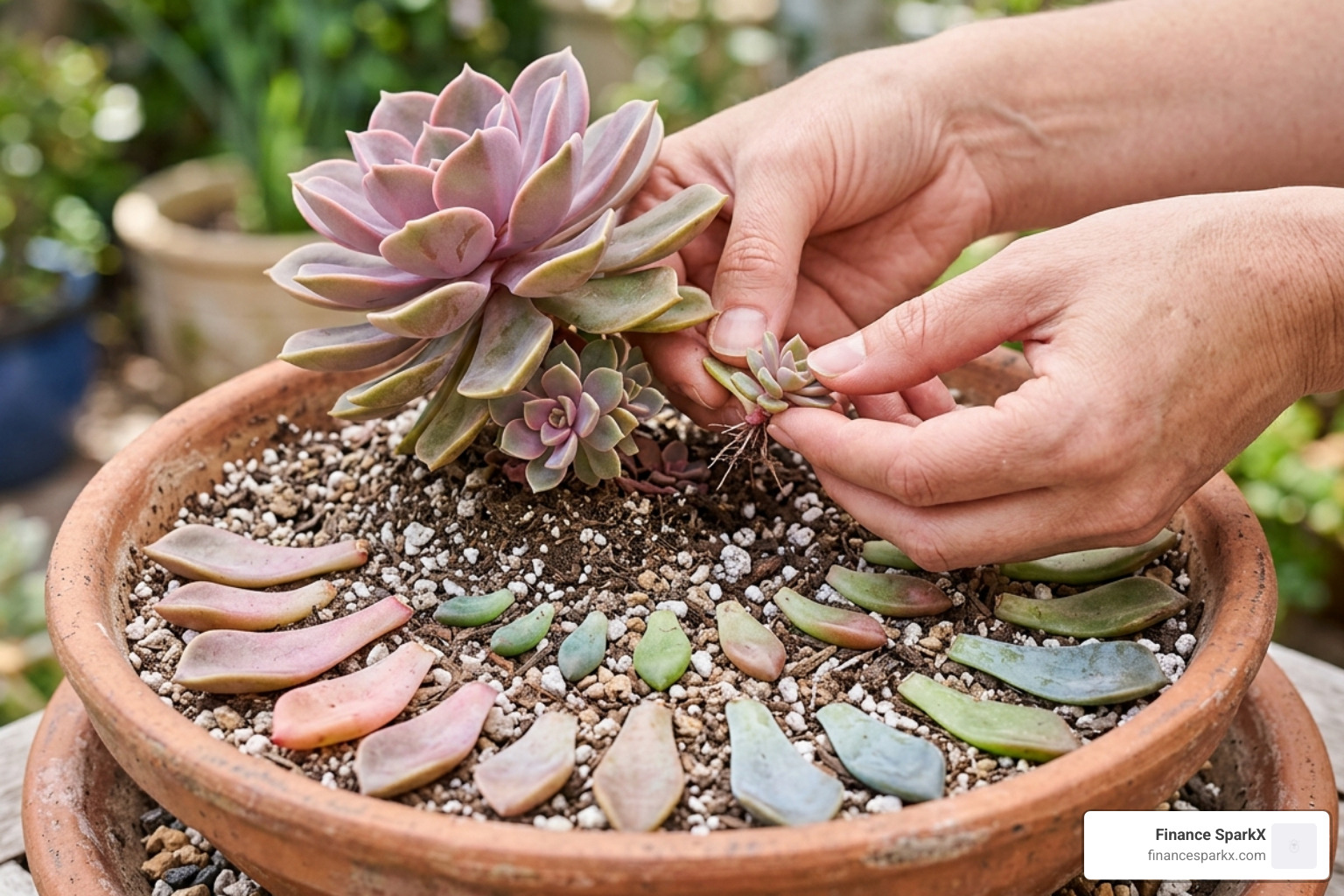
- Offsets: Plants like Haworthia and Aloe produce “pups.” You can gently pull these up, let them callus (dry out) for a day or two, and then replant them.
- Leaf Cuttings: For plants like the Panda Plant or Echeveria, a single leaf can grow a whole new plant.
- Stem Cuttings: Ideal for trailing varieties like String of Bananas.
Troubleshooting: The “Leggy” Problem The most common issue with succulents for indirect light is etiolation. This is when a plant stretches out, becoming tall and “leggy” as it searches for more sun.
- The Fix: You can’t “un-stretch” a plant, but you can “behead” it. Cut the top off, let it callus, and replant it. It will grow as a new, compact rosette. Meanwhile, the original stem will often produce new babies!
Safety and Selection: Choosing the Right Plant for Your Home
Before you bring a new green friend home, consider your roommates—especially the four-legged ones.
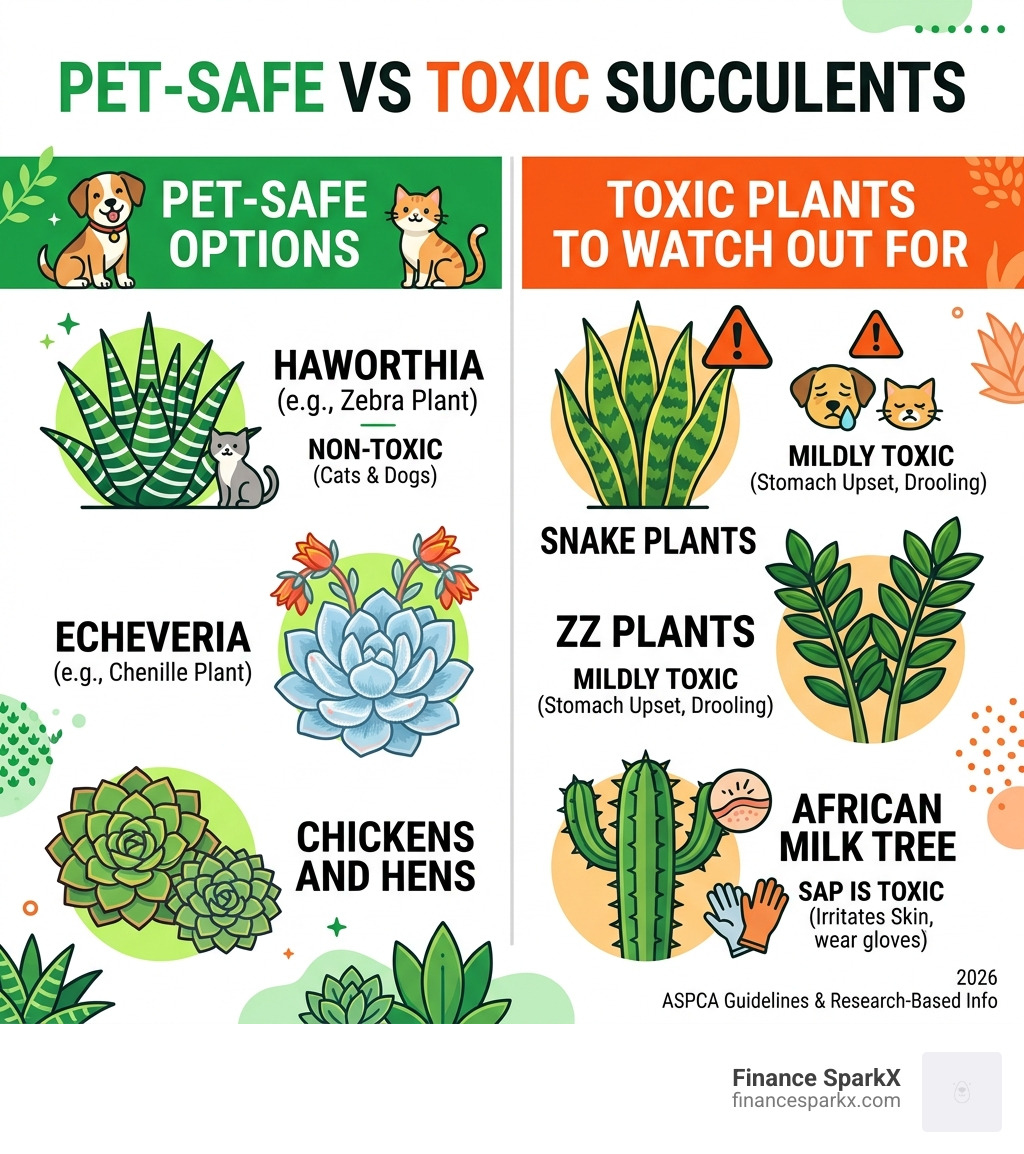
Pet-Friendly Options: According to ASPCA guidelines and research, most Haworthia species (like the Zebra Plant) and Echeveria are non-toxic to cats and dogs. The Echeveria leucotricha | chenille plant Cactus Succulent/RHS is a beautiful, safe choice. It features pale blue leaves covered in soft white hairs and produces stunning orange-red flowers.
Plants to Watch Out For:
- Snake Plants and ZZ Plants: These are mildly toxic if ingested by pets, causing stomach upset or drooling.
- African Milk Tree: The sap is toxic and can irritate the skin. Always wear gloves when pruning.
When buying, look for healthy specimens. Avoid plants with yellowing leaves, mushy stems (a sign of rot), or tiny white fluff (mealybugs). A healthy Haworthia should feel firm to the touch.
Frequently Asked Questions about Indirect Light Succulents
Can succulents survive in a windowless room?
Technically, no succulent can survive in total darkness indefinitely. However, they can thrive in a windowless room if you provide artificial light. A high-quality LED grow light on a timer for 8 hours a day mimics the sun well enough for a ZZ plant or a Snake Plant to live a long, happy life.
How do I fix a leggy succulent?
As mentioned, the best way is the “behead and replant” method. Pruning back a Panda Plant by half a few times a year also encourages a bushier, less leggy growth habit. Always ensure that after you prune, you move the plant to a slightly brighter spot to prevent the new growth from stretching again.
Which low-light succulents produce flowers?
Many do!
- Holiday Cacti (Schlumbergera): These bloom in winter (Thanksgiving or Christmas) with vibrant pinks and reds. They actually prefer cooler temperatures and indirect light to trigger their buds.
- Wax Plant (Hoya): Known for its incredible scent, it produces clusters of star-shaped flowers when it’s happy and slightly pot-bound.
- Gasteria: These often produce arching stems with stomach-shaped (hence “Gaster”) orange flowers.
Conclusion
At Finance SparkX, we believe that a balanced lifestyle is rooted in our environment. Integrating succulents for indirect light into your home isn’t just about decor; it’s about bringing a slice of sustainable nature into your workspace to boost productivity and peace of mind.
Whether you choose a towering Snake Plant for a dim corner or a tiny Zebra Haworthia for your desk, these plants prove that you don’t need a greenhouse to be a successful gardener. By choosing the right species and mastering the “soak and dry” method, you can enjoy a lush, eco-conscious home all year round.
Ready to dive deeper into home improvement and green living? More info about our lifestyle tips is just a click away!
