
The Ultimate Guide to Thriving Shade Loving Succulents
Not All Succulents Need Full Sun — Here Are the Best Shade Lovers
Shade loving succulents are real, and there are more of them than most people think.
Most succulents get a reputation for needing bright, direct sunlight. But a surprising number of species actually prefer low light — and some will struggle or even die in too much sun.
Here are the top shade loving succulents at a glance:
| Succulent | Light Needed | Best For |
|---|---|---|
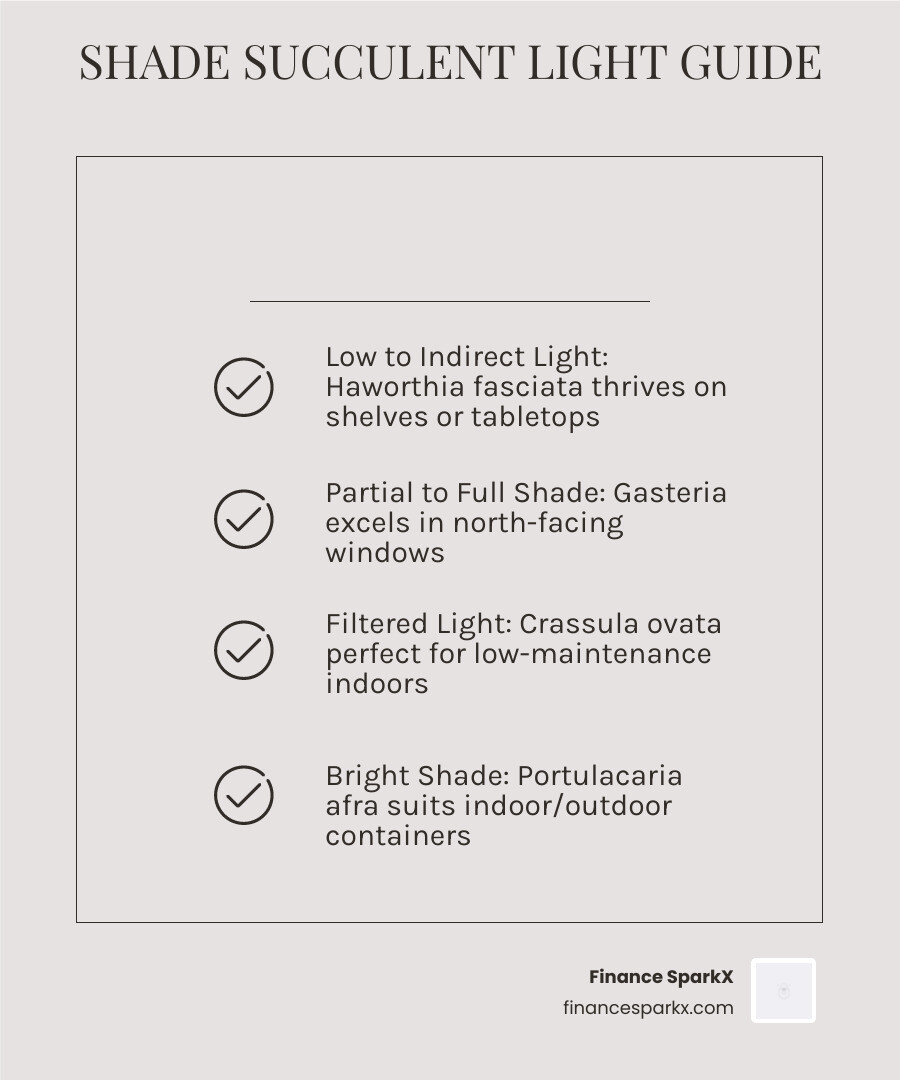
| Haworthia fasciata (Zebra Plant) | Low to indirect light | Indoors, shelves, tabletops |
| Gasteria (Lawyer’s Tongue) | Partial to full shade | Shady corners, north windows |
| Crassula ovata (Jade Plant) | Filtered light | Indoors, low-maintenance spaces |
| Sansevieria (Snake Plant) | Low indirect light | Any room, any skill level |
| Aloe aristata (Lace Aloe) | Partial shade | Outdoor shade gardens |
| Aeonium urbicum | Partial shade | Containers, cool climates |
| Sempervivum arachnoideum | Partial shade | Rock gardens, cold climates |
| Portulacaria afra (Elephant’s Food) | Bright shade | Indoor or outdoor containers |
One important thing to understand: shade for succulents doesn’t mean darkness. As one source puts it well — you can’t stick these plants in a closet and expect them to survive. They still need some indirect or filtered light to thrive.
The good news? If you have a low-light living room, a north-facing window, or a shady garden corner, there are plenty of beautiful, low-maintenance options that will genuinely thrive — not just survive.
Introduction
At Finance SparkX, we believe that a balanced lifestyle involves bringing nature into our homes without the stress of high-maintenance chores. As we move through April 2026, many of us are looking for ways to green up our “sun-starved” spaces. Whether you live in a cozy apartment with limited windows or have a garden corner dominated by a large oak tree, the myth that you can’t grow succulents is officially debunked.
When we talk about light for shade loving succulents, we usually categorize it into two types:
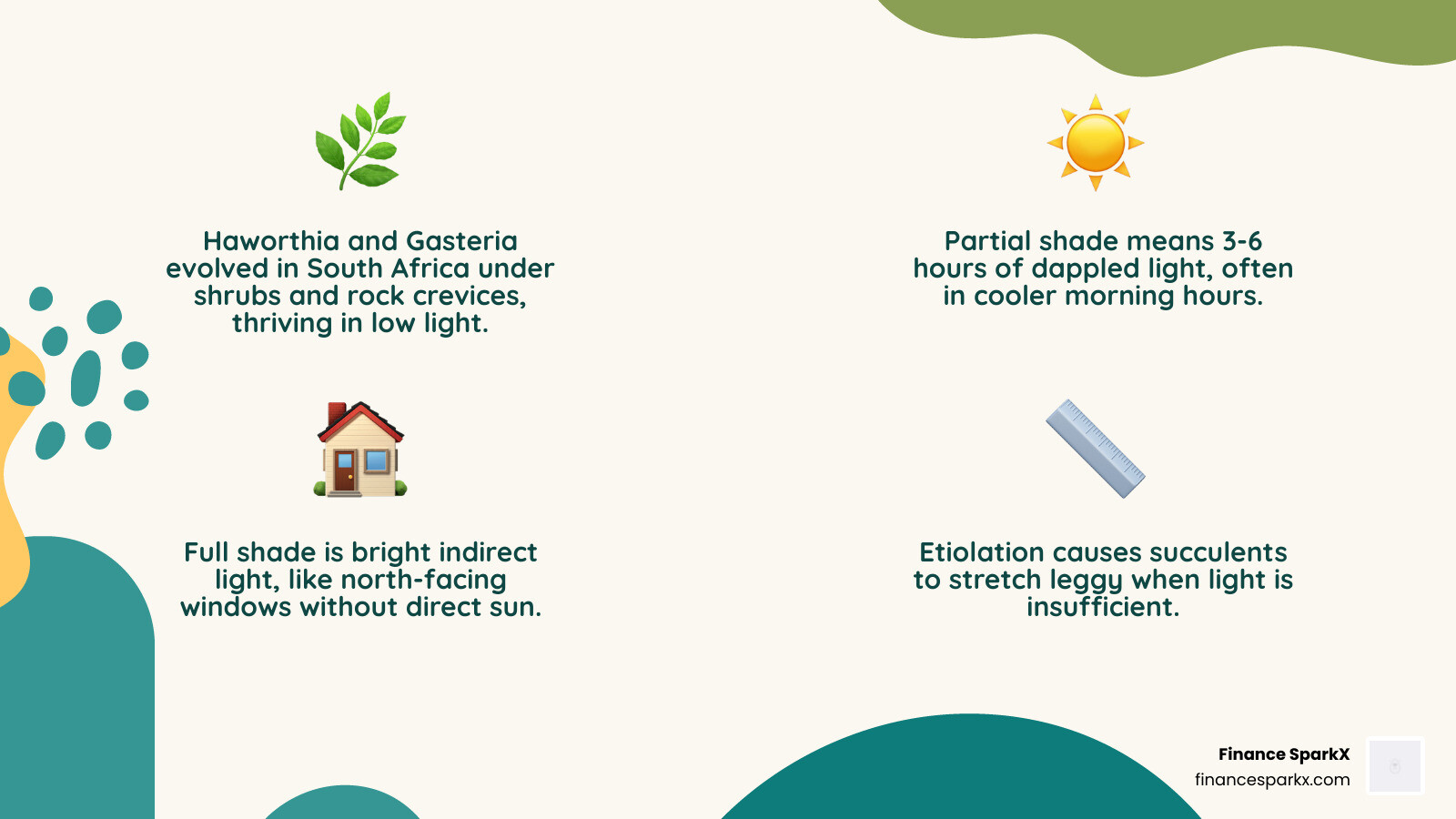
- Partial Shade: This typically means about 3 to 6 hours of light, often dappled or occurring during the cooler morning hours.
- Full Shade/Indirect Light: This doesn’t mean a pitch-black room. It refers to bright, reflected light—like a room with a north-facing window where the sun never hits the plant directly.
Understanding this distinction is the key to preventing “etiolation”—that frustrating phenomenon where your once-compact succulent stretches out and becomes “leggy” as it desperately searches for a light source.
Top Shade Loving Succulents for Indoor and Outdoor Spaces
If you are just starting your journey into low-light greenery, two genera stand out above the rest: Haworthia and Gasteria. These plants have evolved in South Africa to hide under shrubs or in rock crevices, making them naturally adapted to lower light levels.
The Stars of the Shade: Haworthia and Gasteria
- Haworthia fasciata (Zebra Plant): Perhaps the most famous of all shade loving succulents, the Zebra Plant features striking white horizontal stripes on dark green leaves. It is slow-growing and perfect for coffee tables.
- Gasteria bicolor: Often called “Lawyer’s Tongue” because of its long, rough-textured leaves, this plant is nearly indestructible. It produces beautiful orange, stomach-shaped flowers even in lower light.
- Haworthia emelyae: This species is a true gem for collectors. It forms low rosettes of fleshy, triangular leaves. While it can handle some sun, it actually requires protection from hot, direct rays to prevent its white markings from scorching. You can find more detailed botanical info on Haworthia emelyae here.
Why They Love the Shade
Many of these plants feature “windowed leaves.” If you look closely at species like Haworthia cooperi, the tips of the leaves are translucent. In the wild, these plants grow mostly underground; these “windows” allow sunlight to filter down into the body of the plant for photosynthesis. This high chlorophyll efficiency is what makes them such successful shade loving succulents.
Top 5 Varieties for Deep Indirect Light:
- Haworthia limifolia (Fairy Washboard)
- Gasteria ‘Little Warty’
- Sansevieria trifasciata (Snake Plant)
- Ledebouria socialis (Silver Squill)
- Crassula ovata (Jade Plant)
Crassula and Sansevieria: Versatile Shade Loving Succulents
We cannot talk about shade without mentioning the Snake Plant (Sansevieria). It is the gold standard for low-light endurance. While it grows faster in bright light, it will happily sit in a dim corner for years. Similarly, the Jade Plant (Crassula ovata) is incredibly versatile. While often grown in full sun, it adapts beautifully to filtered light indoors.
However, be aware that light levels affect appearance. For example, the stunning Echeveria ‘Afterglow’ displays vibrant pink and purple hues in bright light but will shift toward a softer, silvery-green in partial shade.
| Feature | Sun-Grown | Shade-Grown |
|---|---|---|
| Growth Rate | Fast | Slow |
| Color | Intense (Red/Purple/Black) | Deep Green/Silvery |
| Leaf Shape | Compact/Tight Rosette | Slightly broader/open |
| Water Needs | Frequent (high evaporation) | Infrequent (low evaporation) |
Beginner-Friendly Shade Loving Succulents
If you’re worried about your “black thumb,” start with Elephant’s Food (Portulacaria afra) or the Lace Aloe (Aloe aristata). These are resilient species that can handle a bit of neglect.
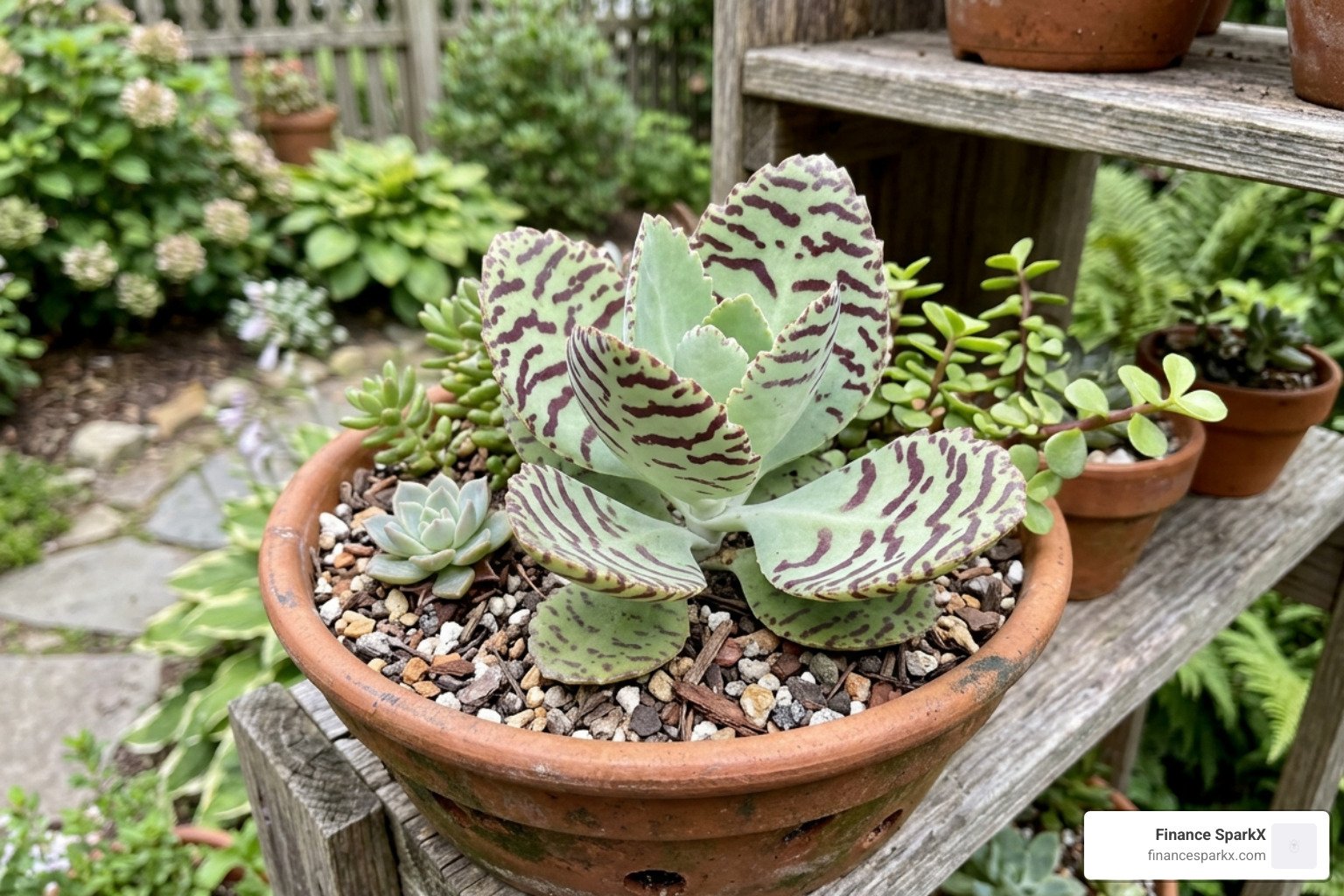
Another favorite of ours is the Kalanchoe humilis. This plant is famous for its “tiger stripes”—maroon spots that decorate its pale green leaves. While it loves bright shade, those maroon spots become most vivid when it gets at least a few hours of dappled sun. It’s a great “bridge” plant for those transitioning from sun-loving varieties.
Essential Care and Soil Requirements
The biggest mistake we see with shade loving succulents is overwatering. Because these plants are not in the hot sun, the water in their soil doesn’t evaporate nearly as fast. If the roots sit in damp soil for too long, they will rot.
The Golden Rule: Drainage
Always use a pot with drainage holes. If you find a decorative pot you love that doesn’t have holes, use it as a “cachepot”—keep the plant in a plastic nursery liner inside the decorative one. For soil, we recommend a high-quality cactus compost or a mix of potting soil, coarse sand, and perlite.
A fascinating example of a shade-dweller with specific needs is Adromischus umbraticola. Its name literally translates to “shade-lover” in Latin! In its native South Africa, it grows in rock crevices on south-facing cliffs. It requires very gritty, well-draining soil to mimic its rocky home.
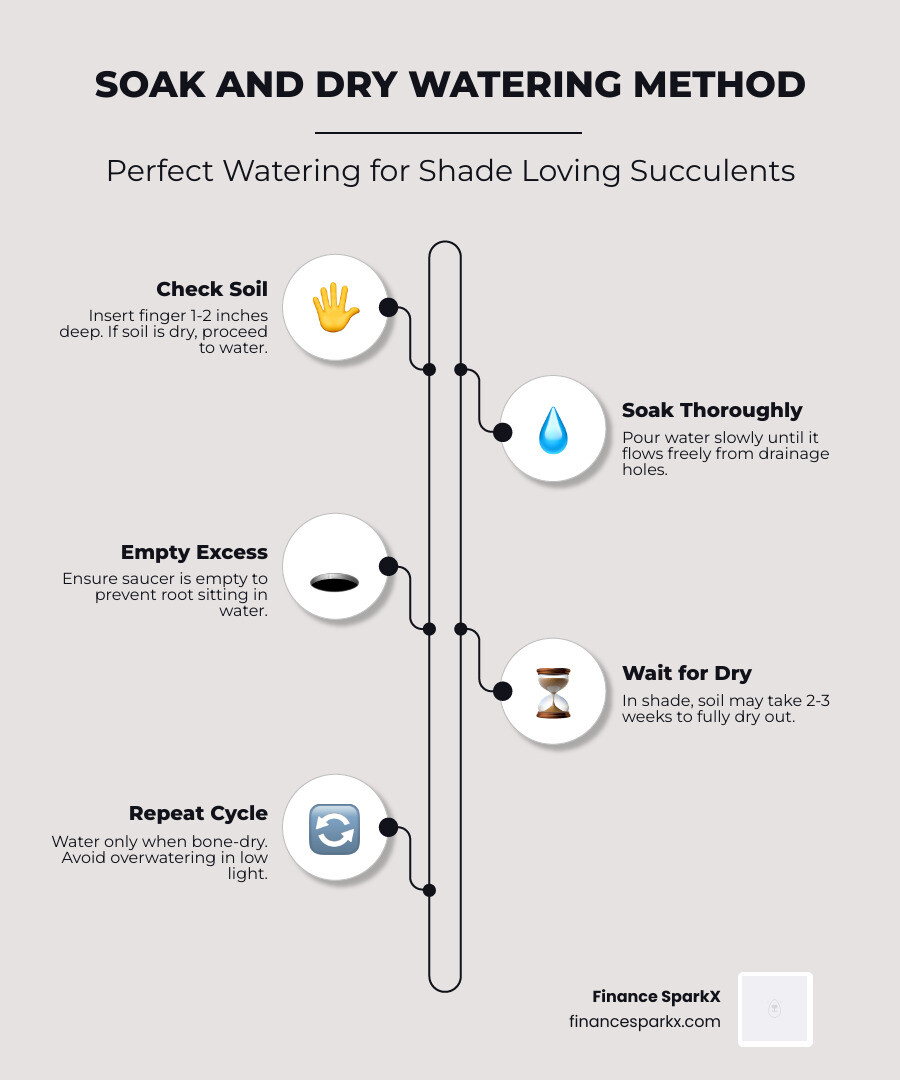
The “Soak and Dry” Method
We swear by the soak and dry method for all our succulents.
- Pour water until it runs out of the drainage holes.
- Wait until the soil is bone-dry (check with your finger or a moisture meter).
- In shade, this might take 2-3 weeks, whereas in the sun, it might take only 5 days.
Summer Dormancy
Many shade loving succulents, particularly Haworthia and Gasteria, actually go dormant in the heat of summer. During this time, they need almost no water. We’ve found that most “unexplained” succulent deaths happen in July and August because owners keep watering a plant that has temporarily stopped drinking!
Ideal Light and Temperature Conditions
While these plants are shade-tolerant, they still appreciate warmth. Most shade loving succulents thrive in temperatures between 65°F and 80°F.
Hardiness and Cold Tolerance:
- Indoor: Most are happy at room temperature year-round.
- Outdoor: Some, like Sempervivum (Hens and Chicks), are incredibly cold-hardy, surviving down to -20°F. Others, like the Jade Plant, will turn to mush if they hit a hard frost.
- Placement: Indoors, a south-facing window with a sheer curtain is the “Goldilocks” zone—just right.
Propagation and Pest Management
One of the most rewarding parts of succulent care is making more plants for free! Most shade loving succulents are easy to propagate.
- Offsets (Pups): Haworthia and Aloe aristata produce “babies” around the base. Simply wiggle them free or cut them with a sterile knife, let the wound “callus” (dry over) for two days, and plant in dry soil.
- Leaf Cuttings: Varieties like Gasteria and Adromischus can grow from a single leaf. Twist a healthy leaf off cleanly, let it callus, and lay it on top of the soil.
- Stem Cuttings: For leggy plants like Crassula, cut the top off, let it dry, and replant it.
Dealing with Pests
Even in the shade, pests can find your plants.
- Mealybugs: These look like tiny bits of white cotton in the crevices of your plant. We use a cotton swab dipped in rubbing alcohol to remove them.
- Aphids: These often attack flower stems. A quick spray of soapy water usually does the trick.
- Root Rot: If your plant turns yellow and mushy at the base, it’s likely rot. You can sometimes save it by cutting away the rotted parts and replanting the healthy top in fresh, dry soil.
Frequently Asked Questions about Shade Succulents
Can succulents live in total darkness?
No. All succulents need some light for photosynthesis. If a room has no windows, you will need to provide a “grow light” to keep your shade loving succulents healthy. Without light, the plant will eventually lose its color, stretch out, and die.
Which shade succulents are toxic to pets?
Safety first! While Haworthia and Gasteria are generally considered non-toxic, others can be dangerous. The Snake Plant and Jade Plant are toxic to cats and dogs if ingested. Always check the toxicity of a plant before placing it within reach of your furry friends.
How often should I water succulents in low light?
Less is more. In low light, evaporation is slow. We typically water our indoor shade succulents once every 3 to 4 weeks. Always use the “finger test”—if the soil feels even slightly damp, wait another week.
Conclusion
Embracing shade loving succulents is a fantastic way to practice sustainable living. These plants require fewer resources, less frequent watering, and can turn a dull corner into a lush, eco-conscious sanctuary. At Finance SparkX, we love how these resilient species reflect a balanced lifestyle—they grow slowly, steadily, and beautifully, even when the “sun” isn’t always shining directly on them.
As we look at gardening trends for April 2026, the shift toward low-maintenance, indoor greenery is stronger than ever. By choosing the right species and mastering the “soak and dry” method, you can enjoy a thriving indoor garden regardless of your home’s orientation.
For more inspiration on creating a beautiful, productive home environment, check out our guide to eco-conscious home decor. Happy planting!
