
Don’t Be a Succ-er: The Ultimate Guide to Echeveria Leaf Propagation
Why Echeveria Leaf Propagation Is the Smartest Way to Grow Your Succulent Collection
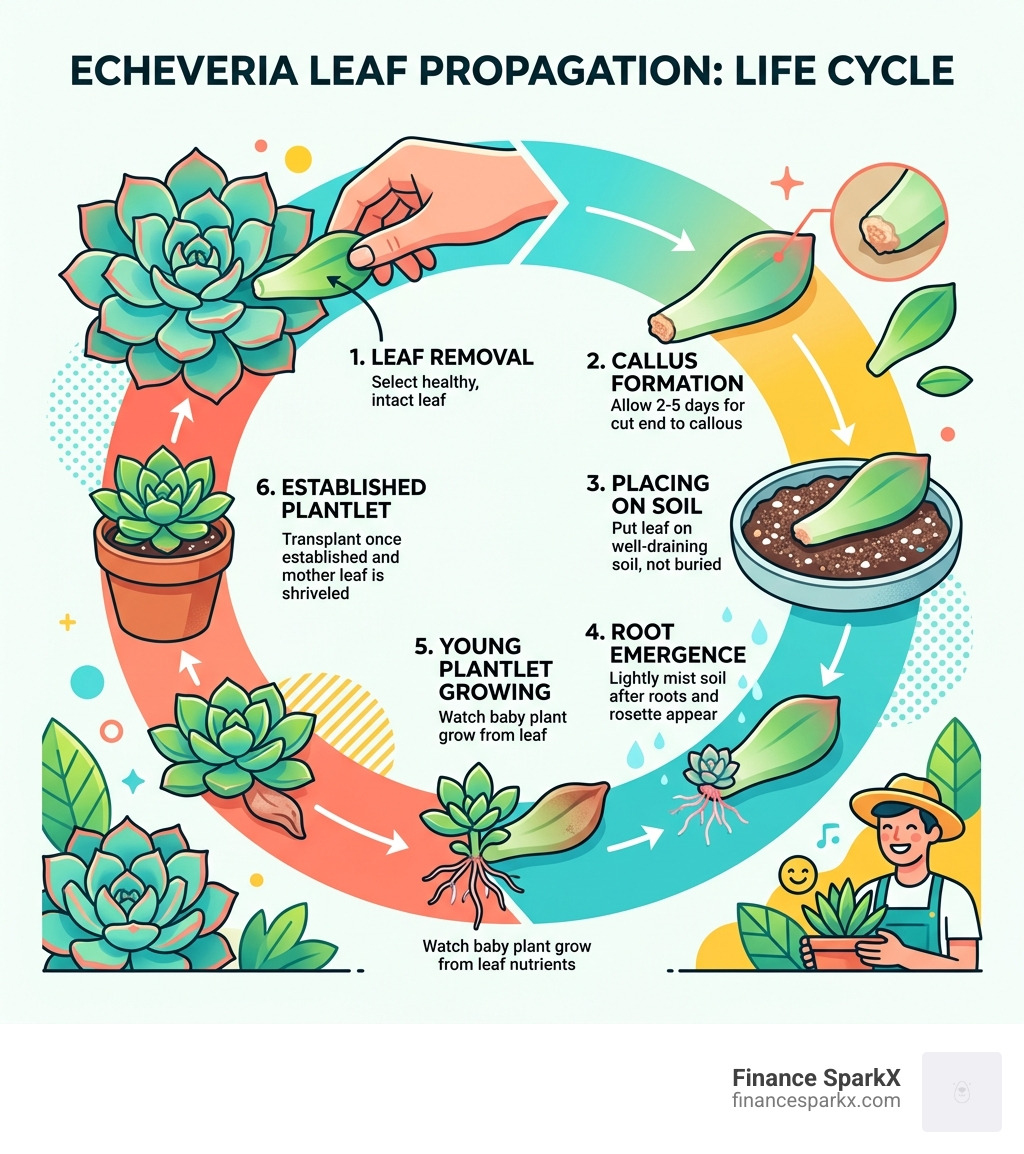
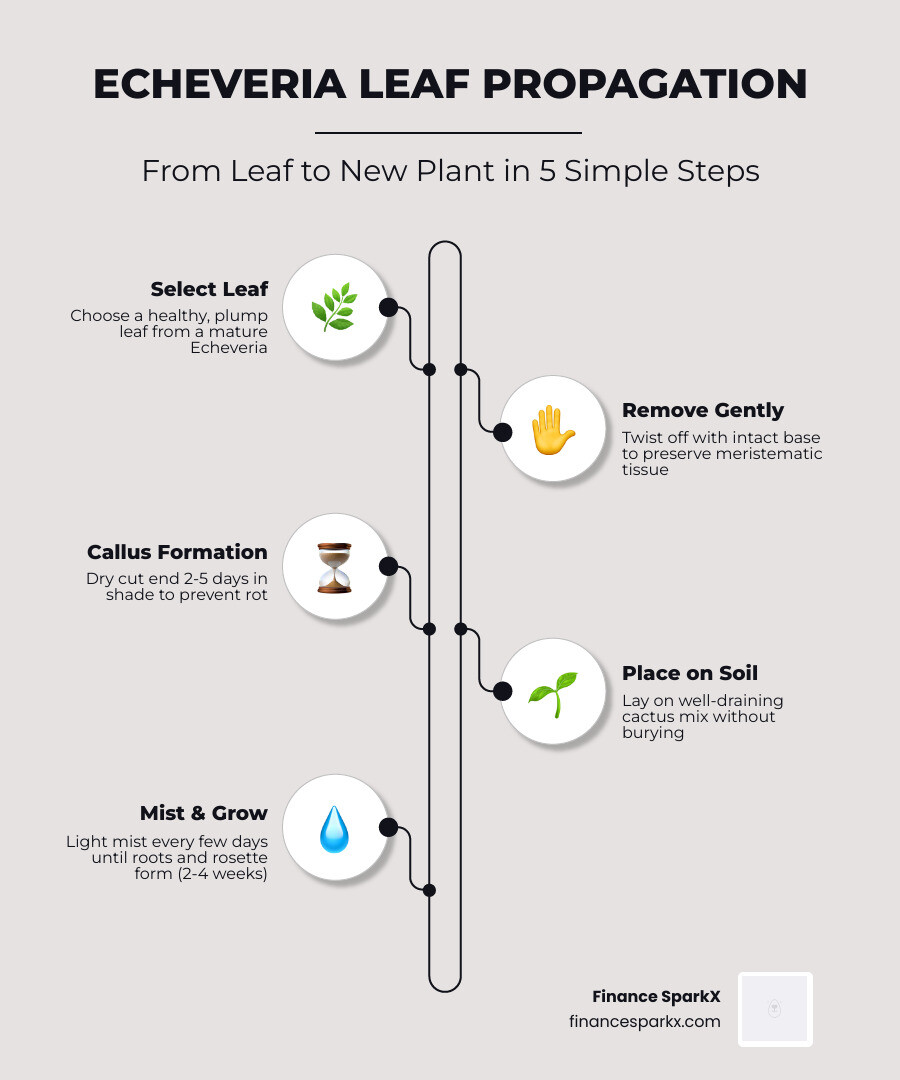
Echeveria leaf propagation is the process of growing a brand-new plant from a single detached leaf. Here’s a quick overview of how it works:
- Select a healthy, plump leaf from a mature Echeveria plant
- Remove it with a gentle twist, keeping the base intact
- Callus the cut end for 2-5 days in a dry, shaded spot
- Place the leaf on top of well-draining soil — don’t bury it
- Mist lightly every few days until roots and a tiny rosette appear
- Transplant once the baby plant is established and the mother leaf shrivels
Roots typically appear in 2-4 weeks. A transplantable plantlet takes several weeks to a few months.
There’s something almost magical about watching a single leaf transform into a whole new plant. No seeds. No special greenhouse. Just a leaf, some soil, and a little patience.
For busy, eco-conscious homeowners, Echeveria leaf propagation is one of the most rewarding low-effort DIY projects you can do at home. It costs next to nothing, creates zero waste, and turns one plant into many — all from your windowsill.
The best part? You don’t need experience. Echeverias are among the most beginner-friendly succulents to propagate. Their thick, fleshy leaves store nutrients that fuel new growth entirely on their own. No watering required until roots appear.
Whether you want to expand your collection, create thoughtful green gifts, or simply try something hands-on and satisfying — this guide walks you through every step.
Getting Started with Echeveria Leaf Propagation
As we step into the gardening season of April 2026, there is no better time to start your propagation journey. Spring and early summer are the peak active growth phases for most succulents. During this time, the “mother” plant is full of energy, and the leaves you harvest are much more likely to sprout roots quickly compared to the dormant winter months.
At Finance SparkX, we believe in maximizing productivity through sustainable practices. Propagating your own plants is the ultimate way to garden on a budget while reducing the carbon footprint associated with transporting nursery-bought plants. To succeed, we need to focus on the biological heart of the leaf: the meristematic tissue. This is the “stem cell” region located exactly where the leaf meets the plant’s main stem. If this area is damaged during removal, the leaf won’t grow a thing.
Selecting the Best Varieties for Echeveria Leaf Propagation
While many succulents can grow from a leaf, some Echeverias are absolute rockstars in the propagation tray. If you are a beginner, we recommend starting with varieties known for their high success rates.
- Echeveria ‘Lola’: A stunning, marble-like rosette that is surprisingly hardy. According to the experts at Propagating Echeveria | Plant Addicts, these are reliable clones of the parent plant.
- Echeveria ‘Perle von Nurnberg’: Famous for its purple hues, this variety produces thick, nutrient-rich leaves that hold up well during the callusing phase.
- Echeveria Minima: These smaller rosettes are prolific producers of offsets, but their leaves also root readily.
Generally, the thicker and “juicier” the leaf, the better. Hybrid cultivars can sometimes be a bit more “drama queens,” requiring more precise temperature control, but the basic principles of echeveria leaf propagation remain the same.
Essential Tools and Materials
One of the reasons we love this project at Finance SparkX is that it requires almost no specialized equipment. You likely already have most of these items in your home or shed:
- Sterile shears or scissors: While we usually “twist” leaves off, sharp tools are essential if you decide to take stem cuttings or prune a leggy plant.
- Well-draining soil: A specific cactus or succulent mix is best.
- Perlite or Pumice: We suggest mixing this into your soil (a 1:1 ratio is great) to ensure the roots never sit in stagnant water.
- Shallow trays: You don’t need deep pots yet. Old wooden crates, seed trays, or even a clean egg carton can work.
- Spray bottle: For light misting once those tiny pink roots emerge.
The Step-by-Step Process: From Leaf to Plantlet
The journey from a single leaf to a miniature rosette is a lesson in patience and nature’s resilience. It starts with a “clean pull.”
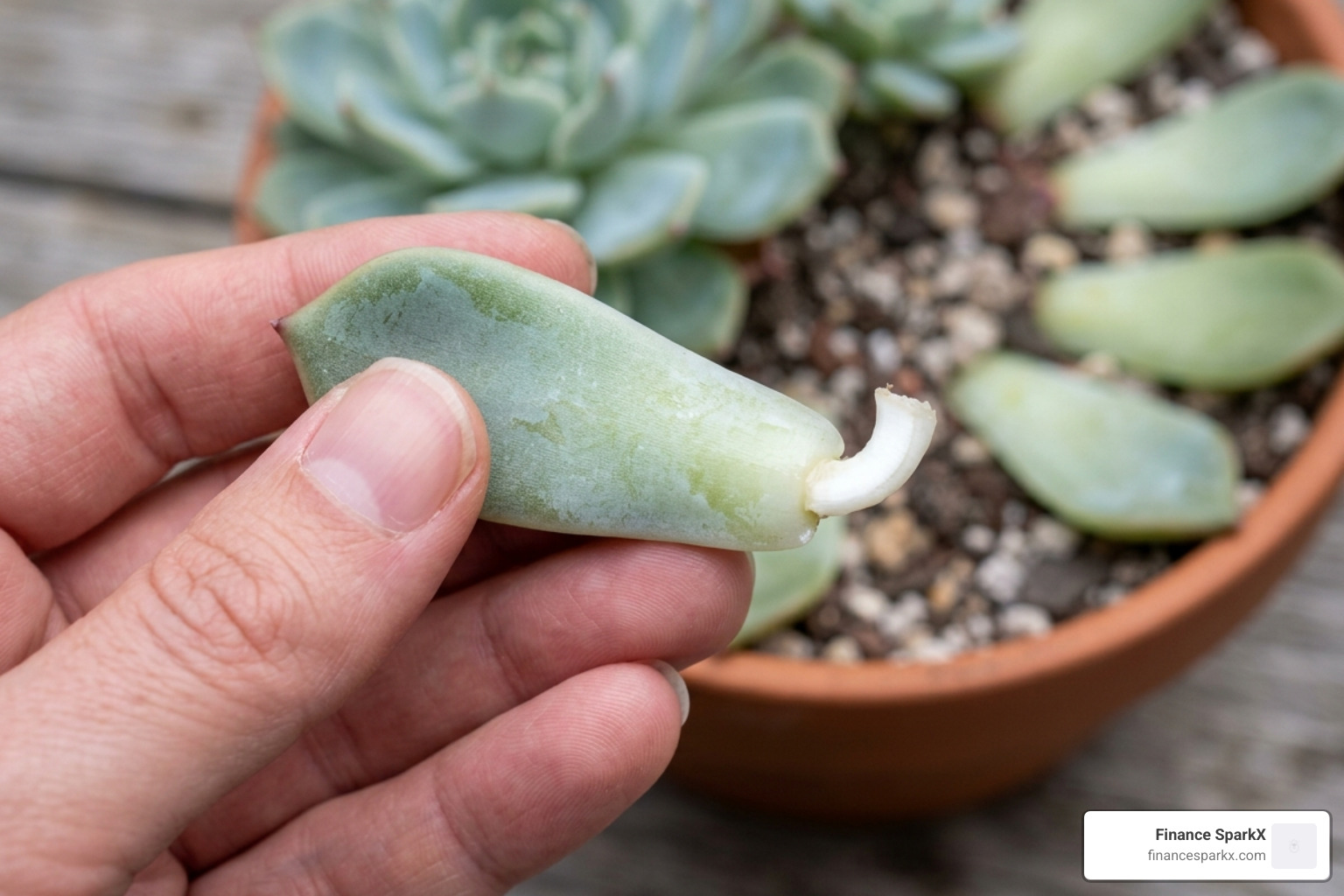
When you are ready to harvest, choose a healthy, plump leaf from the bottom or middle of the rosette. Avoid the very tiny leaves at the center (the “heart”) as they aren’t mature enough. As noted in How To Propagate Echeveria Plants (A Complete Guide), you should gently grasp the leaf and wiggle it from side to side until it “pops” off. You must ensure the entire base of the leaf comes away cleanly. If the leaf snaps in half, it will simply shrivel and die.
The Clean Pull and Callusing
Once you have your leaves, the most common mistake is planting them immediately. If you put a “fresh” wound into moist soil, it will suck up bacteria and rot within days.
Instead, we practice the callusing process. Lay your leaves on a dry paper towel or an empty tray in a spot with good air circulation but away from direct sunlight. Over the next 2 to 5 days, the raw end of the leaf will dry out and form a protective, skin-like scar (the callus). This scar tissue acts as a barrier against fungal pathogens and prevents the leaf from losing too much moisture too quickly. Think of it as a scab that protects the “meristematic” cells while they prepare to transform into roots.
Planting and Watering Your Echeveria Leaf Propagation
After the callus has formed, it’s time to introduce the leaves to their new home.
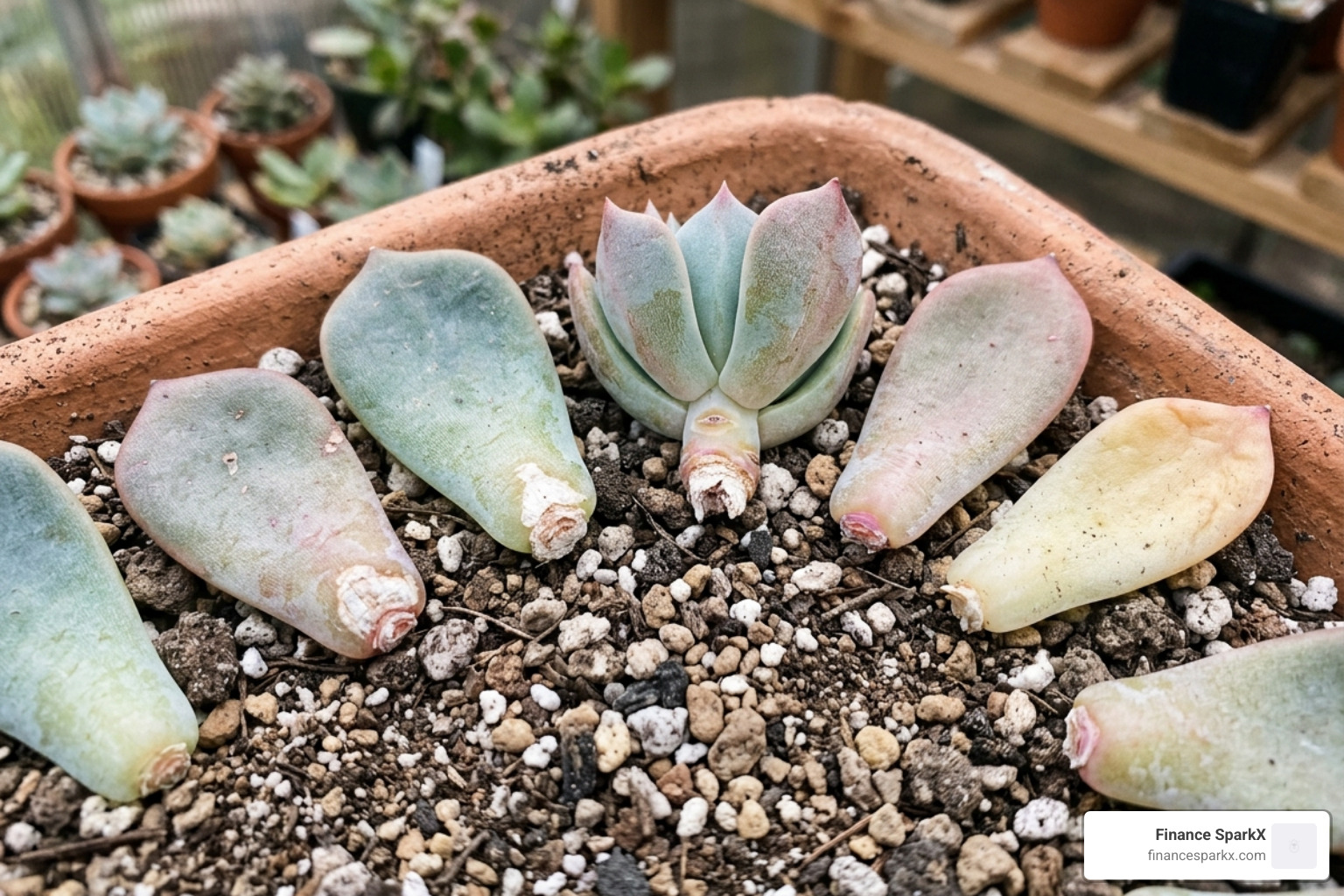
- Placement: Lay the leaves flat on top of your well-draining soil mix. You do not need to bury the ends; in fact, burying them can sometimes lead to rot. The roots will naturally find their way down into the dirt as they seek out moisture.
- The Waiting Game: For the first few weeks, do nothing. The leaf has enough water stored inside to survive.
- Misting: Once you see tiny, hair-like pink or white roots appearing, you can start a light misting schedule. Spritz the soil near the roots every few days when the surface feels bone-dry.
- Soak-and-Dry: As the baby rosette (the “pup”) begins to form, transition to a more traditional watering method. Let the soil dry completely, then give it a light soak. This encourages the roots to grow deep and strong.
Optimizing Your Propagation Environment
To get the highest yield from your echeveria leaf propagation project, you need to mimic the Echeveria’s natural semi-desert habitat.
- Light: Bright, indirect sunlight is the “Goldilocks” zone. Direct afternoon sun in April 2026 can be too intense and actually “cook” the tender leaves before they root. A north or east-facing windowsill is usually perfect.
- Temperature: Aim for a range of 60-80°F (15–26°C). If your home is too cold, the leaves may go dormant; if it’s too hot, they might shrivel before the roots can provide hydration.
- Humidity: Succulents prefer low humidity (30-40%). If you live in a very humid climate, ensure you have a small fan nearby to provide airflow, which prevents mold and fungal growth on the soil surface.
- Indoor vs. Outdoor: While outdoor propagation can lead to faster growth in USDA zones 9–11, we recommend indoor setups for beginners to better control these variables.
Frequently Asked Questions about Echeveria Propagation
Can I propagate Echeveria from damaged or older leaves?
We often get asked if a leaf that fell off on its own or looks a bit “wrinkly” can still grow. The answer is: maybe, but the odds are lower. A leaf needs a significant nutrient reserve to fuel the growth of a new plantlet. If a leaf is yellowing or has a hole in it, it may run out of energy before the baby plant is self-sufficient. For the best results, always select the healthiest, firmest leaves available.
How long does it take for roots and new plantlets to form?
Patience is your best friend here! Typically, you will see the first signs of roots within a 2 to 4-week window. However, the tiny rosette might take another few weeks to appear. Total time from leaf pull to a plant large enough to be in its own 2-inch pot is usually 3 to 6 months. Factors like light intensity and the specific Echeveria variety will influence this timeline.
Why is my Echeveria leaf turning yellow or mushy?
If your leaf looks like a soggy grape, it is rotting. This is almost always caused by one of two things:
- Overwatering: You started misting before roots appeared, or the soil stayed wet for too long.
- Improper Callusing: You didn’t wait long enough for the end to dry before putting it on the soil.
If you spot rot, remove the affected leaf immediately so it doesn’t spread fungus to the healthy ones.
Conclusion
At Finance SparkX, we believe that a balanced, productive lifestyle includes taking the time to nurture living things. Echeveria leaf propagation is more than just a gardening trick; it is a sustainable way to decorate your home, reduce waste, and connect with the natural world.
By following these simple steps, you can turn a single “mother” plant into a whole family of succulents to brighten your workspace or share with friends. It’s an eco-conscious hobby that pays off in beautiful, green dividends.
For more tips on integrating productivity with sustainable living, be sure to explore our other guides on More info about sustainable living. Happy propagating!
