
Don’t Worry Be Appy with Autumn Joy Sedum
The Low-Maintenance Fall Plant Every Eco-Conscious Gardener Needs
Autumn Joy sedum care is surprisingly simple — and that’s exactly why this plant deserves a spot in your garden.
Here’s a quick overview to get you started:
| Care Factor | What You Need to Know |
|---|---|
| Sunlight | At least 6 hours of direct sun daily |
| Soil | Well-drained, lean, and slightly sandy |
| Watering | Drought-tolerant once established; water every 2-4 days for first 6 weeks |
| Fertilizing | Rarely needed — lean soil is better |
| Pruning | Cut back by half in May-June; clean up in late fall or early spring |
| Dividing | Every 3-4 years to prevent flopping and center splitting |
| Hardiness Zones | USDA Zones 3-9 |
| Bloom Time | Late summer through fall (August-November) |
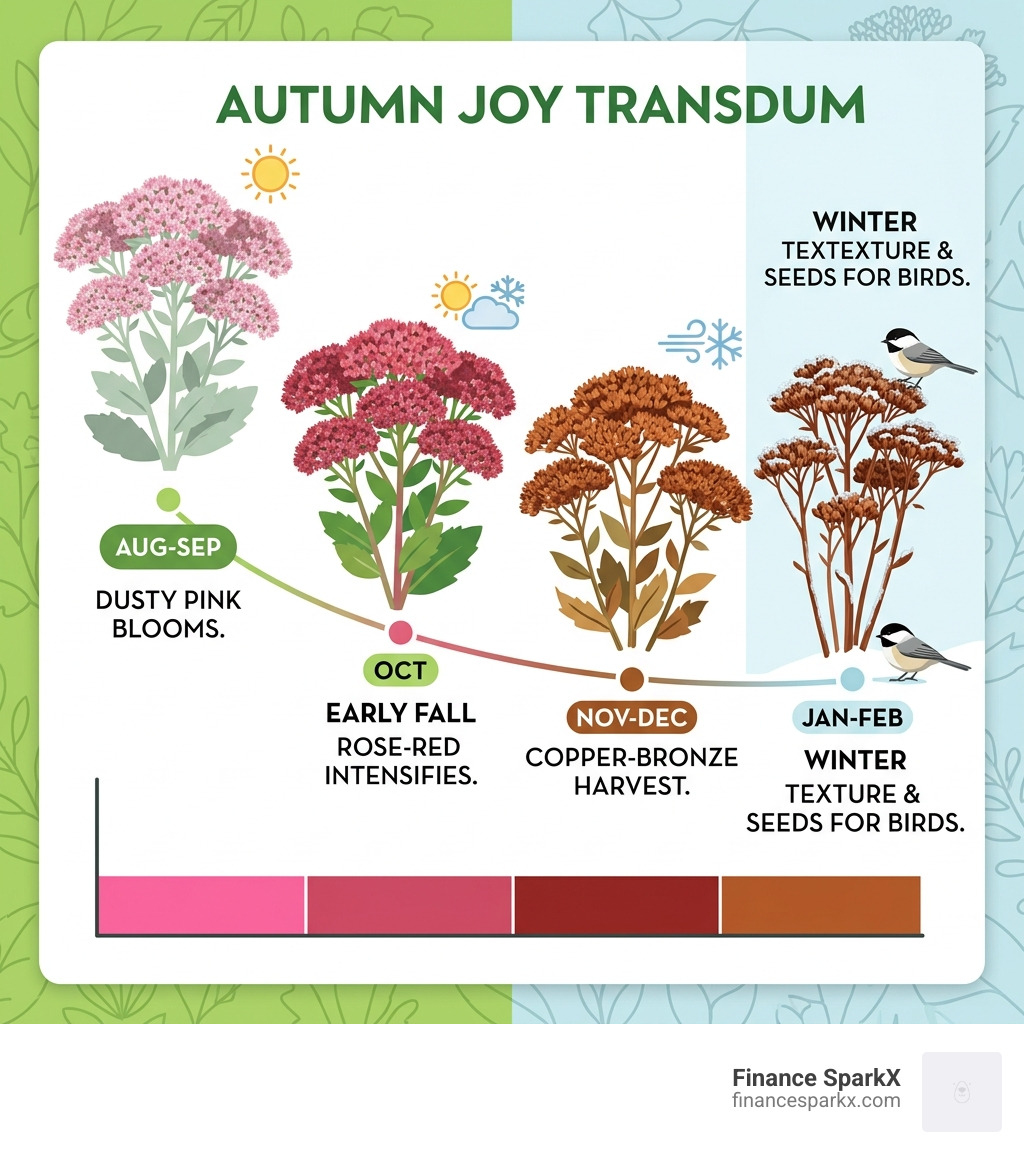
You’ve probably seen it without knowing its name. That clump of thick, gray-green leaves that explodes into dusty pink flower heads every fall — and then slowly deepens to copper-bronze as the season turns. That’s Autumn Joy sedum (Hylotelephium telephium ‘Herbstfreude’), and it’s one of the most forgiving, beautiful, low-effort plants you can grow.
It thrives on neglect. Poor soil? Fine. Skipped a watering? No problem. Forgot to prune? It’ll survive — though it might flop a little (more on that later).
For busy homeowners who want a beautiful, eco-friendly garden without spending every weekend maintaining it, this plant is close to perfect. It feeds bees and butterflies when most other flowers have called it quits for the year. It gives birds something to snack on all winter. And it comes back reliably, year after year, in climates as cold as -30°F.
One gardener summed it up well in an online community discussion: “One of the best, lowest maintenance plants ever.”
The only real challenge? Keeping it from getting too big, splitting open in the center, or flopping over under the weight of its own flower heads. Those are common problems — and they’re all fixable with a few simple techniques.
Essential Autumn Joy Sedum Care and Growing Conditions
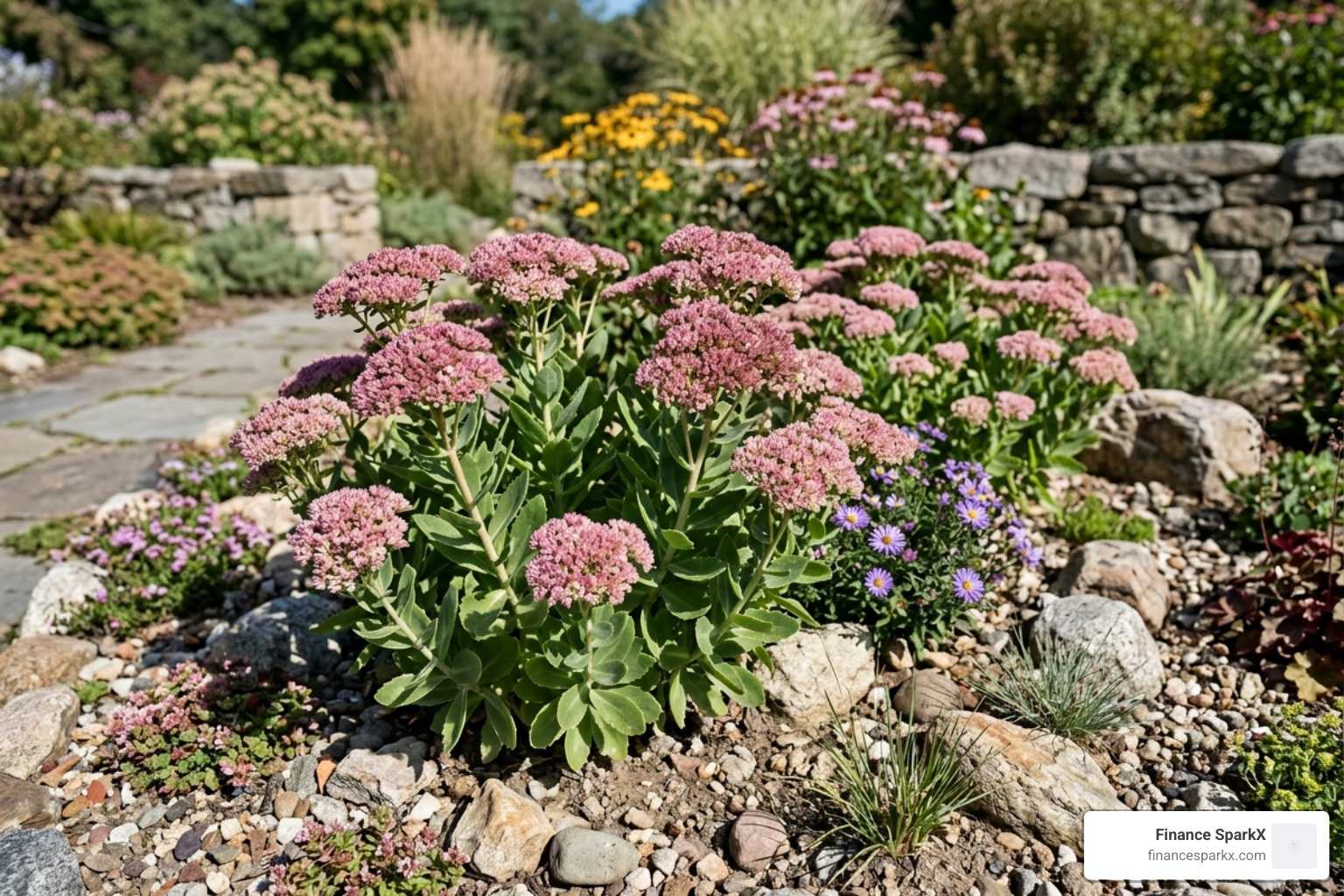
When we talk about a “workhorse” in the garden, we are talking about Autumn Joy. It is a succulent, meaning those thick, fleshy leaves are actually tiny water reservoirs. This makes it incredibly drought-tolerant and a champion of xeriscaping—a style of gardening that reduces or eliminates the need for supplemental water.
While it is famously tough, reaching its full potential requires understanding its basic needs. It is hardy in USDA Zones 3 through 9 (and some even say up to Zone 10), which means it can survive blistering summer heat and freezing winters down to -30°F. It’s also salt-tolerant, making it a great choice for gardens near roads that get salted in winter or coastal areas. According to Stacy Ling’s guide on Growing Sedum Autumn Joy: Your Flower Garden BFF, this plant is truly a gardener’s best friend because of its resilience across all four seasons.
Ideal Sunlight and Soil for Autumn Joy Sedum Care
If there is one thing you cannot compromise on with autumn joy sedum care, it is sunlight. This plant is a sun-worshipper. To keep the stems strong and the flower heads upright, it needs at least 6 hours of direct sunlight every single day. If you plant it in the shade, it will “stretch” toward the light, resulting in weak, spindly stems that will inevitably flop over once the heavy flower heads bloom in August.
As for the soil, Autumn Joy has a bit of an “anti-diva” personality. It actually prefers poor, lean soil.
- Texture: Sandy or gravelly soil is ideal.
- Drainage: This is the most critical factor. Sedum hates “wet feet.” If the roots sit in water, they will rot.
- pH: It thrives in a neutral to slightly alkaline range (6.5 to 7.5).
- The Drainage Test: Before planting, dig a hole 12 inches deep and fill it with water. If it takes more than an hour to drain, you’ll need to amend the area with sand or gravel to improve drainage.
Whatever you do, avoid planting it in rich, highly fertile loam or over-composted garden beds. High nitrogen levels encourage rapid, soft growth that makes the plant too top-heavy to support itself.
Watering and Feeding Your Stonecrop
Because it is a succulent, the watering needs of Autumn Joy change drastically as the plant matures.
| Growth Stage | Watering Frequency | Why? |
|---|---|---|
| Newly Planted (Weeks 1-6) | Every 2-4 days | To help the root system establish in its new home. |
| Established (After 1 Season) | Once a week (or less) | The plant can now rely on its stored water in the leaves. |
| Mature / Drought Period | Only during extreme dry spells | Overwatering is more dangerous than underwatering. |
To check if your plant needs a drink, stick your finger three inches into the soil. If it feels bone dry, give it a thorough soaking at the base. Avoid overhead watering, as wet foliage can lead to fungal issues like powdery mildew.
When it comes to feeding, less is definitely more. Most experts recommend skipping fertilizer altogether for established plants. If your soil is particularly depleted, a single handful of balanced, slow-release fertilizer in early spring is plenty. Over-feeding is a primary cause of “leggy” growth, which leads to that dreaded split in the center of the clump.
Planting and Propagating for a Lush Garden
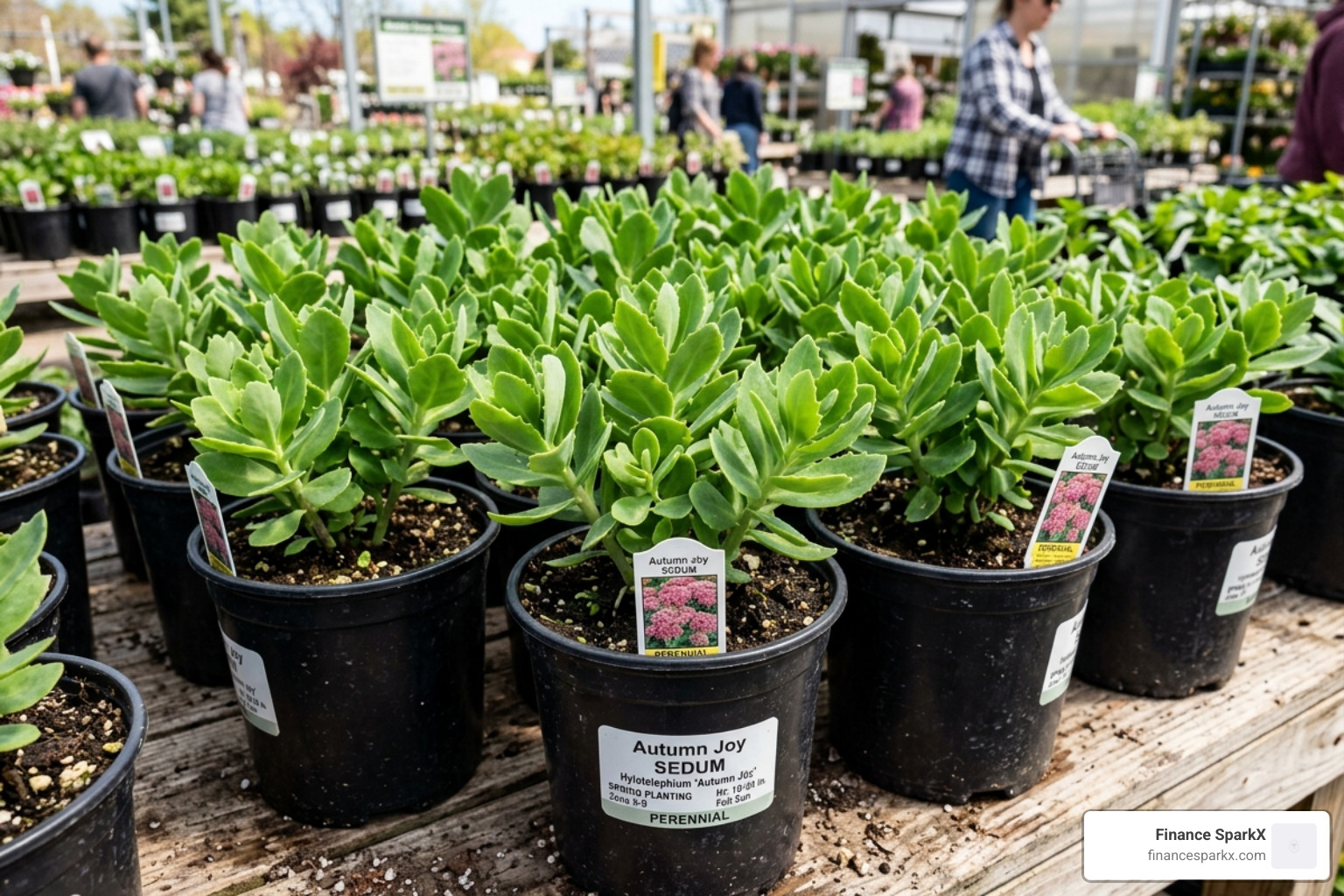
The best time to get your sedum in the ground is in the spring, after the danger of frost has passed but before the intense summer heat arrives. This gives the plant a full growing season to settle its roots.
When planting, space your sedums 18 to 24 inches apart. While they might look small in their nursery pots, they will quickly grow to be 2 feet tall and wide.
- The Hole: Dig a hole twice as wide as the root ball but no deeper.
- The Root Flair: Ensure the “root flair” (where the stems meet the roots) is level with the soil surface. Planting too deep can lead to stem rot.
- Saturation: Before taking it out of the pot, submerge the nursery container in water until the bubbles stop. This ensures the root ball is fully hydrated.
- Backfilling: Fill the hole with soil, tamping down gently to remove air pockets, and water immediately.
How to Propagate Autumn Joy Sedum Care
One of the most rewarding aspects of autumn joy sedum care is how easy it is to multiply your collection. You can easily turn one plant into ten!
- Division: This is the most common method. Every 3 to 4 years, the center of the sedum clump may start to die out or look thin. In early spring, dig up the entire clump, use a sharp spade to slice it into sections (ensuring each piece has roots and shoots), and replant them elsewhere.
- Stem Cuttings: You can take a 4-to-6-inch cutting in late spring. Remove the bottom leaves, let the cut end “callus” (dry out) for a day, and then stick it directly into a soilless potting mix or even a glass of water. They usually root within 2 to 3 weeks.
- Leaf Propagation: Believe it or not, even a single leaf that gets knocked off and falls onto bare soil can sometimes grow roots and start a new plant. It’s nature’s way of being productive!
Container Gardening and Rock Garden Placement
Autumn Joy isn’t just for the garden border; it’s a versatile design element.
- Containers: Choose a pot at least 12 inches in diameter with plenty of drainage holes. Use a “cactus or succulent” potting mix rather than standard heavy potting soil. In cold zones, plants in pots are more vulnerable to freezing, so you may need to move the pot to a sheltered area or bury it in the ground for the winter.
- Rock Gardens: Their love for drainage and lean soil makes them perfect candidates for rock gardens.
- Mass Plantings: Planting them in groups of three or five creates a stunning visual impact, especially when they transition to their deep rust-red color in late September.
Maintenance Secrets: Preventing the “Center Split” and Flopping
It’s a common frustration: your sedum looks great all summer, but as soon as the flowers bloom, the stems splay outward, leaving a big, ugly hole in the middle. This is often called “flopping” or “splitting.”
As noted in the Autumn Joy Sedum Care: Everything You Need to Know guide, this usually happens because the plant is too happy—too much water, too much fertilizer, or too much shade. To keep the plant compact and sturdy, you have a few tricks up your sleeve.
One physical solution is to use hoop supports or grow-through stakes early in the season (May). The plant will grow up through the grid, which provides an invisible skeleton to hold those heavy flower heads upright in the fall.
The Chelsea Chop and Spring Pruning
The most effective way to prevent flopping is a technique called the Chelsea chop.
- When: Late May or early June (around the time of the Chelsea Flower Show in the UK, hence the name).
- How: Use garden shears to cut the entire plant back by about one-half.
- The Result: This might feel scary, but it forces the plant to grow shorter, bushier, and more branched. The stems will be much sturdier, and while the blooming might be delayed by a week or two, the flower heads will be smaller and lighter, meaning they won’t pull the stems down.
Seasonal Cleanup and Winter Interest
One of our favorite things about Autumn Joy is that it provides “four-season interest.”
- Fall: Vibrant pink to bronze flowers.
- Winter: Do not cut the plant back in the fall! The dried flower heads turn a beautiful chestnut brown. They look stunning poking out through a layer of snow (often called “snow sculpting”) and provide a vital winter food source for finches and other birds.
- Spring: In late March or April, you’ll see tiny, cabbage-like green buds emerging at the base of the plant. This is your signal to cut the old, dead stems down to about 2 inches above the ground.
Pests, Diseases, and Companion Planting
Autumn Joy is remarkably pest-resistant, but it isn’t invincible.
- Aphids and Mealybugs: These can sometimes cluster on the succulent stems. A sharp blast of water from the hose usually knocks them off. For persistent cases, use organic neem oil.
- Slugs: They love the fleshy leaves. Keep the area around the base of the plant free of debris to discourage them.
- Diseases: The most common issue is root rot or powdery mildew, both of which are caused by too much moisture. Ensure good air circulation by not overcrowding your plants and always watering at the soil level rather than over the leaves.
Is it deer-resistant? Most sources say yes, but hungry deer have been known to nibble on the succulent leaves during dry summers. If you have a high deer population, a quick spray of repellent in early spring can help.
Best Companion Plants for a Sustainable Landscape
Designing a garden with Autumn Joy is a joy in itself because it plays so well with others. Since it peaks in late summer and fall, you want to pair it with plants that either share that timeline or provide a contrast in texture.
- Ornamental Grasses: The wispy texture of Blue Oat Grass or Fountain Grass looks incredible next to the solid, rubbery leaves of the sedum.
- Pollinator Powerhouses: Pair it with Coneflowers (Echinacea), Black-eyed Susans (Rudbeckia), and Asters to create a late-season buffet for bees and butterflies.
- Color Contrast: The silver-purple of Russian Sage or Lavender provides a beautiful cool-toned backdrop for the warming pinks and bronzes of the sedum.
Frequently Asked Questions about Autumn Joy Sedum
Why is my sedum falling over in the middle?
This is almost always due to excessive growth caused by too much fertilizer, too much water, or insufficient sunlight. If your soil is too rich, the plant grows too fast and the stems become “soft.” Next year, try the Chelsea chop in June and avoid adding any compost or fertilizer to the area.
Is Autumn Joy sedum invasive?
No. While it does spread, it is a clump-forming perennial, not a runner. It expands slowly from the center. If the clump gets too large for your space, simply divide it in the spring. It is very easy to manage and will not take over your yard like some more aggressive groundcovers.
Can I grow Autumn Joy sedum indoors?
Technically, yes, but we wouldn’t recommend it. As a houseplant, it rarely gets the intensity of light it needs to bloom. Without at least 6-8 hours of very bright light, it will become leggy and weak. It is much happier outdoors where it can soak up the summer heat and humidity.
Conclusion
At Finance SparkX, we believe that sustainable living should be both productive and beautiful. Incorporating autumn joy sedum care into your DIY gardening routine is a perfect example of this philosophy. By choosing plants that thrive on minimal water and provide essential habitat for pollinators, you are creating a landscape that works with nature rather than against it.
Whether you are a beginner looking for your first “unkillable” plant or a seasoned gardener wanting to add some late-season drama to your borders, Autumn Joy is a choice you won’t regret. It’s low-maintenance, eco-friendly, and offers beauty from the first green buds of spring to the frost-covered seed heads of winter.
Ready to grow your green thumb while keeping your lifestyle balanced? Start your sustainable garden journey with Finance SparkX and discover more tips for a beautiful, eco-conscious home.
