
Zero Waste Home Decor Tips That Won’t Break the Bank
Your Home Can Be Beautiful, Green, and Budget-Friendly
Sustainable home decor ideas don’t have to be expensive or complicated. Here’s a quick overview of the most impactful ways to get started:
- Shop secondhand first — thrift stores, estate sales, and online marketplaces
- Choose natural materials — solid wood, bamboo, linen, jute, cork, and wool
- Switch to LED lighting — uses up to 75% less energy than incandescent bulbs
- Use low-VOC or zero-VOC paint — better for your health and indoor air quality
- Add air-purifying plants — snake plants, pothos, and spider plants are low-maintenance
- Upcycle what you already own — refinish, repaint, or repurpose before replacing
- Look for certifications — FSC, GOTS, OEKO-TEX, and Fair Trade labels verify real sustainability
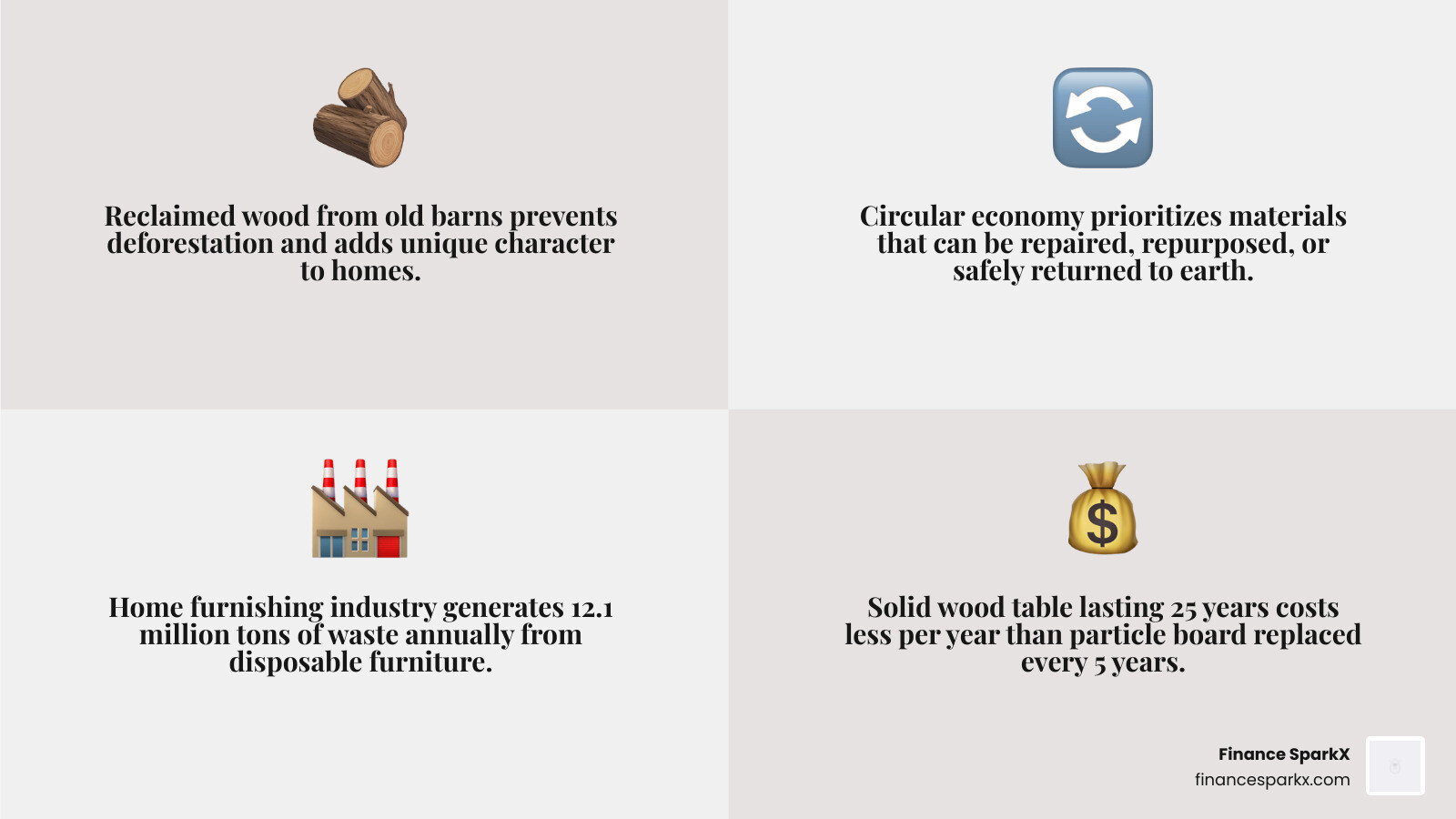
The home furnishing industry generates roughly 12.1 million tons of waste every year. A lot of that comes from cheap, trendy pieces bought on impulse and tossed a few years later — the home decor version of fast fashion.
But here’s the good news: the most sustainable choice is often the most affordable one. Buying secondhand, repairing what you have, and choosing durable natural materials can actually cost you less over time. A solid wood table at $1,200 that lasts 25 years works out cheaper per year than a $400 particle board version you replace in five.
In April 2026, sustainable decorating has never been more accessible. Whether you rent an apartment or own a home, small swaps add up fast — and your space will look better for it.
Core Principles of Sustainable Home Decor Ideas
To build a home that respects the planet, we need to shift our mindset from “disposable” to “circular.” The core principles of sustainable home decor ideas focus on longevity, health, and ethical production. When we choose items for our homes, we aren’t just looking at the price tag; we are looking at the “embodied carbon”—the total energy used to create, ship, and eventually dispose of that item.
A circular economy in home decor means prioritizing materials that can be repaired, repurposed, or safely returned to the earth. For example, reclaimed wood is a superstar in this category. Using wood salvaged from old barns or demolished buildings prevents deforestation and gives a unique character to your space that mass-produced furniture simply cannot match.
Eco-Friendly Materials and Certifications
Navigating “green” products can feel like a maze. To avoid “greenwashing”—where companies claim to be eco-friendly without proof—we look for specific third-party certifications. These labels are our best friends when hunting for sustainable home decor ideas.
- FSC (Forest Stewardship Council): This ensures that wood products come from responsibly managed forests that provide environmental, social, and economic benefits.
- GOTS (Global Organic Textile Standard): This is the gold standard for organic fibers, ensuring the entire supply chain meets strict ecological and social criteria.
- Fair Trade: This ensures that the artisans and makers were paid a living wage and worked in safe conditions.
- OEKO-TEX: This certification verifies that textiles are free from harmful chemicals.
- Greenguard: This helps us identify products with low chemical emissions, which is vital for maintaining indoor air quality.
Beyond wood and fabric, consider materials like cork and bamboo. Bamboo is incredibly renewable, growing up to 35 inches in a single day! Cork is another winner; the bark is harvested without harming the tree, allowing it to continue absorbing CO2.
For a deeper dive into high-impact items, check out this guide on Top 5 Sustainable Furnishings for Eco-Conscious Homes.
| Feature | Solid Wood Furniture | Particle Board / MDF |
|---|---|---|
| Average Lifespan | 20–100+ Years | 3–5 Years |
| Repairability | High (can be sanded/refinished) | Low (usually discarded if damaged) |
| Chemicals | Low (if using natural finishes) | High (often contains formaldehyde) |
| Long-term Value | High (often becomes an heirloom) | Low (landfill bound) |

Affordable Upcycling and DIY Furniture Projects
One of the most rewarding sustainable home decor ideas is upcycling. This is the art of taking something old or discarded and turning it into something beautiful and functional. Not only does this keep waste out of landfills, but it also allows you to create one-of-a-kind pieces that reflect your personality.
For instance, an old wooden ladder can be cleaned up and leaned against a wall to serve as a chic, minimalist bookshelf or a towel rack for a bathroom. Mason jars, which many of us have sitting in our recycling bins, can be transformed into candle holders, spice jars, or even small planters for a kitchen herb garden.
When working on DIY projects, we always recommend using non-toxic finishes. Conventional paints and stains release Volatile Organic Compounds (VOCs) that can cause headaches and respiratory issues. Look for “Zero-VOC” or “Low-VOC” labels. Natural options like lime wash or milk paint are also fantastic for creating a soft, textured look that is completely safe for your family and pets.
Sourcing Sustainable Home Decor Ideas Secondhand
The most sustainable item is the one that already exists. Thrifting and shopping secondhand are no longer just budget strategies; they are essential environmental practices. By purchasing a vintage dresser from an estate sale or a mid-century chair from an online marketplace, you are effectively “saving” that item from a landfill.
Vintage pieces often boast superior craftsmanship compared to modern “fast furniture.” They were built to last decades, not just a few seasons. Plus, mixing aged, storied pieces with your existing decor creates an eclectic, designer look that feels curated rather than “bought out of a catalog.”
Our Essential DIY Eco-Toolbox:
- Sandpaper (various grits): For smoothing out old finishes.
- Eco-friendly wood glue: Look for solvent-free options.
- Natural bristle brushes: Better for applying milk paints and waxes.
- Beeswax polish: A natural, non-toxic way to protect wood surfaces.
- Microfiber cloths: For cleaning without harsh chemicals.

Energy-Efficient Lighting and Smart Decor
Lighting is one of the easiest areas to implement sustainable home decor ideas. It’s not just about the fixture; it’s about the energy it consumes. Switching to LED bulbs is a “set it and forget it” win for the planet. LEDs use at least 75% less energy than traditional incandescent bulbs and can last up to 25 times longer.
In 2026, we are also seeing a massive rise in solar-powered indoor accents. Small solar panels placed near windows can power decorative lanterns or string lights, providing ambient evening light without drawing a single watt from the grid.
Lowering Utility Bills with Eco-Conscious Lighting
Beyond the bulbs, how we design our rooms affects our energy use.
- Natural Light Optimization: Use mirrors to bounce sunlight into darker corners. This reduces the need for overhead lights during the day.
- Light-Colored Walls: Painting walls in warm whites, beiges, or light pastels reflects more light, making a room feel brighter naturally.
- Thermal Curtains: These are a dual-purpose decor item. They look great and provide insulation, keeping heat in during the winter and out during the summer, which significantly lowers your HVAC bills.
- Task Lighting: Instead of lighting an entire room, use a small, energy-efficient lamp for reading or working.
Smart home technology also plays a huge role in a sustainable lifestyle. Smart thermostats and motion-sensor lights ensure that energy is only being used when you are actually in the room, aligning perfectly with our mission to integrate productivity with eco-conscious habits.
Biophilic Design and Air-Purifying Plants
Biophilic design is the practice of connecting our indoor living spaces with the natural world. It’s more than just a trend; it’s a way to improve our mental health and productivity. Incorporating natural textures like jute rugs, organic linen curtains, and terracotta pots creates a grounding atmosphere.
The ultimate biophilic tool? Indoor plants. Not only do they add a splash of vibrant green to your decor, but they also act as natural air scrubbers. Based on research (including famous studies by NASA), certain plants are incredibly effective at removing indoor pollutants like formaldehyde and benzene, which can off-gas from conventional carpets and furniture.
Air-Purifying Plants as Sustainable Home Decor Ideas
You don’t need a green thumb to make this work. Many of the best air-purifying plants are also the hardest to kill:
- Snake Plants: These are nearly indestructible and are unique because they release oxygen at night, making them perfect for bedrooms.
- Spider Plants: Great for hanging baskets, these are excellent at filtering out carbon monoxide and xylene.
- Peace Lilies: These beautiful flowering plants can help reduce mold spores in the air, making them ideal for bathrooms or laundry rooms.
- Pothos: A fast-growing vine that is incredibly easy to propagate. You can take a small cutting from a friend’s plant, put it in water, and soon you’ll have a brand-new plant for free!
Using natural clay or ceramic pots instead of plastic ones is another small but meaningful step toward a zero-waste home. Terracotta is breathable and biodegradable, making it a much better choice for both your plants and the environment.
Frequently Asked Questions about Sustainable Decor
What are the most important eco-certifications to look for?
The “big four” to keep in mind are FSC for wood, GOTS for textiles, Fair Trade for ethical labor, and Greenguard for air quality. If a brand uses vague terms like “natural” or “eco-friendly” without these third-party stamps, proceed with caution!
How can I decorate sustainably on a very tight budget?
Start with what you have. Rearrange your furniture to refresh the space, or try a DIY project like painting an old picture frame with low-VOC paint. Thrifting is your best friend—you can often find high-quality, solid wood pieces for a fraction of the price of new, low-quality alternatives. Also, plant propagation is a completely free way to add decor!
Which materials should I avoid for better indoor air quality?
Steer clear of particle board and MDF (medium-density fiberboard) whenever possible, as the glues used often contain formaldehyde. Avoid synthetic rugs (like polyester or nylon), which can shed microplastics and off-gas chemicals. Instead, opt for natural fibers like wool, jute, or organic cotton. Finally, avoid conventional paints that aren’t labeled as Low- or Zero-VOC.
Conclusion
At Finance SparkX, we believe that your home should be a sanctuary that supports both your productivity and your values. Creating a beautiful, sustainable space doesn’t require a massive renovation or a huge bank account. It starts with intentionality—choosing quality over quantity, repair over replacement, and nature over synthetics.
By embracing these sustainable home decor ideas, you aren’t just following a trend; you are participating in a movement toward a healthier planet and a more balanced lifestyle. Whether it’s the satisfaction of refinishing a thrifted chair or the calm brought by a room full of air-purifying plants, the benefits of eco-conscious living are felt every single day.
Start your journey toward a sustainable and productive home today and discover how small, mindful changes can lead to a more inspired and eco-friendly life.
