
The Art of Doing Less with Mindful Living Tips
The Hidden Cost of Always Being “On” — And Why Slow Living Is the Answer
Embrace slow living and you stop just surviving your days — you start actually living them.
Here’s the quick version of what that means in practice:
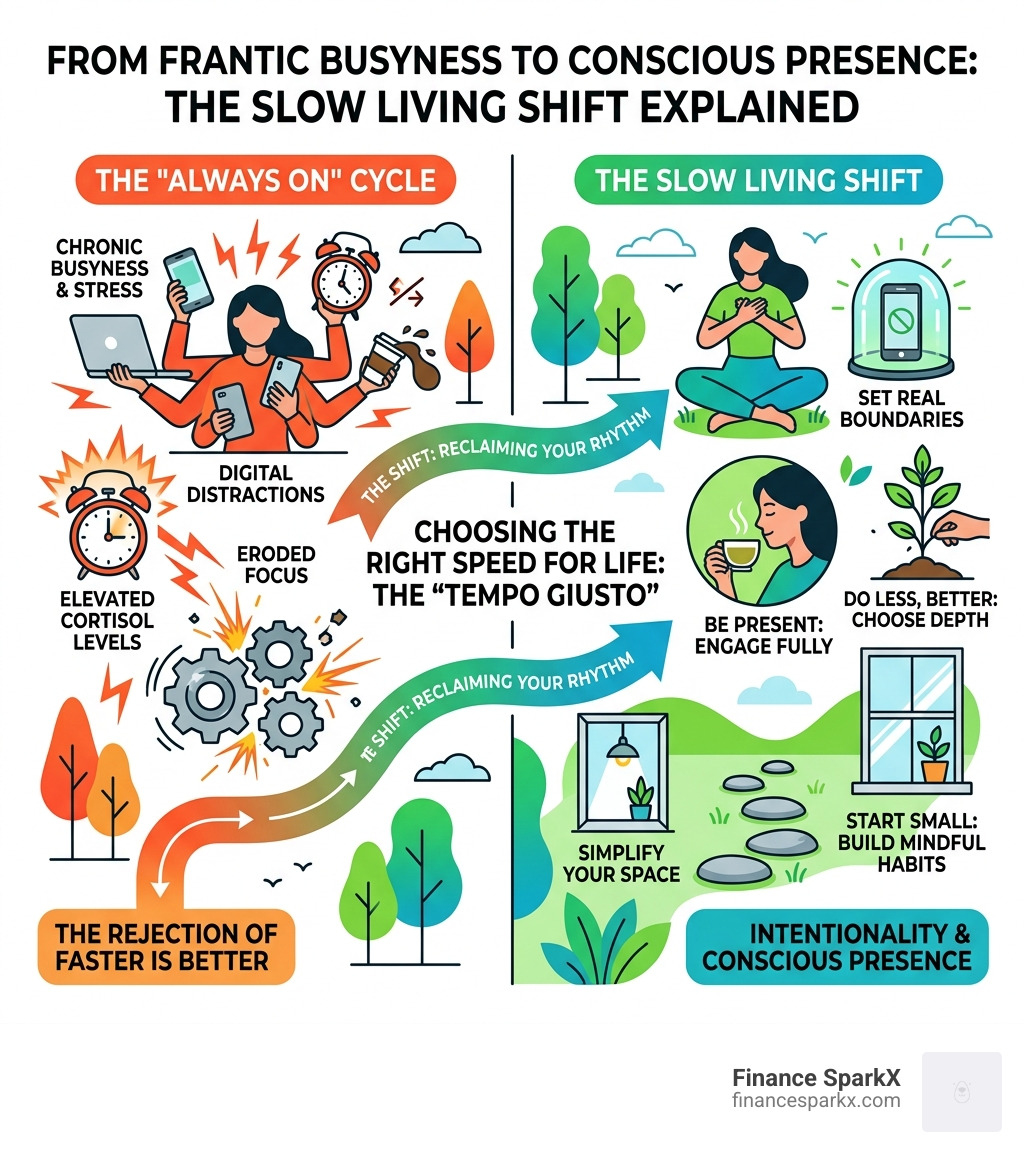
- Be present — put the phone down, show up fully for the moment you’re in
- Do less, better — cut the tasks that drain you, keep the ones that matter
- Simplify your space — a calmer home creates a calmer mind
- Set real boundaries — with technology, your schedule, and other people’s demands
- Start small — one mindful habit at a time is enough to shift the whole rhythm of your day
Picture this: it’s 7 a.m., you haven’t eaten, you’re still in yesterday’s clothes, and you’ve already answered a dozen emails. By noon, the day feels half-gone before it ever started.
That’s not a productivity problem. That’s a pace problem.
In 2026, the pressure to stay constantly busy, connected, and “on” has reached a breaking point for a lot of people. The Global Wellness Institute identified “Analog Wellness” — a conscious return to low-tech, slower experiences — as one of the top wellness trends of 2025. Researchers have linked chronic busyness to elevated cortisol levels, eroded focus, and a persistent sense of falling behind no matter how much you do.
Slow living is the counter-move.
It isn’t about doing nothing. It isn’t about moving to a farmhouse or quitting your job. It’s about choosing depth over speed — and making room, on purpose, for the things that actually fill you up.
For eco-conscious homeowners juggling real responsibilities, that distinction matters. You don’t need a complete life overhaul. You need a smarter rhythm.
What is Slow Living and Why It Matters in 2026
When we talk about slow living, we aren’t talking about being lazy or unproductive. Instead, it is a deliberate lifestyle philosophy centered on intentionality and the rejection of the “faster is better” cultural default. To embrace slow living is to engage with life more fully, using a calm and collected mind to navigate a world that often values speed over depth.
The roots of this movement go back to the late 1980s in Italy. It started as the “Slow Food” movement, sparked by Carlo Petrini and a group of activists protesting the opening of a McDonald’s near the historic Spanish Steps in Rome. They weren’t just protesting burgers; they were protesting the “fast life” that erodes local culture and connection. Later, author Carl Honoré popularized the broader concept in his book In Praise of Slowness, where he introduced the idea of the “tempo giusto”—the right speed for any given activity.
In 2026, this conversation feels more urgent than ever. We are living through what some call “digital exhaustion.” Our brains are marinating in cortisol because of the constant “digital twitch” of notifications. Clinical data from 2025 indicates that introducing just three “slow intervals” into a workday can lower stress hormones by 11%. By slowing down, we allow our nervous systems to exit “survival mode” and enter a state of “time affluence”—the wonderful feeling of actually having enough time.

The Core Principles to Embrace Slow Living
To truly embrace slow living, we need to understand its pillars. It isn’t an aesthetic you buy on social media; it’s a mindset you cultivate.
- Intentionality: Making conscious choices rather than reacting on autopilot. It’s asking, “Does this activity align with my values?”
- Presence: Being fully “in” the moment. Whether you are washing dishes or talking to a friend, you are there, not drafting an email in your head.
- Connection: Deepening our relationship with ourselves, our community, and the natural world.
- Sustainability: Choosing quality over quantity. This applies to the clothes we wear, the food we eat, and the home projects we undertake.
According to research on mindful lifestyles, these principles don’t just make us feel better; they improve our executive function and selective attention.
Slow Living vs. Minimalism: Understanding the Difference
People often confuse slow living with minimalism. While they are best friends, they aren’t twins. Minimalism is primarily about possessions—reducing what you own to the essentials. Slow living is about pace—how you use your time and energy.
| Feature | Minimalism | Slow Living |
|---|---|---|
| Primary Focus | Material belongings / Clutter | The rhythm of daily life / Time |
| Goal | Owning less to live more | Doing things at the “right” speed |
| Action | Decluttering physical spaces | Creating pockets of stillness |
| Mindset | “Do I need this object?” | “Is this pace sustainable?” |
Practical Strategies to Embrace Slow Living Every Day
Transitioning to a slower life doesn’t require moving to a cabin in the woods. You can embrace slow living right where you are by changing your daily rituals.
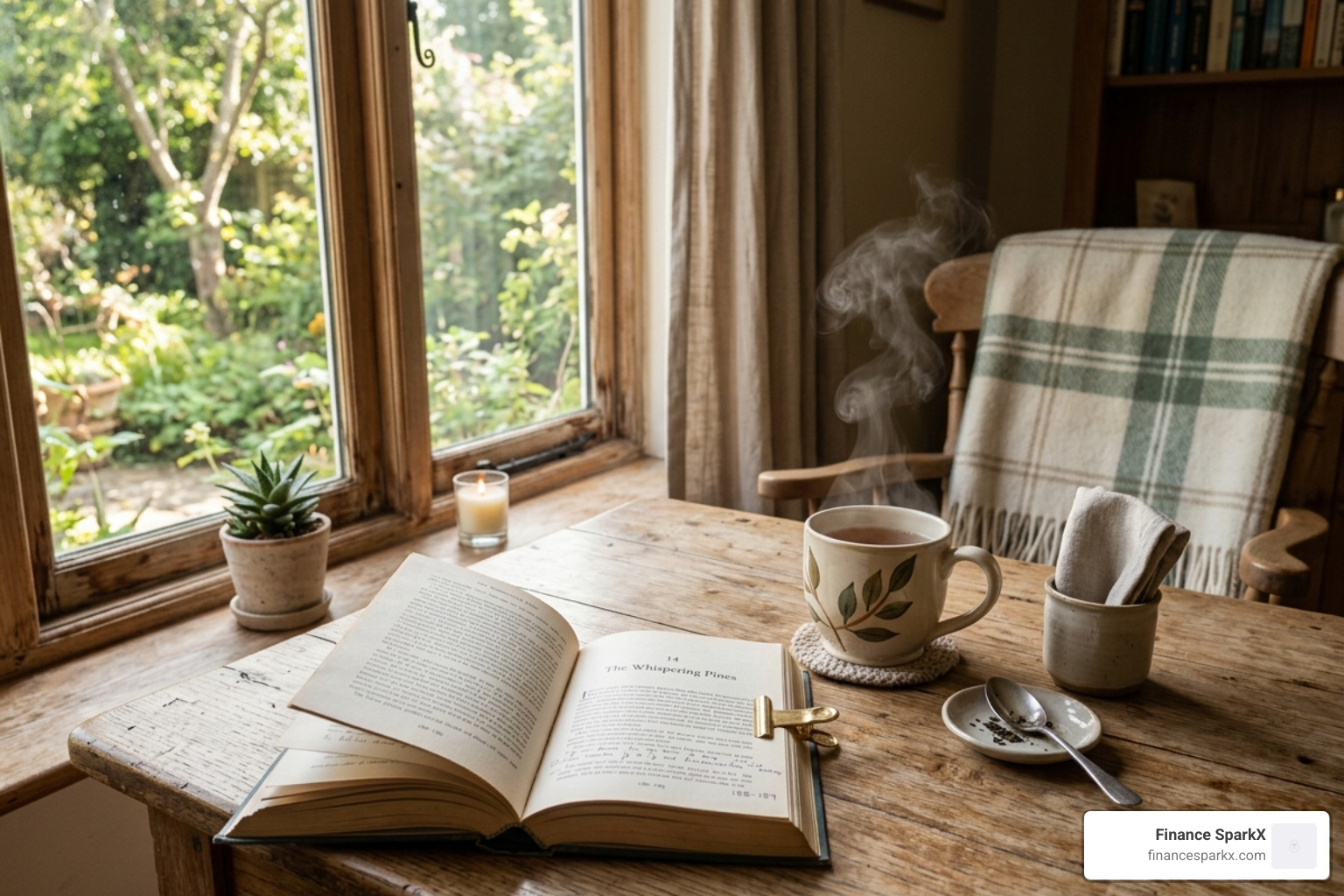
Start with a “Sensory Morning Buffer.” Instead of reaching for your phone the second you wake up—which hits your brain like a starter pistol—try sitting by a window with a warm drink. Notice the light, the steam from your cup, and the sound of the birds. This sets a tonal baseline of agency rather than reactivity.
Another powerful tool is “single-tasking.” We’ve been told multitasking is a superpower, but in reality, it thins the prefrontal cortex and leaves us exhausted. Try doing one thing at a time for 20 minutes. If you’re cooking, just cook. If you’re writing, just write.
Creating a Slow Home and Sustainable Environment
Our homes should be sanctuaries, not just places we crash between shifts. A “slow home” is an environment designed for relaxation and intentionality.
- Declutter with Purpose: You won’t enjoy slowing down if you’re surrounded by “visual noise.” Start with the room you use most. Use the “one-in, one-out” policy to keep clutter from returning.
- Natural Fragrances: Ditch the synthetic room sprays. We love using essential oils like lavender or eucalyptus. They offer a sensory anchor that signals to your brain it’s time to decompress.
- Tactile Comfort: Invest in quality over quantity. We prefer linen or hotel-quality cotton sheets. Since you spend a third of your life in bed, making it a place you “can’t wait to return to” is a vital act of self-care.
- The Ritual of the Bath: Never underestimate the power of an Epsom salt bath. It’s rich in magnesium, which helps relax muscles and calm the mind.
For those of us at Finance SparkX, this is where home improvement meets well-being. Using sustainable materials like reclaimed wood or eco-friendly paints isn’t just good for the planet; it creates a grounded, “real” feeling in your living space.
Digital Detox and Setting Boundaries in a Busy World
Technology is a tool, but in the modern age, it often feels like the master. To embrace slow living, we must reclaim our digital sovereignty.
- Notification Audit: Turn off everything that isn’t a direct message from a human. You don’t need a “ping” to tell you someone liked a photo or that a sale is happening.
- The Sunset Rule: Establish a “digital sunset” at least 60 minutes before bed. Put the devices in a different room and pick up a physical book or a journal.
- Embrace JOMO: The “Joy of Missing Out” is the antidote to the anxiety of “keeping up.” It’s the conscious choice to invest your energy into your own life rather than observing the curated lives of others.
- The Power of “No”: Re-evaluate your commitments. If a volunteer opportunity or a social event doesn’t align with your “calling” or core purpose, give yourself permission to say no to preserve your bandwidth.
How to Embrace Slow Living as a Busy Professional or Parent
“That sounds great,” you might say, “but I have a mortgage and three kids.” We hear you. Slow living isn’t just for the retired; it’s a strategy for the stressed.
For professionals, we recommend “Slow Productivity.” This involves working in deep blocks (90 minutes) followed by a total mental break. Batch your communications—check emails only three times a day instead of leaving the tab open all day. This reduces “context switching,” which is one of the biggest drains on our cognitive focus.
For parents, it’s about “unbusying” the weekends. We often feel pressured to fill every hour with “enriching” activities. But children often thrive more in the “gaps”—the unscheduled hours where they have to use their imaginations.
Integrating Productivity with Eco-Conscious Habits
At Finance SparkX, we believe that being productive and being eco-conscious are two sides of the same coin. Mindful consumption—buying fewer, higher-quality items—saves money in the long run and reduces waste.
- Slow Money: This involves being intentional with your spending. Instead of “retail therapy,” we practice “intentional investment” in items that last.
- Localism: Support your local farmers’ markets. The act of walking through a market and talking to the person who grew your carrots is a quintessential slow living experience.
- Heritage Crafts: Take up a hobby like knitting, woodworking, or gardening. These activities require patience and produce something tangible, providing a much-needed break from the “frictionless” digital world.
Slow Living Rituals for Professionals:
- Transition Rituals: Change your clothes or take a 10-minute walk immediately after work to signal the “end of performance.”
- The Daily Three: Identify only three key tasks each morning. Everything else is a bonus.
- Gap Method: Leave 10 minutes of “nothing” between meetings to process and breathe.
Frequently Asked Questions about Slow Living
Do I have to move to the countryside to live slowly?
Absolutely not. Slow living is a mindset, not a zip code. In a city, it’s about creating “interior silence.” You can find “third spaces”—like quiet libraries or local parks—to escape the bustle. Use noise-canceling headphones during your commute to create a “mobile sanctuary.” It’s about finding the rhythm that works for your environment.
Is slow living anti-technology?
Not at all. We love our gadgets when they serve us. Slow living is about human-centric tech use. It means using technology with intention. A GPS is a great tool for a road trip; a social media feed that makes you feel inadequate at 11 p.m. is a distraction. The goal is to ensure the tool is in your hand, not the other way around.
Can I be productive while practicing slow living?
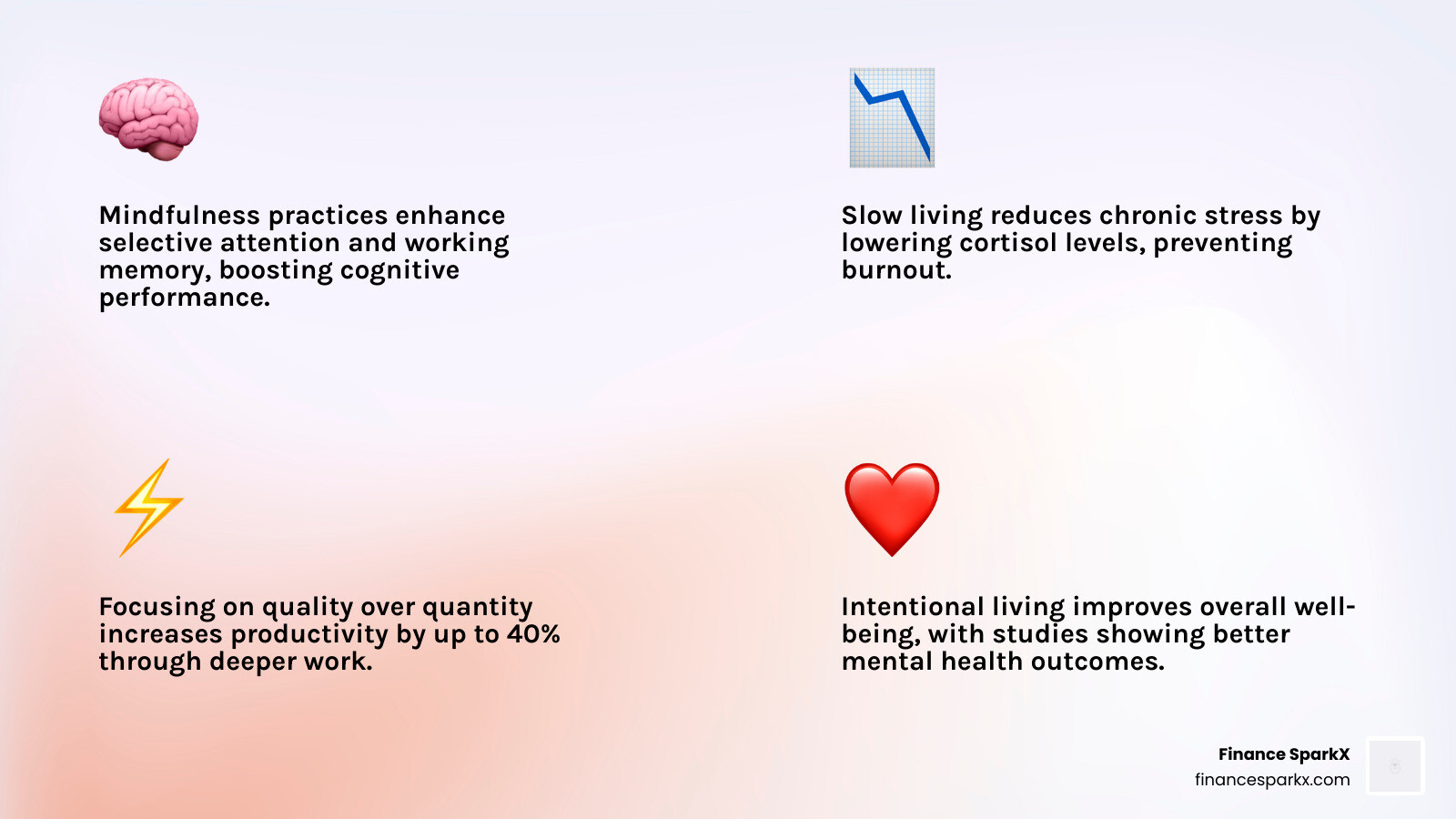
Yes—and you might even be more productive. Research shows that mindfulness and slow living principles enhance selective attention and working memory. By focusing on quality over quantity and “focus over frenzy,” you produce work that is deeper and more meaningful. You finish more by rushing less because you aren’t wasting energy on “busy work.”
Conclusion
The journey to embrace slow living is not a race. There is no “perfect” slow life to achieve. It is a series of small, intentional choices that add up to a life that feels like yours again. Whether it’s choosing a linen sheet for a better night’s sleep, spending twenty minutes in the garden, or finally turning off those pesky app notifications, every step counts.
At Finance SparkX, we are here to help you bridge the gap between a busy life and a sustainable, mindful one. We believe that a beautiful home and a productive life don’t have to come at the cost of your peace of mind.
Are you ready to stop the “to-do list speedrun” and start savoring the day? Take one deep breath. Put your phone down. And just for a moment, do nothing at all. You’ve just started your slow living journey.
