Entryway Lighting Ideas: Layering Light at the Front Door
How to light an entry in three layers: general light overhead, a lamp at console height and one small accent, with warm matching bulbs and options that plug in or recharge.
One ceiling light does a fair job of showing you where the door is. It does little for the mood. Light that comes only from above flattens everything under it: the console looks like a shape, the art goes dull, and faces at the door are lit from the top down.
The entryway lighting ideas that change this are about layers, not brightness. Add a second and a third source at different heights and the same space starts to look furnished, with depth and warm spots that draw you in. Most of it can be done with lamps that plug in or recharge.
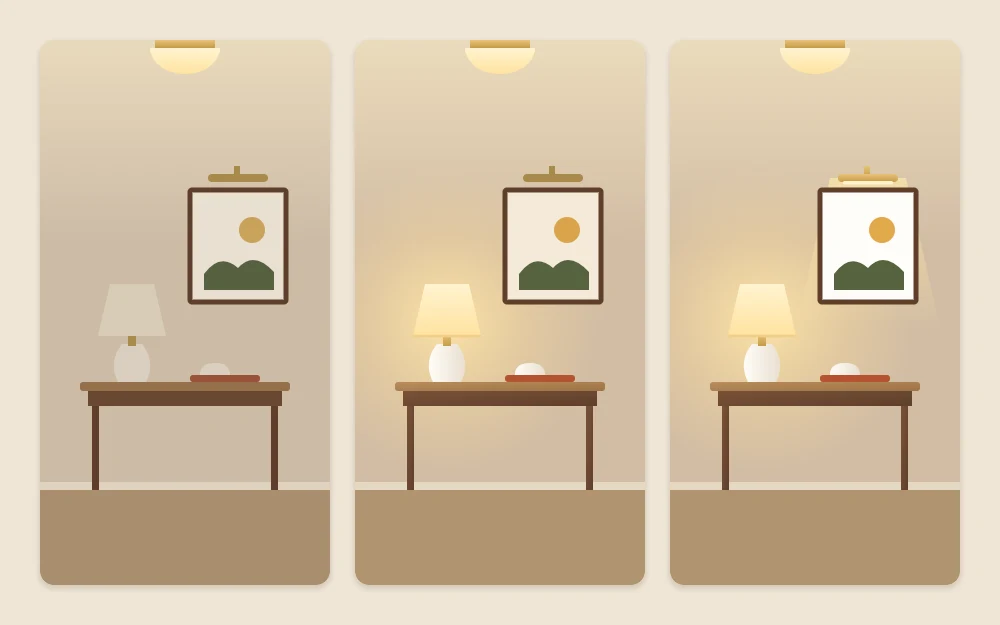
Think in three entryway lighting layers
Each layer does a different job, and the entry looks best when all three are present, even in a small way.
- General light from overhead, so you can see the floor, the lock and what you are carrying.
- A lamp at console height, which puts a warm glow at the level of faces and objects.
- An accent, small and aimed: a picture light over art, a lit shelf, a glow in a corner.
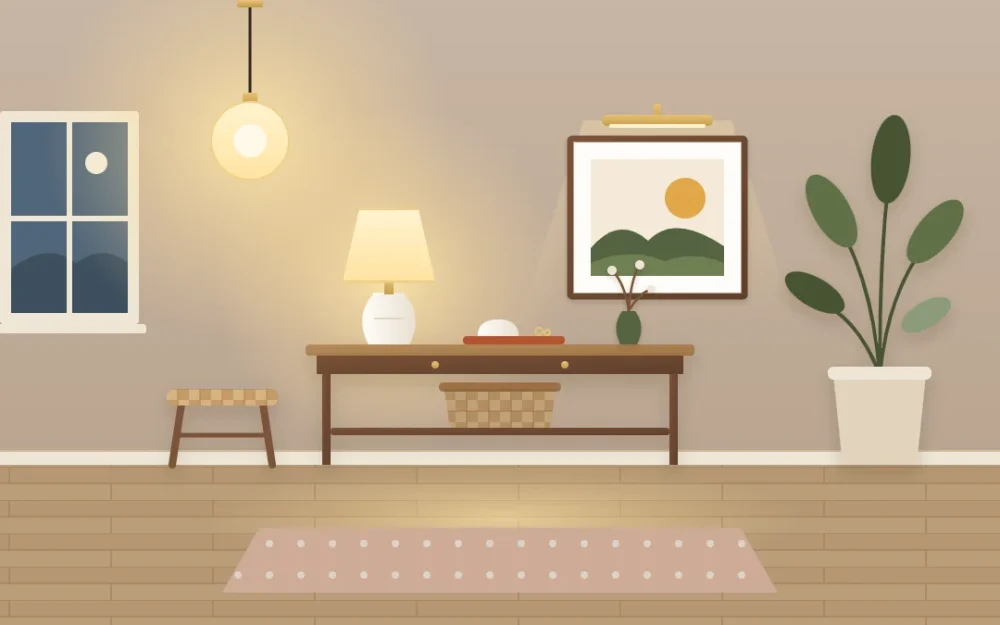
In the evening, the lower layers do most of the decorating. Many entries look their best with the overhead light dimmed or off and the lamp and accent left on.
Layer one: the light overhead
The ceiling light is the one most entries already have, and it sets the style from the moment the door opens. When you look at entryway light fixture ideas, think about proportion and shape before finish.
A rule of thumb for width: add the length and width of the space in feet and read the total as inches. An entry of about 6 by 8 ft (1.8 by 2.4 m) points to a fixture roughly 14 in (36 cm) across. Treat that as a starting point and adjust by eye. A low ceiling suits a fixture that sits close to it; a tall foyer has room for a pendant or lantern that drops into the space, hung well clear of heads and the swing of the door.
Shape matters as much as size. A globe or drum that glows on all sides spreads light onto the walls and ceiling. A fixture that only points down leaves the upper walls dark and makes the entry feel lower.
Good to know
Choosing the location for a wired fixture, installing one or replacing one is a job for a licensed electrician, and in a rental it needs the landlord’s permission. The same goes for sconces and dimmers. The ideas here are about what to look for, not how to fit it.
Layer two: a lamp at console height
This is the layer that makes the biggest difference for the least effort. A table lamp on a console, shelf or shoe cabinet puts light where you look, catches the mirror and gives the eye a warm spot to land on from the door.
Place it at one end of the surface, not the center, so it balances the mirror or art instead of blocking it. Height, shade shape and where the cord goes are covered in the guide to choosing a table lamp for the entry console.
No surface? A slim floor lamp beside a bench does the same job.
Layer three: one accent
An accent is a small light with a single target. It adds the depth that makes front hall lighting feel considered.
- A picture light above a framed print turns the art into a focal point after dark.
- A lit shelf, with a slim rechargeable light bar tucked under or behind it, washes the wall with a soft glow.
- A low glow in a corner, from a small lamp on the floor behind a plant, throws leaf shadows up the wall.
Battery and rechargeable picture lights and light bars are widely available and avoid visible cords. If one attaches to the wall or a frame, choose a fixing that suits the wall type and the weight of the light, and follow the manufacturer instructions.
One accent is enough in most entries. If yours has no window and feels dim even at noon, the guide to brightening a dark entry goes further into where to add light.
Keep the color of the light warm and consistent
Bulbs differ in the color of light they give, from a yellowish glow to a bluish white. This is described as color temperature, and bulb packaging states it. For an entrance, bulbs labeled warm white, around 2700 K, tend to flatter wood, paint and skin.
More important than the exact figure is that every bulb in view matches. A cool ceiling light and a warm lamp side by side make each other look wrong: one turns blue, the other orange. When you replace a bulb, check the others and bring them into line, including any that are visible in the next room.
Mind shades and glare at eye level
A bare bulb at eye level is uncomfortable, and in an entrance you meet it at close range. Check each light from where you actually stand: at the door, at the mirror and seated on the bench.
- Choose shades that hide the bulb from a standing view. Fabric and opal glass diffuse; clear glass shows the bulb and needs a soft, low-output one.
- Pale shades spread light through the sides. Dark or metal shades send it up and down in pools, which is moodier and dimmer.
- Look at the mirror. If it reflects a bare bulb back at you, shift the lamp or change the shade.
Options that need no wiring
Good foyer lighting does not depend on changing what is in the ceiling. All of these work in any home and move with you:
- a plug-in table or floor lamp, with the cord run down a table leg;
- a rechargeable cordless lamp for a shelf, ledge or console far from a socket;
- a plug-in wall light with a cord cover in the wall color;
- battery or rechargeable picture lights and light bars;
- a plug-in timer or smart plug, so the lamp is already on when you come home.
Tip
Judge the result after dark, standing outside with the door open. That is the view the lighting is for.
Once the layers are in place, textiles and a few natural touches build on the same glow; the cozy entry ideas for the colder months pick up from there.
Frequently asked questions
How can an entry with only a ceiling light feel warmer in the evening?
Add a second source lower down. A table lamp on a console or shelf puts a glow at eye level and gives the space depth. A small accent, such as a rechargeable picture light, adds a third layer. Use warm bulbs that match each other.
What size ceiling light suits an entry?
A loose rule of thumb is to add the length and width of the space in feet and read the total as the fixture width in inches, then adjust by eye. Choosing, installing or replacing a wired fixture is a job for a licensed electrician.
What can be done where there is no socket near the console?
Rechargeable cordless lamps are the simplest answer; they sit anywhere and are charged every so often. Battery picture lights and light bars cover the accent layer. Adding a socket is electrical work, so that decision belongs with a licensed electrician and, in a rental, the landlord.